Alexei Ovchinnikov
The UWEC editorial team continues to share highlights of recent media coverage and analysis of the Ukraine war’s environmental consequences with our readers. As always, we welcome reader feedback, which you can leave by commenting on texts, writing to us (editor@uwecworkgroup.info) or contacting us via social networks.
Russia’s war of aggression in Ukraine continues to destroy ecosystems. The consequences for the Black Sea are likely to be long-lasting and are already affecting fish and marine mammals, while the impact on the climate cannot be calculated with any degree of accuracy. Moreover, experts predict that the majority of greenhouse gas emissions will occur in Ukraine after the war, during the long rebuilding and recovery process. At the same time the environmental agenda is becoming weaponized for propaganda purposes. Moscow spent the whole of 2025 accusing Ukraine of carrying out attacks on the occupied Zaporizhzhia nuclear power plant, though an investigation by Greenpeace Ukraine found no evidence of this. On the contrary, Russia is actively building fortifications around the atomic station, essentially transforming it into a military facility. Meanwhile, the occupiers have decided to create a national park on the site of the Kakhovka Reservoir, which may be linked to Moscow’s desire to legitimize its control over these territories in the eyes of the global community. The ongoing persecution of environmental activists and scientists in Russia is further confirmation that green issues are not a priority for the Kremlin. Read more about this, as well as the fate of the Kreminski Forest in Donbas, in our latest review.
The war’s impact on Black Sea mammals: military action, fishing and marine logistics
Russia’s full-scale invasion of Ukraine has dealt a serious blow to the ecological state of the Black Sea and, in particular, to its marine mammal population, which includes three species of higher mammal: the bottlenose dolphin (Tursiops truncatus), the short-beaked common dolphin (Delphinus delphis) and the harbor porpoise (Phocoena phocoena). The Mediterranean monk seal (Monachus monachus) was also once found in the Black Sea, but this species vanished from these waters in the 20th century.
ACCOMBAS (an intergovernmental body dedicated to protecting cetaceans in the Black and Mediterranean seas, as well as contiguous parts of the Atlantic) recently published a proposal outlining the steps needed to ensure the post-war recovery of the Black Sea’s cetacean population.
Linas Svolkinas, a researcher from the Conflict and Environment Observatory (CEOBS), has summarized the main impacts of the war on marine mammals such as dolphins and porpoises. As Svolkinas notes, in 2022 marine mammal mortality doubled. “Researchers documented 914 deaths, including 125 on Ukraine’s Black Sea coast between February and December; most cases occurred before October 2022. Mortality was 2.2 times greater than it was between 2019-21, comprising: 59% harbour porpoises, 26% common dolphins and 10% bottlenose dolphins,” he writes.
Historically, mammals in the Black Sea were hunted for their meat and fat. In fact, Turkey only banned commercial dolphin fishing in 1983. Unfortunately, this did not lead to the full recovery of the population, since in the 1980s active coastal development and the appearance of invasive species such as the rapa whelk (Rapana venosa) and the comb jelly (Mnemiopsis leidyi) had a negative impact on the ecosystem.
Sitting at the top of the food chain, marine mammals are vulnerable to pollution. Heavy metals and poisonous substances that have accumulated in other organisms enter their body. This is particularly true of the Black Sea, 80% of which is devoid of life due to the high content of hydrogen sulfide at depths below 150 meters, where water circulates less. All life is concentrated in the oxygenated upper layer.
Svolkinas explains that the main war-related causes of cetacean deaths in the Black Sea are the use of sonars and hydrolocators, as well as explosions and water pollution as a result of missile attacks on Ukrainian infrastructure. He highlights the significant pollution that was recorded after the destruction of the Azovstal steel plant in Mariupol during the siege of the complex in 2022.
In the years of the full-scale invasion, pollution levels in the Black Sea have only increased. The Kakhovka dam disaster led to waters being polluted with toxic substances of both industrial (naphthalene, phenanthrene and anthracene) and agricultural origin (β-HCH and heptachlorine), as well as heavy metals such as zinc, copper, chromium and nickel. An analysis of pollutant content in mullet fish, which forms part of dolphins’ diet, has shown that it currently exceeds safe health levels. Yet the pollution continues, as the fuel oil spills in the Kerch Strait and the vegetable oil spill as a result of missile attacks on Ukrainian ports in January 2026 clearly illustrate.
Another factor that concerns Svolkinas but that often escapes attention is the negative impacts that militarization of Crimea and the construction of the Crimean Bridge have had on the dolphin and porpoise populations that use the Kerch Strait as a migration corridor, as well as the species they feed on: goby, anchovy and mullet.
Another example is the increased use of the Danube Delta. Before 2022, Ukraine had 18 deep-water ports. However, due to the full-scale invasion, the country was forced to adjust its logistics and make more active use of safer ports, such as Izmail, Kiliia and Reni, which are situated on the Danube rather than the Black Sea coast. This has been accompanied by work to deepen the Danube channel, which has a negative impact on the local ecosystem. The Danube Delta is an important biodiversity conservation area, protected by UNESCO and the Ramsara Convention on Wetlands, and plays a key role in the growth of mammal populations in the Black Sea.
Changes in fishing intensity are yet another influencing factor. After the beginning of Russia’s full-scale invasion of Ukraine, Moscow and Kyiv essentially halted their own commercial fishing operations in the Black Sea. Turkey, however, which was already responsible for 61% of all fish caught in the Black Sea, began to expand its fishing activity. Entanglement in fishing nets is one of the chief causes of dolphin and porpoise deaths. As a result, cetaceans have tended to move toward the northern part of the sea, where there is less fishing activity, but where they more frequently encounter pollution, mining and other consequences of military action.
According to Svolkinas, it is now vital to increase investment in analysis of the environmental consequences of the war for the Black Sea. This will allow Ukraine not only to understand how its ecosystems have changed, but also to develop a comprehensive plan for their recovery. These investments should both offer financing for existing research projects, as well as the development of new ones. It is also important to involve civil monitoring, which can facilitate the collection of data. The environmental consequences of the war for the Black Sea are long-term, so the recovery plan should be developed with this in mind.
Read more:
- Impact of Russia’s invasion of Ukraine on the Black Sea and the Sea of Azov
- Mass dolphin mortality in the Black Sea: a military perspective
- Black Sea heals its wounds: 4 months after the Kakhovka catastrophe
- The Crimean Bridge: environmental impact of Russia’s ‘project of the century’
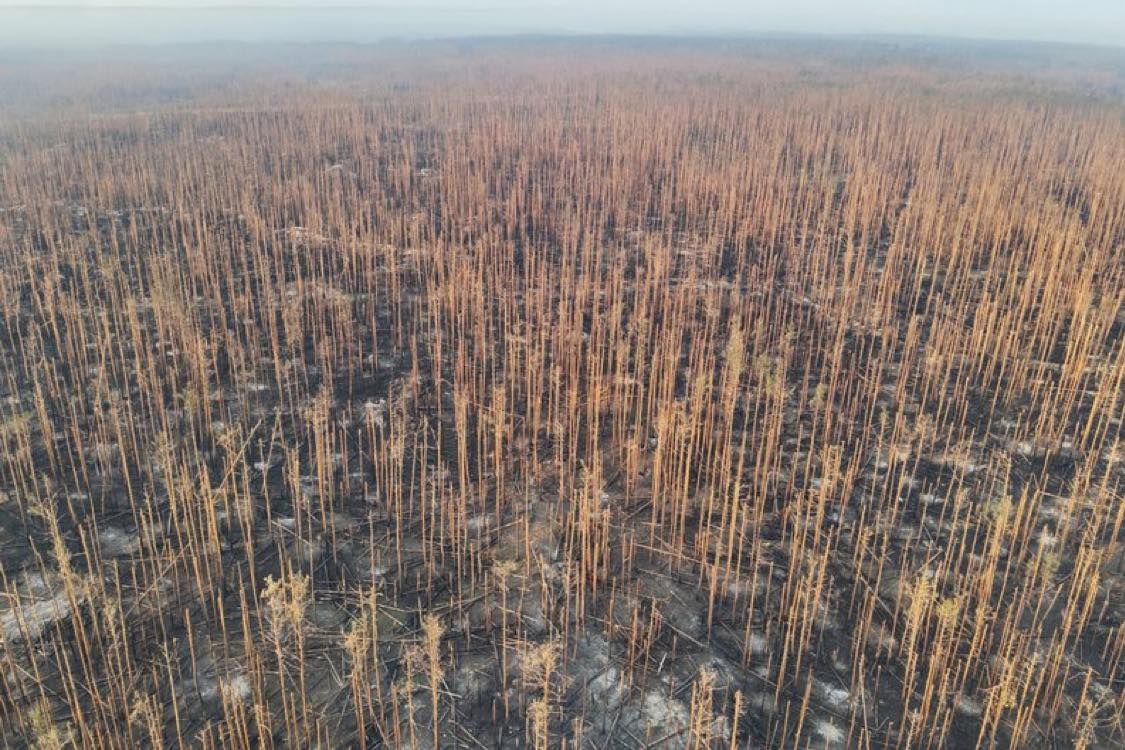
The Luhansk region’s Kreminski Lisy National Park has been almost destroyed
According to a report by the regional branch of the Ukrainian national broadcaster Suspilne Donbas, citing zoologist Vladimir Yarotsky, who is still formally on the staff of the Kreminski Lisy National Park but is currently serving in the Ukrainian armed forces, the reserve has suffered catastrophic destruction since Russia’s full-scale invasion in 2022.
The only national park in the Luhansk region, Kreminski Lisy (Kreminski Forest) was established in 2019, though work on creating it began far earlier, in the 1980s. The original plan was for the national park to cover 42,000 hectares, but ultimately it ended up being restricted to just 7,000. According to Yarotsky, the most valuable areas, located along the Siverskyi Donets river, remained in use by the Serebryansky Forestry Division.
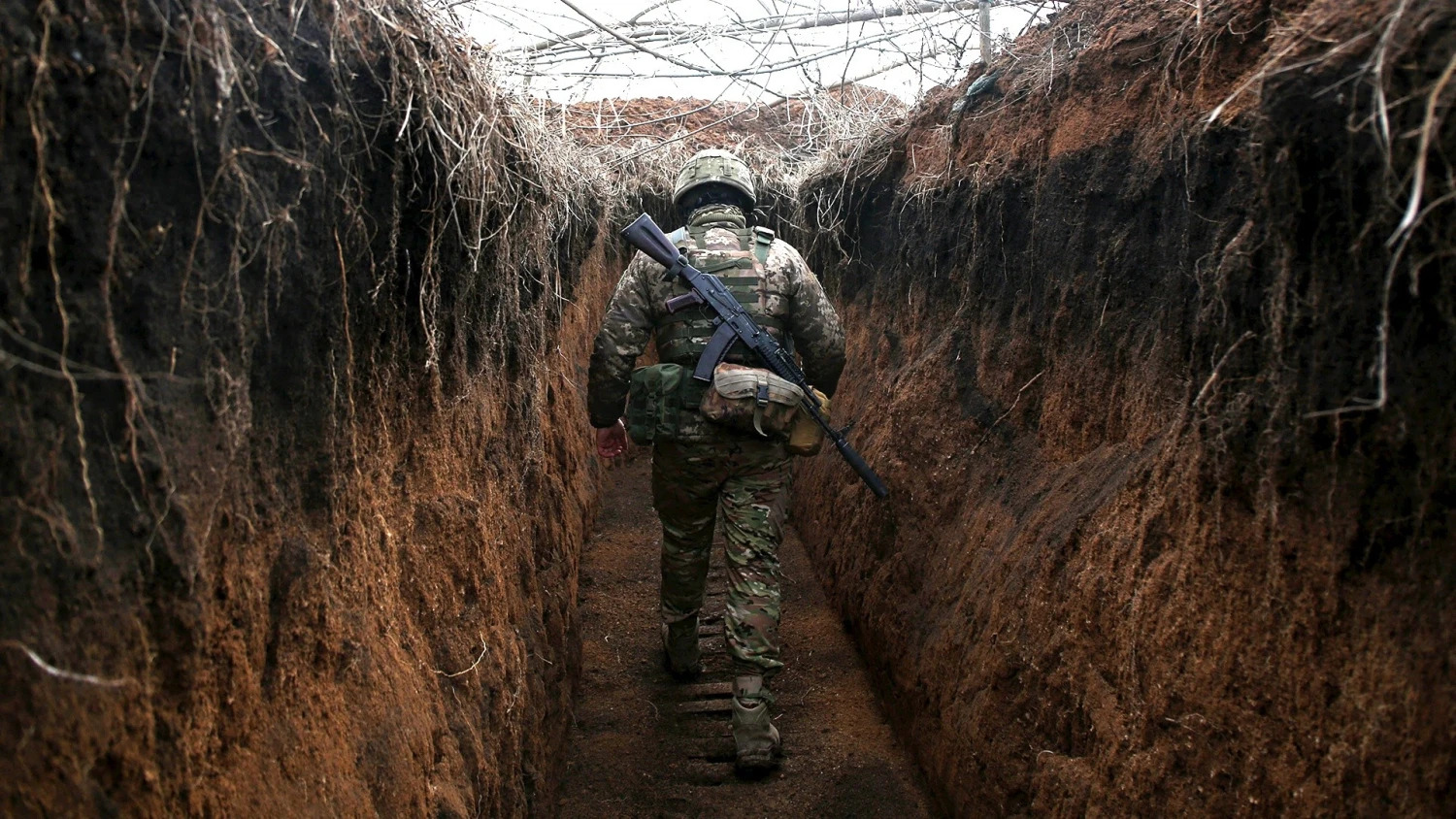
The Serebryansky and Kreminski forests became the site of intense fighting after the beginning of Russia’s full-scale invasion. In October 2025 they were occupied by Russian troops. Since then, the frontline has run right through the Serebryansky Forest, increasing the scale of destruction of local ecosystems.
One of the largest forest areas in Eastern Ukraine, the Kreminski Forest is unique. It is the sole area of boreal (northern) forest in a zone of steppeland that is more typical for the region. The forest grew up naturally at the confluence of the Siverskyi Donets, Zherebets and Krasna rivers.
These woods were the habitat of a rare animal, the Russian desman (Desmana moschata), a small, secretive relict mammal that mainly lives underwater. After World War II, protected hunting grounds were created to help preserve it, and it was these areas that later became the basis for the national park. As Vladimir Yarotsky notes, the Russian desman vanished back in the second half of the 20th century, though the conditions for its reintroduction remained—until they were destroyed by Russia’s war. The Kreminski Forest was also home to the steppe polecat, the weasel, the white-tailed eagle and other rare animal and plant species.
The forest is now under the control of the so-called Luhansk People’s Republic (LNR). The park became part of the Kreminski Forestry Division, whose activities are managed by the former director of the national park. The occupation authorities are actively felling what remains of the forests for the construction of fortifications, export and building materials for local residents.
As Yarotsky notes, the frontline has been fixed in the Serebryansky and Kreminski forests since 2022. As a result, these forests have been almost completely destroyed by military action, shelling and the construction of fortifications. Not only have the trees been destroyed, but the soil too. This means it will be impossible to restore the ecosystem to its former condition. Nature will rebound in the form of new ecosystems, but this will be a different kind of nature and a different story.
In some places, rising groundwater levels may even accelerate the recovery of ecosystems, but the Serebryansky and Kreminski forests, as they once were, are now lost to Ukraine forever. While large animals were generally able to escape after the full-scale war began, smaller ones, such as mollusks and insects, including some endangered species, perished along with the soil. This also applies to plants, including rare ones such as the sand iris (Iris pineticola) and centaury (Centaurea tanaitica). As Yarotsky explains, there is a high risk of invasive species spreading during reforestation, since they can adapt to damaged soils more quickly. This will create entirely different forests.
Read more:
- Fighting for life: How Russia’s war in Ukraine threatens to wipe out rare species
- Invasive species threat resulting from Russia’s full-scale invasion of Ukraine
Moscow creates its own ‘Velykyi Luh National Park’ in occupied territories
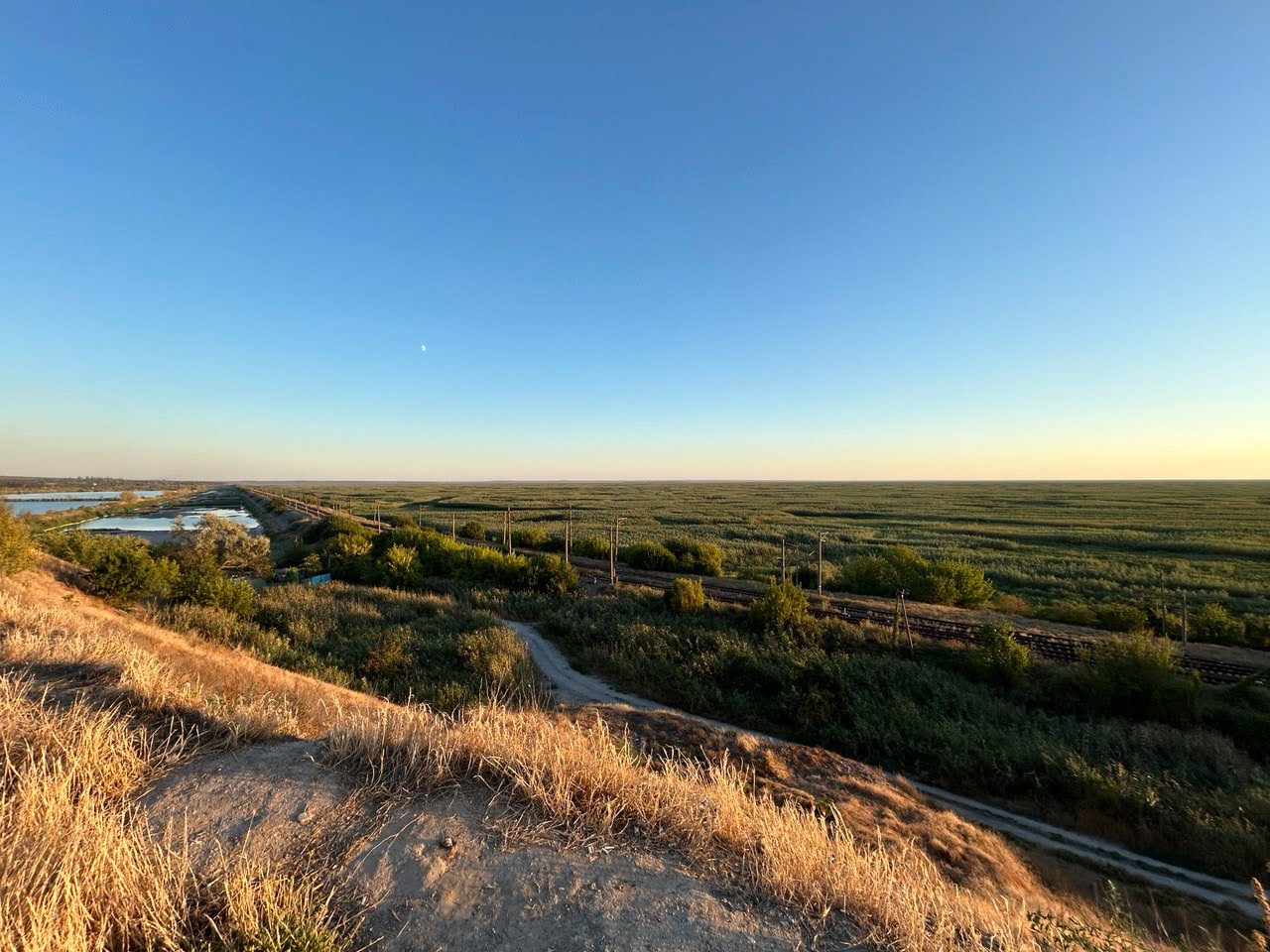
In January 2026, the Russian government approved a decision to establish a national park in occupied territory in the Zaporizhzhia region. This protected area will cover 16,700 hectares in total—and its boundaries precisely match those of Ukraine’s Velykyi Luh National Park. It includes part of the former Kakhovka Reservoir and the Great and Little Kuchuhury islands, a section of shoreline near the village of Skalki and the city of Enerhodar, the Mayachanska ravine and the Bilozerske area. This entire territory is currently an active combat zone.
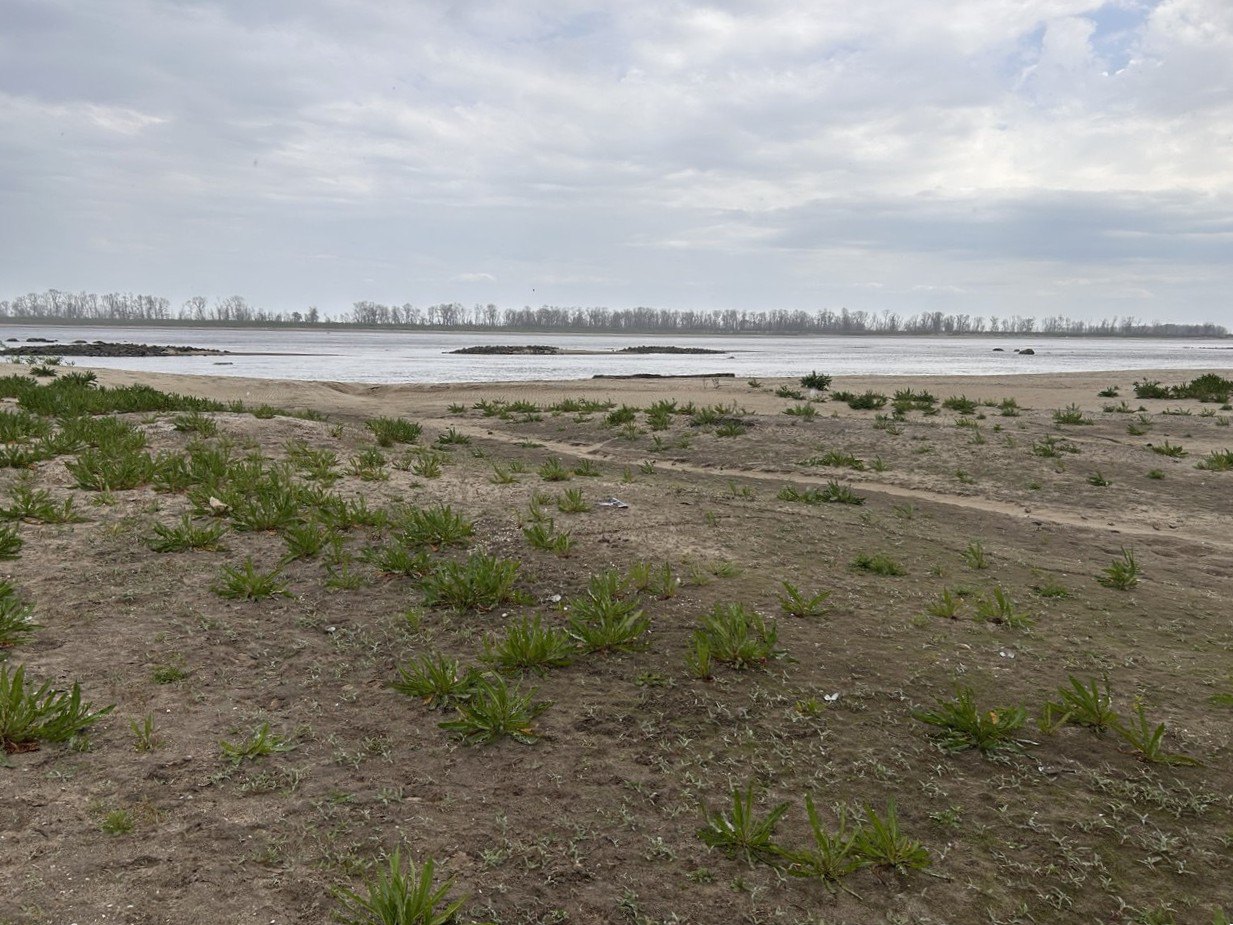
The Velykyi Luh (Great Meadow) natural landscape was almost completely destroyed in 1956, during the filling of the Kakhovka Reservoir. Remnants survived only in ravines along the shoreline, as well as on islands that were formed as a result of the flooding. In 2023, when the reservoir emptied following the destruction of the dam at the Kakhovka hydropower plant, the area was exposed once more and the Velykyi Luh ecosystem rapidly began to recover. Ukrainian scientists have advocated for conservation status to be granted to the area, but naturally this can only be done once the surrounding territory has been liberated.
Read more:
- Is it time to restore Velykyi Luh?
- After the deluge: One year on, can the ecosystems disrupted by the destruction of the Kakhovka Dam recover?
This move by the Russian administration to create national parks in occupied territory could well be based on a desire to legitimize Russian control over them. If conservation zones receive international recognition, then any move to liberate them militarily on Ukraine’s part could be presented as a crime against nature. Russian propaganda has made use of this approach several times. The conclusion is clear: protecting nature is not Moscow’s priority here.
Read more:
The Russian government’s lack of interest in conservation and environmental issues is confirmed by the ongoing persecutions and repression against scientists and environmental activists in the country. In January 2026 the scientist Alexei Dudarev was arrested. He is being charged with treason, though the main reason may be his participation in work on a report on the Arctic and its publication in international scientific journals as part of the Arctic Monitoring and Assessment Program (AMAP).
Dudarev is chief scientific researcher at the North-West Scientific Center of Hygiene and Public Health in St. Petersburg, run under the aegis of Rospotrebnadzor, Russia’s consumer rights watchdog. The main focus of his scientific work was the study of the impact of pollution in the Arctic on the health of its residents. Until 2022, Russian scientists officially participated in the work of AMAP. Russia’s full-scale invasion of Ukraine severed this cooperation, though contact began to be re-established in 2025. However, Russia’s FSB security service saw Dudarev’s work on analyzing heavy metals and persistent organic toxicants in living organisms as treason. Yet, as Indigenous rights defender Pavel Sulyandiziga notes in an article, Dudarev was not working with any secret data and points to the scientist’s persecution as a result of his international research collaboration. As a result of this political persecution, it seems likely that for the first time in five years a report on pollution in the Arctic will be published without the participation of Russian authors.
This is not the first case of the persecution of scientists whose areas of research intersect with Russia’s geopolitical interests. The UWEC Work Group previously reported on the arrest of the Ukrainian marine scientist Leonid Pshenichnov in Crimea in September 2025.
The militarization of the Zaporizhzhia nuclear power plant
Analysis of satellite photos, carried out by McKenzie Intelligence Services (MIS) on request of Greenpeace Ukraine in February 2026, shows that the Russian occupiers have been carrying out major reconstruction activity at the Zaporizhzhia nuclear power plant. The cooling pond is now 100,000 square meters smaller, and new military fortifications and anti-drone nets have been spotted around the plant.
Greenpeace Ukraine’s senior nuclear specialist Shaun Bernie says that the nuclear plant increasingly resembles a military base, rather than a special-purpose facility where any military activity is unacceptable. For example, around the sluice gates and along the western and northern banks of the cooling pond, the satellite images show the construction of permanent buildings with the features of reinforced bunkers. In addition, hangars and fortified structures of the kind typically found along a frontline have been identified around the perimeter of the station, many protected with metallic anti-drone cages.
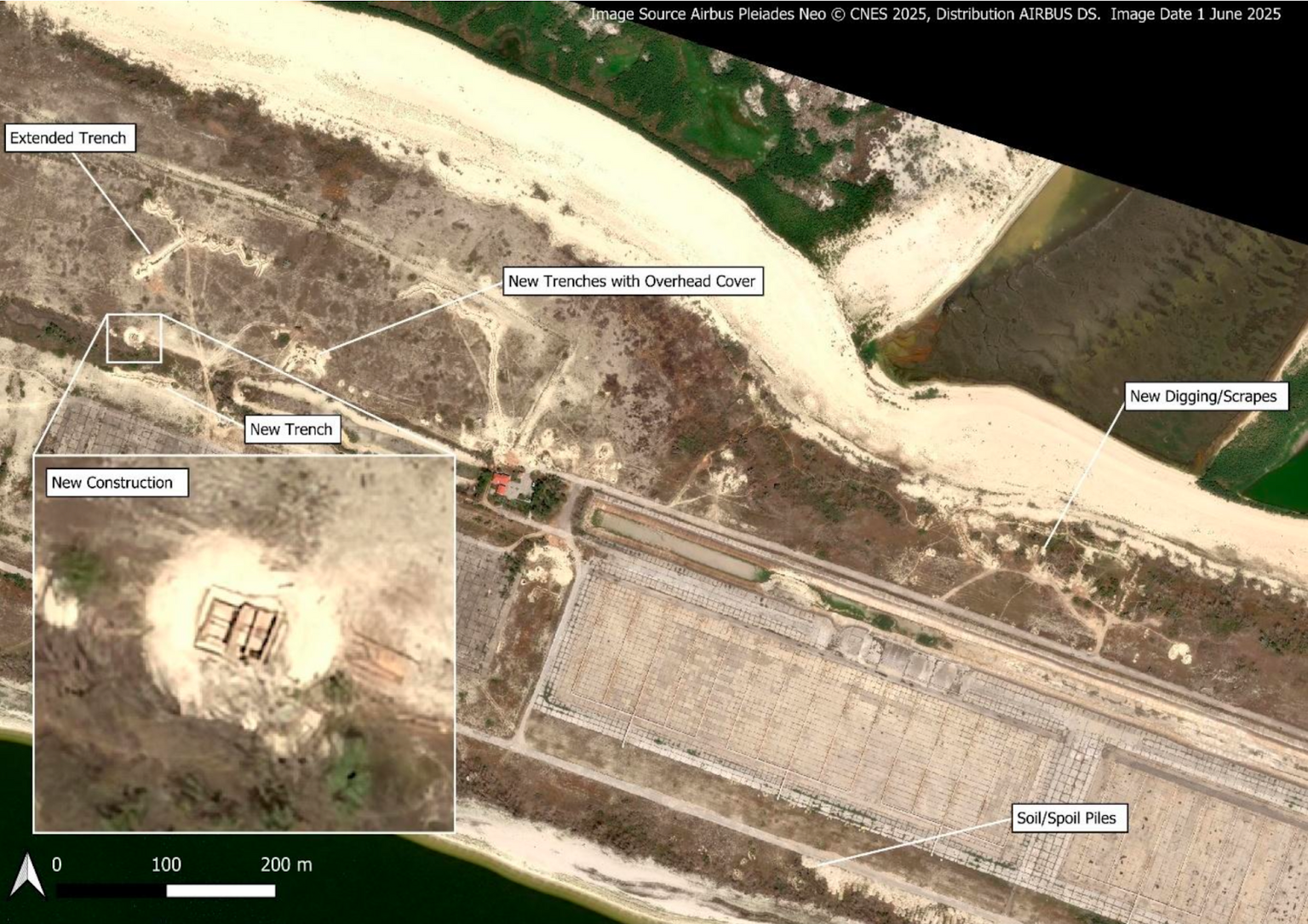
The occupiers have also built a dam wall across the cooling water inlet channel, which could be linked to a sharp fall in the water level in the cooling channel and pool in summer 2025. Such serious interference in the operation of the occupied plant is not only illegal, but could have catastrophic consequences.
“The militarization of the Zaporizhzhia nuclear power plant has now entered its fourth year and is becoming increasingly systematic. The construction of bunkers, trenches, anti-drone fortifications and interference with the cooling system are clear signs of Russia’s efforts to maintain long-term military control over a nuclear facility,” says Jan Vande Putte, a nuclear and radiation protection expert at Greenpeace Ukraine. “The presence of troops and military equipment at Europe’s largest nuclear power plant creates a constant risk to nuclear safety for all of Ukraine and the wider region.”
The satellite analysis carried out by Greenpeace Ukraine did not reveal a single confirmation of attacks by the Ukrainian armed forces on the Zaporizhzhia nuclear power plant, despite repeated claims to that effect by Russian propaganda channels and Russia’s state nuclear agency Rosatom. Moreover, the analysis showed that it was highly probable that the power blackouts at the plant recorded in 2025 were connected to Russian sabotage and offensive action, namely attacks on Ukraine’s energy infrastructure. In the period from February 2025 to February 2026, 13 cases of damage to the 750 kV Dniprovska or 330 kV Ferrosplavna-1 lines were recorded, resulting in communication with the Zaporizhzhia nuclear power plant being cut. However, six of those incidents took place on territory occupied by Russia, the other seven incidents resulted in loss of power—as a result of Russian shelling of energy infrastructure in the Mykolaiv region and the entire Dnipro region.
The investigation, which is available to watch online (in English), will be presented for review at the International Atomic Energy Agency meeting in Vienna on March 4–6. Its aim is to show the responsibility of the Russian occupation for the creation of the nuclear threat at the Zaporizhzhia nuclear power plant.
CO2 emissions in Ukraine up by 75 million tons since the full-scale invasion
A new assessment of the climate-related impact of the full-scale war in Ukraine has been conducted by the Initiative on Greenhouse Gas Accounting of War (an association of climate experts) with the support of the public environmental organization Ecodiya and the Ministry of Economy, Environment and Agriculture of Ukraine.
The total CO2 emissions caused over the four years of the Russian full-scale invasion amounts to 311 million tons—a figure equal to France’s total annual emissions and half of Germany’s annual emissions. The cost of the climate damage sustained over this period is estimated to exceed $57 billion.
Emissions stemming directly from fighting over the four years of the war totaled 114 million tons of CO2 equivalent. Emissions from war-related landscape fires amounted to 70 million tons.
“While emissions rose across all impact categories during the fourth year, war-driven landscape fires surged for the second consecutive year. Unusually hot and dry conditions—likely intensified by global warming—turned even minor sparks from combat into uncontrollable blazes, as firefighting remained impossible. This vicious cycle underscores how armed conflict and climate change exacerbate one another,” explains Lennard de Klerk, the lead author of the report. The climatic consequences are only part of the environmental consequences of the war. In four years of independent monitoring, Ecodiya has recorded 2,643 cases of damage inflicted upon the environment and nature, with the Dnipro and Kharkiv regions suffering most of all.
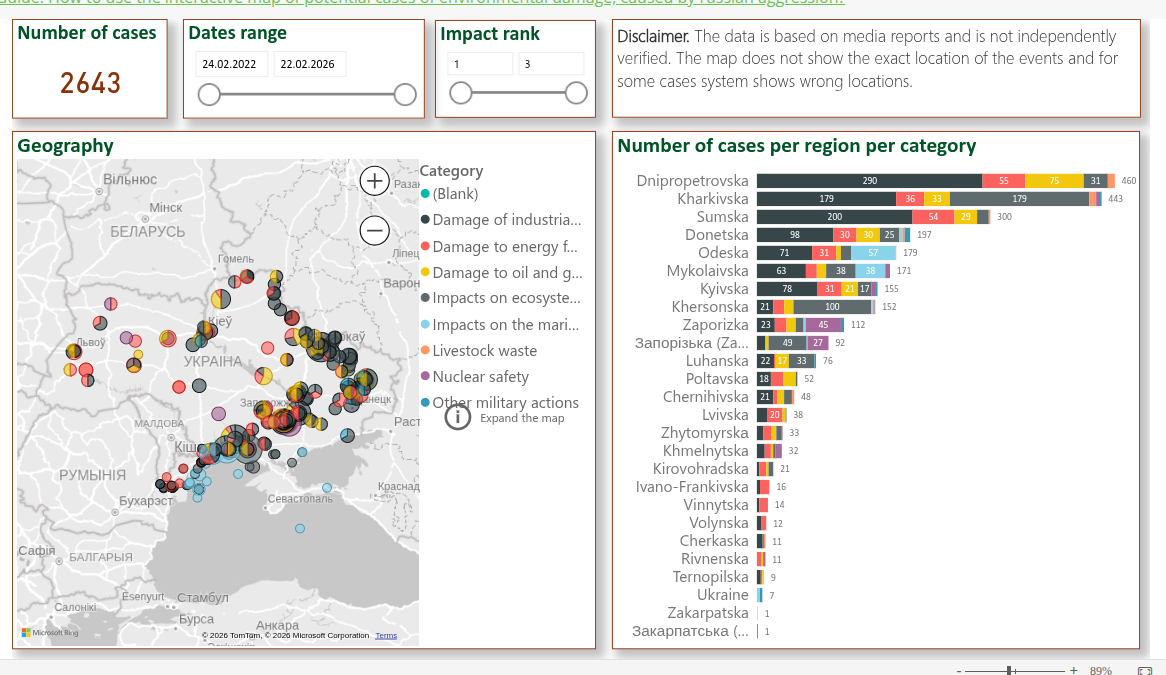
Ecodiya continues to gather data on the environmental consequences of the war and enter it on an interactive map. In four years the public organization has documented missile attacks and shelling of nuclear power plants, ports, infrastructure, burning gas stations, oil depots, forests, steppe and much more.
In order to assess the harm done to the environment, the volunteer team and experts from Ecodiya have been grading the damage on a scale from 1 to 3. A Tier 1 ranking represents cases where a site was damaged without a direct (at the time of recording) impact upon nature, or in cases where there is insufficient data for a full assessment. A Tier 2 ranking indicates the presence of significant local damage. A Tier 3 ranking is used for cases with confirmed large-scale negative impact on the environment, after which long-term efforts will be required in order to restore nature.
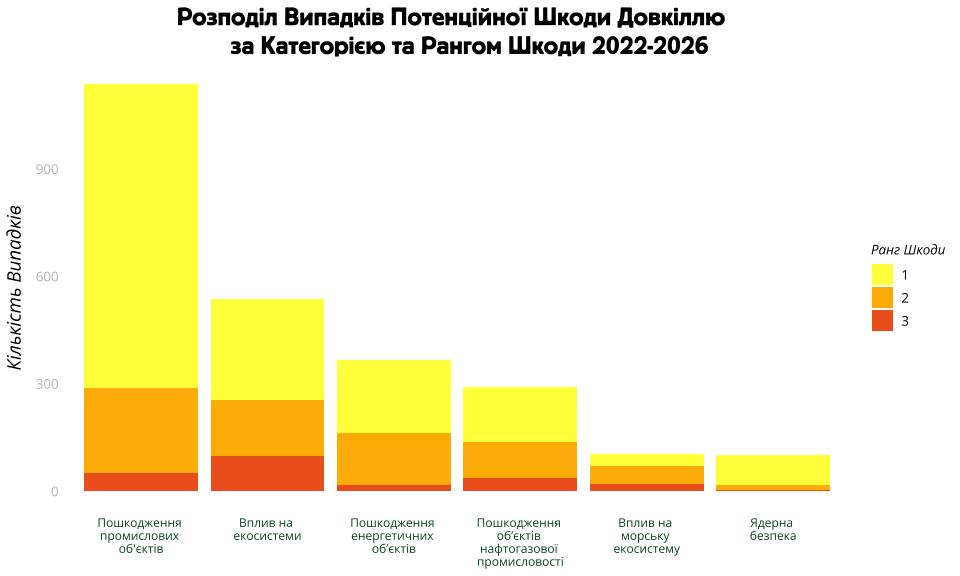
Analysis shows that although the vast majority of incidents (1,623 cases, or 63.2%) are classified as Tier 1, this does not mean that the overall environmental consequences are insignificant. The number of incidents with long-term impact (237 cases, 9.2%) is very high, and it is these incidents that have the most destructive influence on the environment, as well as people’s health.
A graph of the intensity of incidents compiled by Ecodiya volunteer Elizaveta Shpak shows that the greatest number were recorded in the first year of the full-scale invasion and in the most recent (2025 – 12,028).
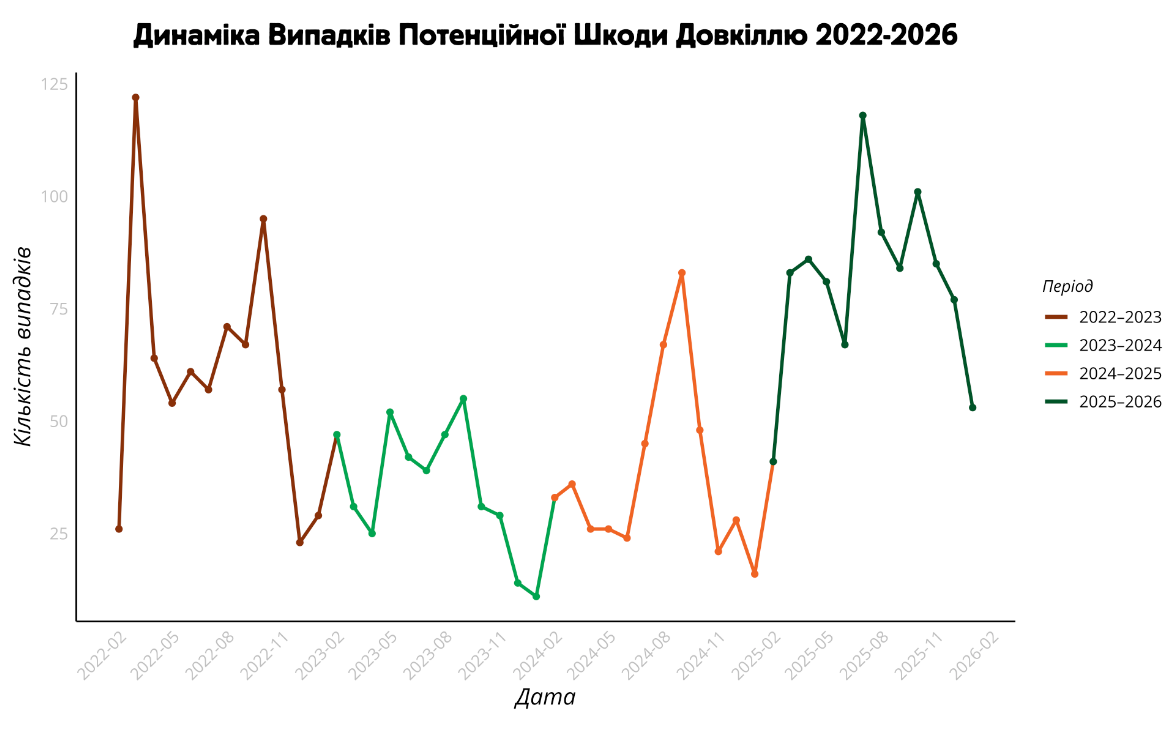
While the Ecodiya team recorded 726 cases in 2022, 446 in 2023 and 442 in 2024, the highest number of incidents was recorded in 2025—931. Why? Because it was in 2025–2026 that Russia began launching targeted attacks on industrial facilities and Ukrainian infrastructure, which has led to increasingly dire consequences for the environment.
Analysis of the environmental and climatic consequences will also continue after the end of the war, when it will be possible to gain fuller access to data. For that reason, at present these statistics are only approximate, obtained as they are from open sources: media, social networks, Telegram channels and eyewitness testimony.
Translated by Alastair Gill
Main image source: Kreminski Lesy destroyed by the Russian invasion. Source: Suspilne. AZOV, Yuriy Gorsky.