Alexej Ovchinnikov
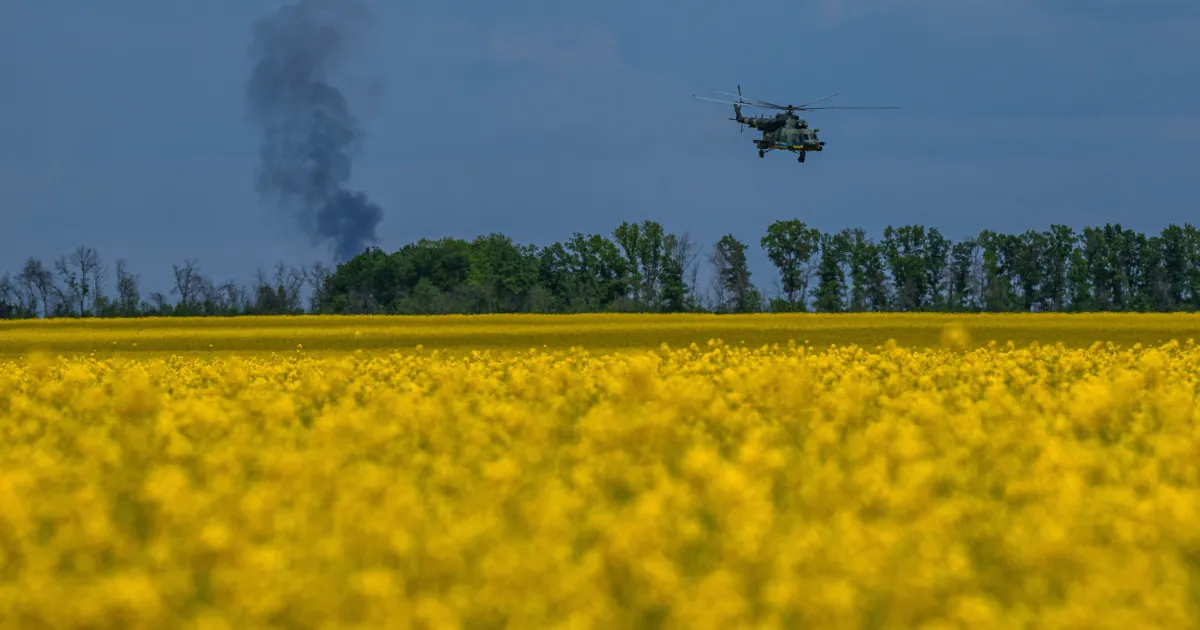
Russia’s full-scale invasion of Ukraine has entered its fifth year—the war that began in 2014 has now continued for over ten years in one form or another. It is becoming clear that the environmental and climatic consequences are only expanding and taking on new forms.
In Ukraine, people and nature alike are today concerned less with the end of the war than with how to adapt to it. This is no easy task: destruction is taking on ever newer forms. Whether it is fields covered with webs of optic fibers or frozen apartments in Kyiv, what we are seeing today would have been impossible to imagine in the first years of the invasion.
One thing is obvious: the consequences of the war will remain with Ukraine for decades to come. Mined fields, burned forests, polluted soils and waters—just like climate change, these consequences are unavoidable. Organizations, activists and experts will need to find ways of adapting to these, having done all they can to ensure that the future of Ukraine and the entire region is both sustainable and green.
But it will only be possible to truly adapt when the war ends—or at least, once its active phase is over. For now, we can only monitor the changes and continue to shout as loudly as possible that the consequences of the Russian invasion are not limited solely to Ukraine—they are spreading around the world. Now, when international support for Ukrainian society and nature is beginning to wane, this alarm should be sounded even more loudly.
The consequences of the war have moved beyond Ukraine and Russia
The high-profile environmental disasters caused by the war are having increasingly international consequences. The 2024 petroleum oil spill in the Kerch Strait was one of the worst Black Sea disasters in history. It occurred because Russia, eager to quickly load its “shadow fleet” with oil, violated all standards and permitted river vessels to sail out into the open sea during a storm.
As old and uninsured shadow fleet vessels continue to sail around the world, an accident could potentially occur at any moment, triggering a new disaster.
Read more:
- International reaction to the Kerch Strait oil spill
- Military oil spill: How the Kerch Strait tanker disaster is linked to Russia’s ‘shadow fleet’ oil exports
- Military oil spill (2): Scale and consequences of the catastrophe for flora and fauna and the region’s ecosystems
International institutions and organizations no longer have any real influence over Russia. Moscow is simply withdrawing from international agreements, as its exit from the Ramsar Convention on Wetlands demonstrated so clearly. All of this leads to the erosion of international institutions and their influence. For the sake of fairness, we should note that Russia is not alone here: the United States is also devaluing international agreements, threatening humanity’s struggle to adapt to climate change.
Read more:
- Between war and nature conservation: Who wins when aggressor countries withdraw from environmental agreements?
- The Ramsar split—was it inevitable, and what should be done next?
The politicization of the environmental and climate agenda is also a factor. One of the reasons for Russia’s withdrawal from the Ramsar Convention was what the Kremlin described as the excessive political bias of the convention committee. However, Russia itself is not above political terrorism when it comes to ecology, environmental protection and climate change. A good example is the detention of the Ukrainian biologist Leonid Pshenichnov shortly before a session of the Commission for the Conservation of Antarctic Marine Living Resources. The arrest was clearly politically motivated—Russia was attempting to protect its ambitions in Antarctica, related, among other things, to krill fishing and the development of hydrocarbon resources on the Antarctic shelf.
Another example is the creation of nature reserves in occupied territory. In attempting to achieve international recognition of Ukrainian conservation areas as Russian—as it is doing in the Donetsk region—Moscow is trying to essentially formalize political annexation.
Read more:
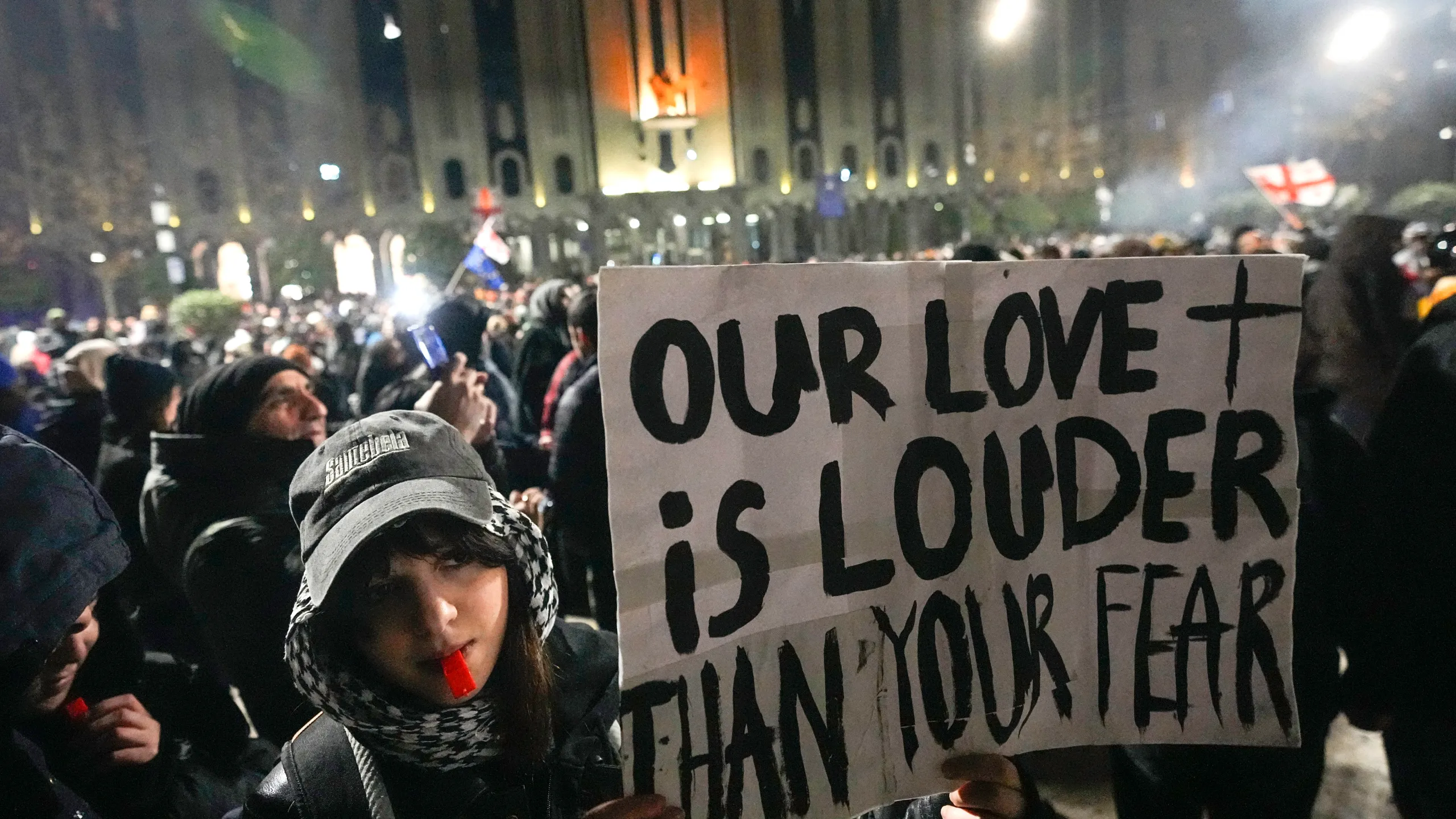
The politicization of the environmental and climate movement is growing in Eastern Europe, the Caucasus and Central Asia. Activists are increasingly facing persecution, and their activity is being stigmatized under the label of “foreign agents.” Political persecution of the environmental movement reached unprecedented levels in Belarus in 2020–2021. Persecution of “undesirables” continues in Russia, while repression against environmental activists is gathering momentum in Georgia.
Read more:
- Environmental and Climate Activism in the time of invasion: Georgia
- Environmental and Climate Activism in the time of Invasion: Belarus
- Environmental and Climate Activism in the time of invasion: Ukraine
New forms of environmental pollution
Military technologies continue to develop, a process that is inevitably accompanied by the appearance of new forms of pollution. Currently, the most discussed example is the pollution of frontline areas with optic fiber from FPV (first-person-view) drones. FPV drones are controlled via multi-kilometer fine fiber optic cables, making them resistant to radiation and electronic warfare systems. These threads have already covered almost the entire frontline with tangled webs of fibers. Yet, this is such a new form of pollution that experts are as yet unable to fully predict its consequences.
Read more:
Ukraine faced unbelievably intense missile attacks this winter, evidently the result of a Russian policy of trying to force Kyiv into a peace deal. This also led to new forms of pollution. For example, to significant spills of sunflower oil into the Black Sea. Although these types of incidents have occurred in wartime in the past, the scale of the recent spills stands out, raising questions about the need to develop standards for cleanups of non-petroleum oil.
Read more:
Nature is also adapting to the war, using the environmental consequences in its own interests. However, this adaptation is often dangerous for people. In summer 2025, the south of Ukraine was hit by an invasion of locusts. The insects took advantage of the new conditions created by the war and the new spaces for mass reproduction that appeared as a result of the destruction of the Kakhovka dam, as well as the suspension of agricultural activity. Climate change, which the war is only intensifying, has also played a significant role.
Read more:
Conducting environmental analysis is becoming harder
At the very least, this is because the war is not ending. Conducting full-fledged studies in a combat zone or in occupied territory is impossible. Even the Kakhovka Reservoir, despite the expeditions organized there by Ukrainian scientists, remains terra incognita—at least, its left bank.
Read more:
In occupied territory, it is very difficult to know what is taking place. The indirect evidence indicates that protected areas there are under threat of degradation and plunder. This means that Ukraine is continuing to lose unique biotopes and ecosystems. An investigation by journalists from URSA.MEDIA has shown that the Askania-Nova reserve’s unique animal collection is basically being sold off. There are increasingly frequent reports that previously intact forests, primarily in the Donbas steppe, are being felled and sold. As for Crimea, there is virtually no reliable information about what is happening to the peninsula’s nature, as public environmental oversight is also impossible there.
Read more:
In spite of this, scientists are continuing to try and calculate the damage caused by the war and gain some understanding of which species, ecosystems and biotopes we have lost forever. For now this is limited to depressing observations, with the minimal hope that when the war ends, de-mining begins and scientists gain access to these territories, they will be pleasantly surprised to discover that some species have been able to survive this war.
Read more:
Monitoring the environmental and climatic impact of the war is more important today than ever. The international media focus is gradually shifting from Ukraine to other “hot” issues, which is allowing certain actors to actively conceal and exploit the country’s environmental problems for selfish interests.
Here at Ukraine War Environmental Consequences Work Group, we continue to tackle this daunting task despite serious financial difficulties. Our editorial team and experts are often forced to work on a volunteer basis. Unfortunately, this does not allow us to work on new projects, such as deeper open-source intelligence (OSINT) analysis, expeditions or disseminating information more effectively. Please, if you are able, we ask you to support us by making a monthly subscription or a one-time donation.
Translator Alastair Gill
Main image source: Evgeniy Maloletka/AP