
Russia’s attacks on oil terminals in Odesa, Chornomorsk, Mykolaiv and Dnipro caused massive sunflower oil spills into estuaries and the Dnipro River. Ukraine exports 5–6 million tons annually, so targeting storage facilities weakens both economy and environment.
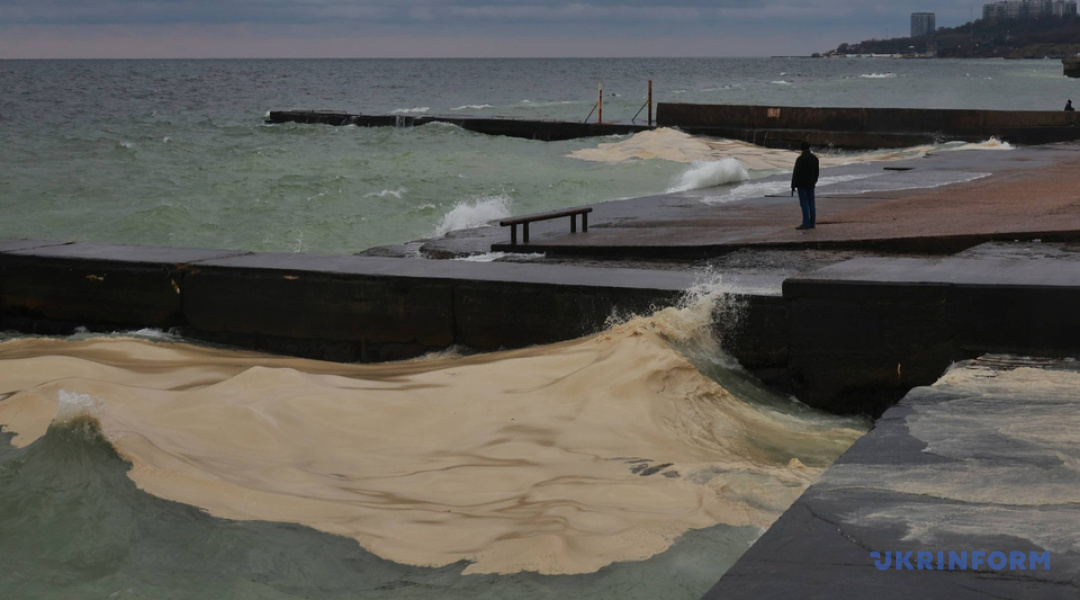
Unlike crude oil, vegetable oils were long seen as low-risk pollutants. Yet cases near Fanning Island, Vancouver, Wales, Colombia and Hong Kong prove they cause fish die-offs, seabird mortality and ecosystem shifts. During the war, repeated strikes on coastal tanks led to recurring contamination of the Ukraine’s coastal waters and rivers.
Vegetable oils biodegrade faster than crude oil, but large volumes rapidly deplete oxygen in water, triggering hypoxia and mass mortality. Sticky fats coat bird feathers and fish gills, while microbial breakdown intensifies eutrophication. Repeated spills in semi-enclosed estuaries like the Small Adzhalyk create chronic contamination, especially where water exchange with the Black Sea is limited.
Spills from shore facilities, combined with military frequency, represent a new environmental threat. A dedicated wartime response plan is urgently needed to prevent large-scale water pollution and protect Black Sea ecosystems.
Recent posts:
- Environmental consequences of the war in Ukraine: Dec 2025 – February 2026 review
- How new technology is helping make Ukraine’s demining process greener
- Building Back Business as usual: Can the Rapid Damage and Needs Assessment provide strategic planning support for green rebuilding of Ukraine?
- LNG dependency poses a risk to Europe’s climate ambitions
- Four years of full-scale war in Ukraine: the environmental perspective