Oleksii Vasyliuk, Viktoriya Hubareva
In October 2025, as the full-scale war raged on, for the first time Ukraine joined the world’s most important nature conservation body, the International Union for Conservation of Nature. This year’s World Conservation Congress was a test of the global conservation community’s readiness to speak about the war in terms of a threat to biodiversity. And the efforts of the Kyiv delegation showed that Ukraine is now a global player on the conservation scene.
The 2025 IUCN (International Union for Conservation of Nature) World Conservation Congress was a real breakthrough for Ukrainian environmental organizations. The delegation from Kyiv managed to push through a resolution on the mechanisms for working with IUCN members involved in armed conflicts, blocked an attempt by Russia to use the forum to ease sanctions, brought home international awards for its parks and partners, and also opened the path toward the creation of an IUCN Green List in Ukraine.
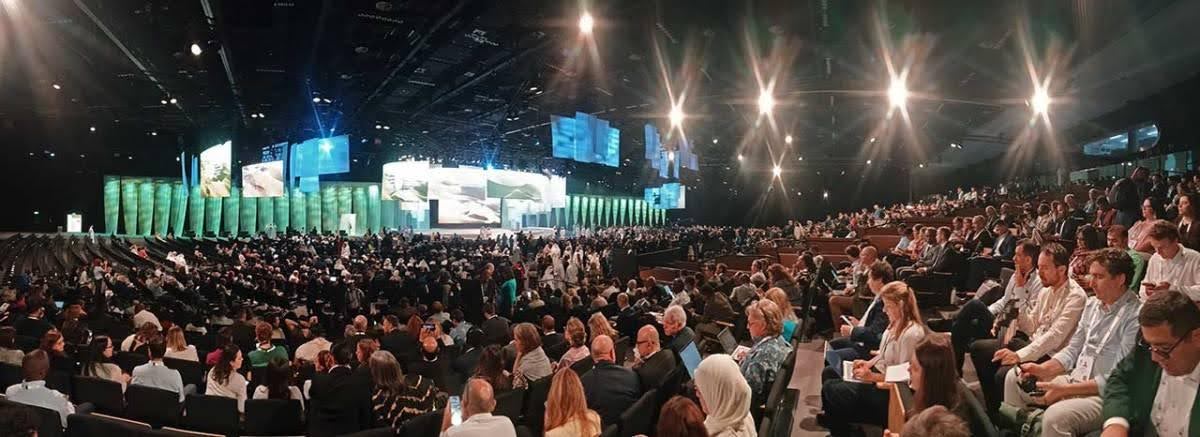
Held from October 9-15, 2025 in Abu Dhabi (United Arab Emirates), the congress was attended by around 10,000 participants, with many more joining remotely using a virtual platform provided by the organizers.
The world’s largest forum for environmental issues, the IUCN World Conservation Congress is a key global event for defenders of nature, scientists, government officials, civil society and business. It is a platform where the biggest questions concerning the protection of species and ecosystems are discussed.
At state level, Ukraine is not yet a member of the IUCN. It was represented at the congress by two public organizations: the Ukrainian Nature Conservation Group (a IUCN member since 2023) and Environment People Law (a IUCN member since 2005). At this year’s congress, the two member organizations were joined by representatives of the Nature Fund of Ukraine, the Tuzly Estuaries National Park and the Frankfurt Zoological Society in Ukraine (FZS Ukraine).
Founded in 1948, the IUCN is one of the world’s largest conservation unions, with over 1,400 members from more than 170 countries. These include government agencies, scientific institutes, public organizations and representatives of indigenous peoples. The union coordinates global efforts aimed at preserving biodiversity, developing a network of nature conservation areas, counteracting climate change and developing international environmental policies. The IUCN is the founder of the Red List of Threatened Species.
IUCN and the war in Ukraine: No more easy rides for aggressors
Before every IUCN World Congress, its members have the right to put forward official motions, which form the union’s global nature protection policy. After adoption, they become IUCN resolutions or recommendations, which determine the organization’s work agenda for the next four years and beyond.
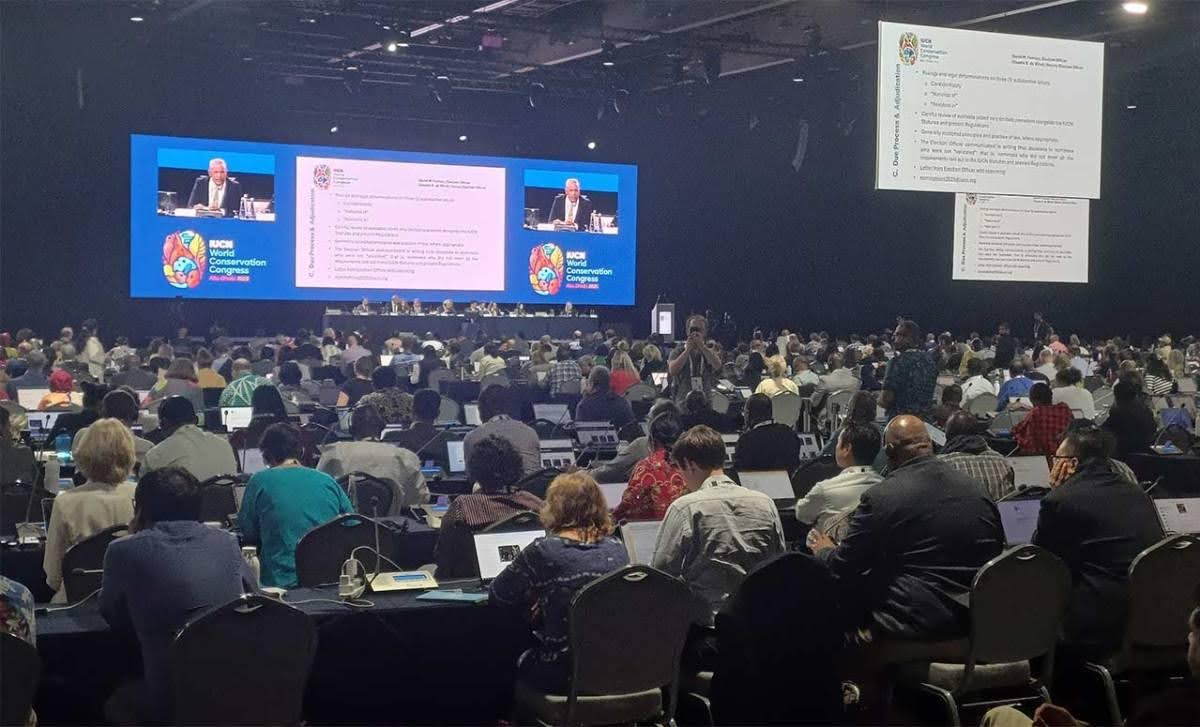
This year was the first time that the issue of the environmental consequences of the war in Ukraine was raised at the IUCN World Congress. Backed by the Nature Fund of Ukraine, the Ukrainian Nature Conservation Group initiated Motion 065, “Establishing Mechanisms for Interaction with IUCN Members Involved in Armed Conflicts”, which was adopted in an electronic vote and became an IUCN resolution. It was joined by Environment People Law, Georgia’s Caucasus Environmental NGO Network and three US groups: the Center for Large Landscape Conservation, the Earth Law Center and the Center for Environmental Ethics and Law.
What does this resolution provide? From now on, the IUCN is obligated to develop special conditions that place limits on participation for aggressor nations and organizations registered in these countries. It will also introduce other potential resolutions on armed conflicts, wars and nature protection.
Russia fails in attempt to avoid sanctions
The Russian participants of the congress—including at state level—tried to use the event for their political goals. One of the goals of the Russian delegation was to convince the congress to adopt a resolution that would amend the wording of the IUCN Charter—the organization’s main document. If adopted, this resolution would have meant that the member countries and organizations of the IUCN consider the international sanctions against Russia unjust discrimination. Additionally, they sought to cancel membership fees for Russian organizations that had “suffered” as a result of the introduction of international sanctions against the Russian Federation. These lobbying efforts were financially supported by the Russian state nuclear agency Rosatom.
Despite the fact that Russia was represented by a rather large delegation headed by a representative of the corresponding ministry, the Ukrainian team was able to convince the international community not to vote for the adoption of this resolution.
By speaking out and taking a tough position during the negotiation process, they consigned the overtly pro-Russian resolution to oblivion. Excerpts from the two-day struggle (the presentations by the Ukrainian and Russian sides) can be viewed here.
Ukrainian representative elected to IUCN executive role
Ukrainian citizen Diana Garlytska was elected IUCN Regional Councillor for Eastern Europe, North and Central Asia.

This is in recognition of her longstanding activity in climate and environmental youth diplomacy, as well as her work in the education sphere, aimed at strengthening the region’s role in the global processes of environmental protection and sustainable development.
Diana Garlytska is the founder of the Vilnius-based public organization Sustainability Narrative Institute, which works on advocacy and communication issues in the sustainable development field. She is also conducting research into green finance as part of her PhD. Her election to the IUCN Council opens up new opportunities to represent the interests of Ukraine and the countries of Eastern Europe, North Asia, and Central Asia at the international level and will contribute to strengthening cooperation on conservation.
Awards for Ukrainian national park staff and conservation leaders
The IUCN World Congress also saw a number of the Ukrainian representatives receive awards recognizing their contributions to conservation. The IUCN presented its World Commission on Protected Areas (WCPA) International Ranger Award to the team from Ukraine’s Tuzly Estuaries National Nature Park for its effective protection of the Black Sea’s coastal ecosystems, its fight against poaching and its organization of educational activities.
This distinction, which highlights the global importance of rangers in preserving biodiversity, is annually awarded by the IUCN WCPA for exceptional dedication to the cause of nature conservation. The team was nominated prior to the congress by the Ukrainian Nature Conservation Group, with the support of the Nature Fund of Ukraine. Iryna Vikhrystiuk, director of the Tuzly Estuaries National Nature Park, was on hand to receive the award.
The 2025 award was given to 13 rangers and teams (six teams and seven personal distinctions) from different countries for their courage, perseverance and hard work on the frontlines of environmental protection. Award winners receive financial support of $5,000-$25,000 for continuing their conservation work.
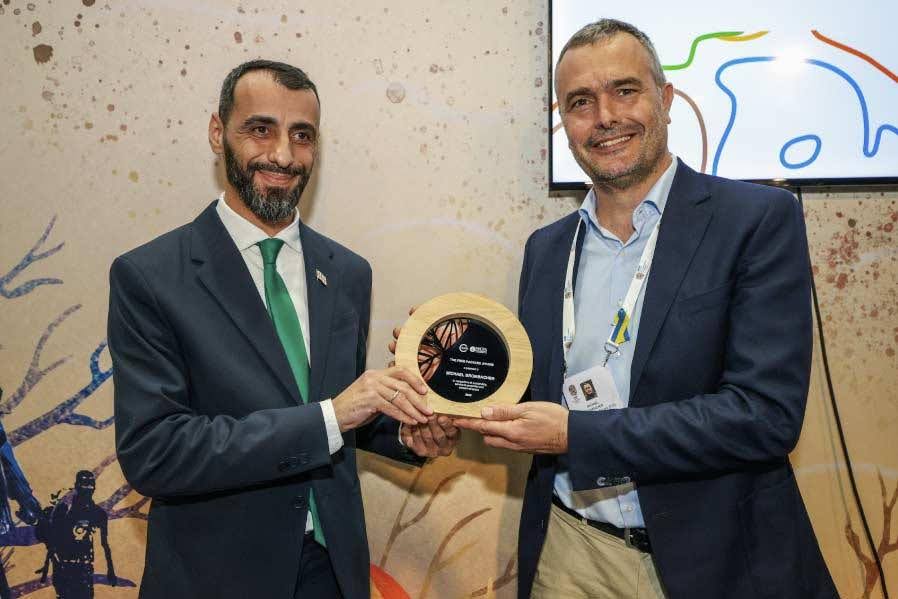
There was also an award for Michael Brombacher, director of FZS Ukraine. The IUCN World Commission on Protected Areas (IUCN WCPA) presented him with its Fred Packard Award—one of the most prestigious international nature conservation honors. This award recognizes his longstanding dedication and personal contribution to the development and protection of nature conservation territories around the world.
During the ceremony, Brombacher talked about the role of Ukrainian national parks during the war. He underlined that the war has given the parks a new significance—they have become a space of solidarity and support. “This award is for all the brave people who are protecting Ukraine’s nature in spite of the war,” he said in his acceptance speech.
Ukrainian conservation groups step up to shape dialogue
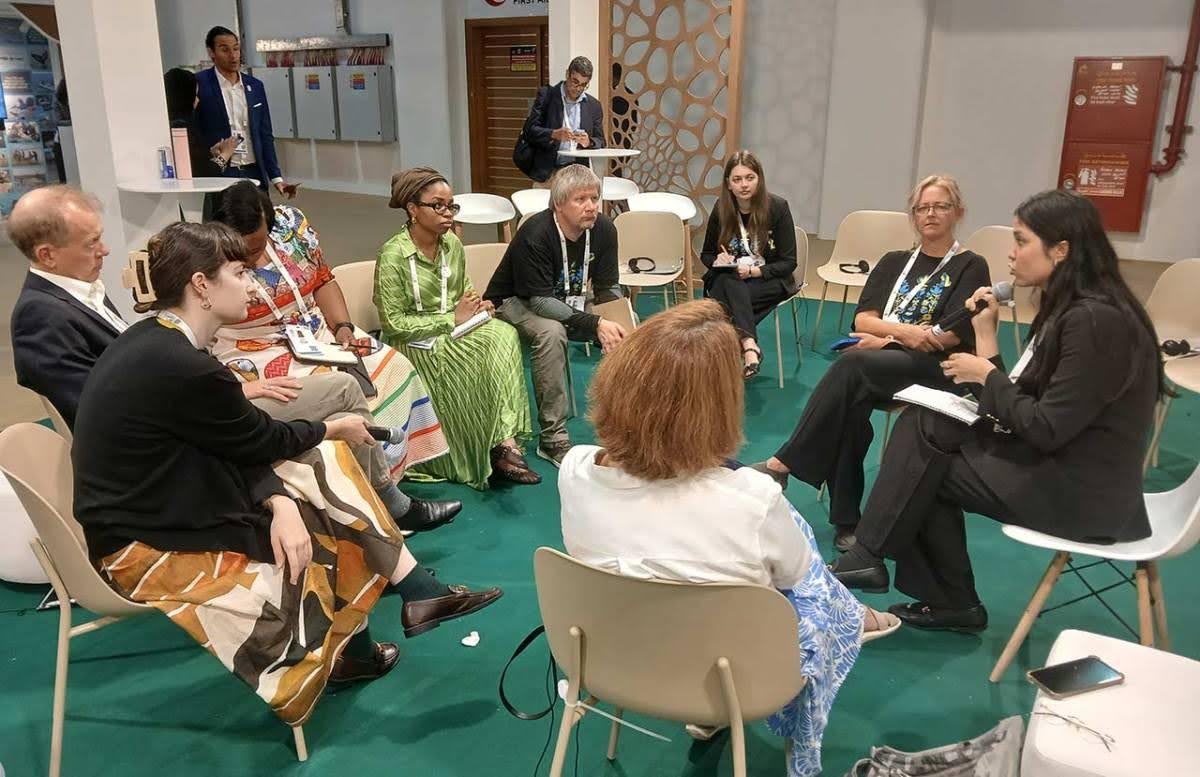
Away from the awards, a team from the Ukrainian Nature Conservation Group and the Nature Fund of Ukraine organized a number of events at the congress, including a session dedicated to the “Role of Youth Engagement and Intergenerational Dialogue in Conservation in Conflict and Post-Conflict Situations.”
This event was aimed at discussing the role of youth in conservation activities during and after the war, as well as finding a way to establish effective intergenerational dialogue between young leaders, scientists, human rights activists and administrators of protected areas. The session was held in the form of a reflective dialogue, which allowed the participants to share their personal experience and views on the subject of the importance of intergenerational dialogue and youth leadership, especially in the context of the war and post-war recovery. The session was moderated by Anna Kovbasniuk, Anastasiia Drapaliuk and Hryhoriy Kolomitsev.
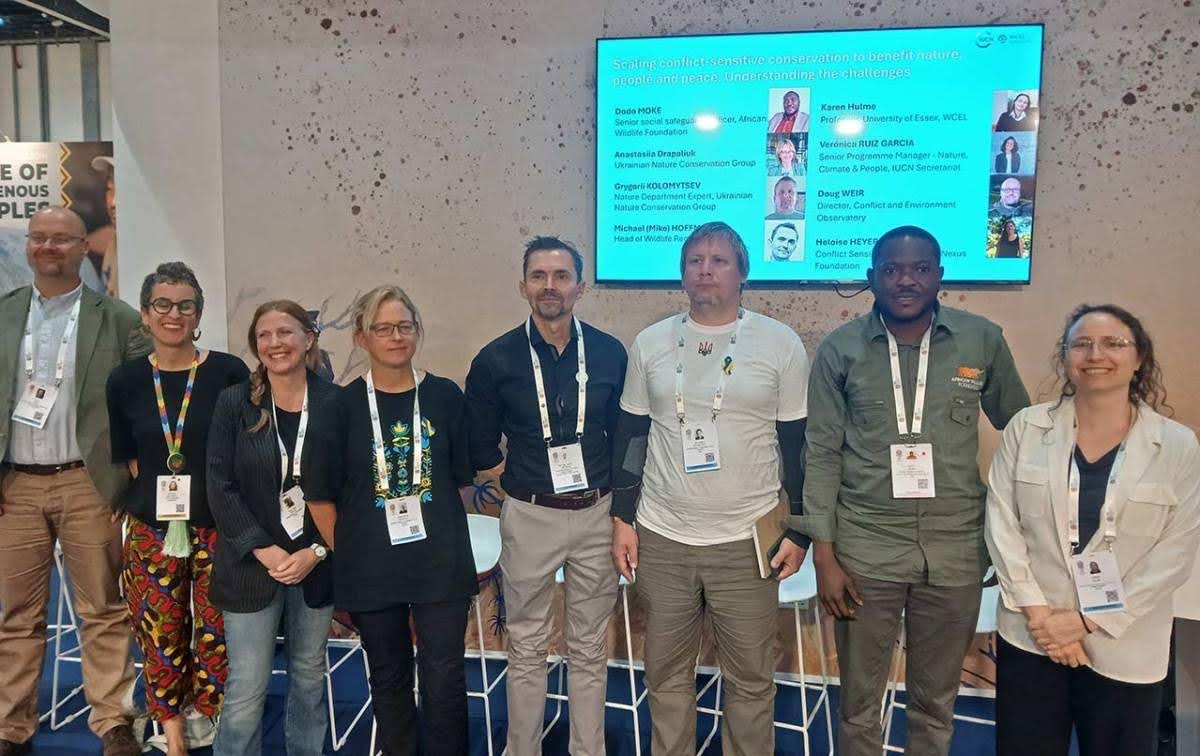
Elsewhere, the session “Scaling Conflict-Sensitive Conservation for Nature, People, and Peace: Understanding the Challenges” was devoted to how wars affect nature conservation, and how conservation activity can facilitate peace. The participants discussed legal and political instruments for protecting the environment during armed conflicts, as well as ways of scaling “conflict-sensitive protection of nature”—an approach taking into account the risks of violence, instability and social tension.
Representing Ukraine in this session were Hryhoriy Kolomitsev and Anastasiia Drapaliuk. Kolomitsev spoke about the scale of destruction of Ukraine’s protected areas as a result of Russian aggression, while Drapaliuk—the wartime realities of life for Ukrainian conservation bodies and the necessity of expelling Russia from international conservation organizations.
The question of the consequences of Russian aggression for nature was echoed in other sessions. During the session “Protecting Nature in Times of Conflict: Ensuring Environmental Justice and Sustainability,” the speaker, Dr. Matrah Al-Mutairi (Kuwait Institute for Scientific Research), noted that the war in Ukraine is one of the three most destructive armed conflicts for the environment of the 21st century. In her talk she looked at the environmental consequences of wars in the context of international humanitarian law and environmental justice, citing examples from the Persian Gulf, Vietnam and Ukraine.
Ukrainian national parks and reserves to get camera traps
The congress also produced some immediate practical benefits for Ukraine’s conservation areas. The Nature Fund of Ukraine signed an agreement with the US organization Wildlife Protection Solutions to supply camera traps for the study of nature in national parks and reserves in Ukraine. A trial shipment of camera traps has already been sent. Apart from equipment, the American partners have also undertaken to organize training for the state security service for protected areas.
Piloting a standard for the IUCN Green List
Finally, the Nature Fund of Ukraine has held talks on the introduction of a IUCN Green List pilot standard. This is an instrument that gives the opportunity to evaluate the quality of the management of a conservation zone in accordance with IUCN standards and give recommendations on improvements that can be made in order to reach these standards. As of today, these standards have already been introduced in over 600 conservation areas in 60 countries.
Translated by Alastair Gill
Main image source: IUCN