Skip to content
  • EN
  • UA
  • RU
Ukraine War Environmental Consequences Work Group

Ukraine War Environmental Consequences Work Group

Seeking solutions through information sharing about the environmental impacts of the war. UWEC Work Group.

  • Home
  • About UWEC
  • Issues
    • Issue #33
    • Issue #32
    • Issue #31
    • Issues 21-30
      • Issue #30
      • Issue #29
      • Issue #28
      • Issue #27
      • Issue #26
      • Issue #25
      • Issue #24
      • Issue #23
      • Issue #22
      • Issue #21
    • Issues 11-20
      • Issue #20
      • Issue #19
      • Issue #18
      • Issue #17
      • Issue #16
      • Issue #15
      • Issue #14
      • Issue #13
      • Issue #12
      • Issue #11
    • Issues 1-10
      • Issue #10
      • Issue #9
      • Issue #8
      • Issue #7
      • Issue #6
      • Issue #5
      • Issue #4
      • Issue #3
      • Issue #2
      • Issue #1
  • Highlights
  • Contacts
  • Resources
    • Webinars
  • Toggle search form

Author: Editor

Fiber-optic drone waste in Ukraine: environmental impact and post-war risks

Posted on February 11, 2026March 13, 2026 By Editor No Comments on Fiber-optic drone waste in Ukraine: environmental impact and post-war risks

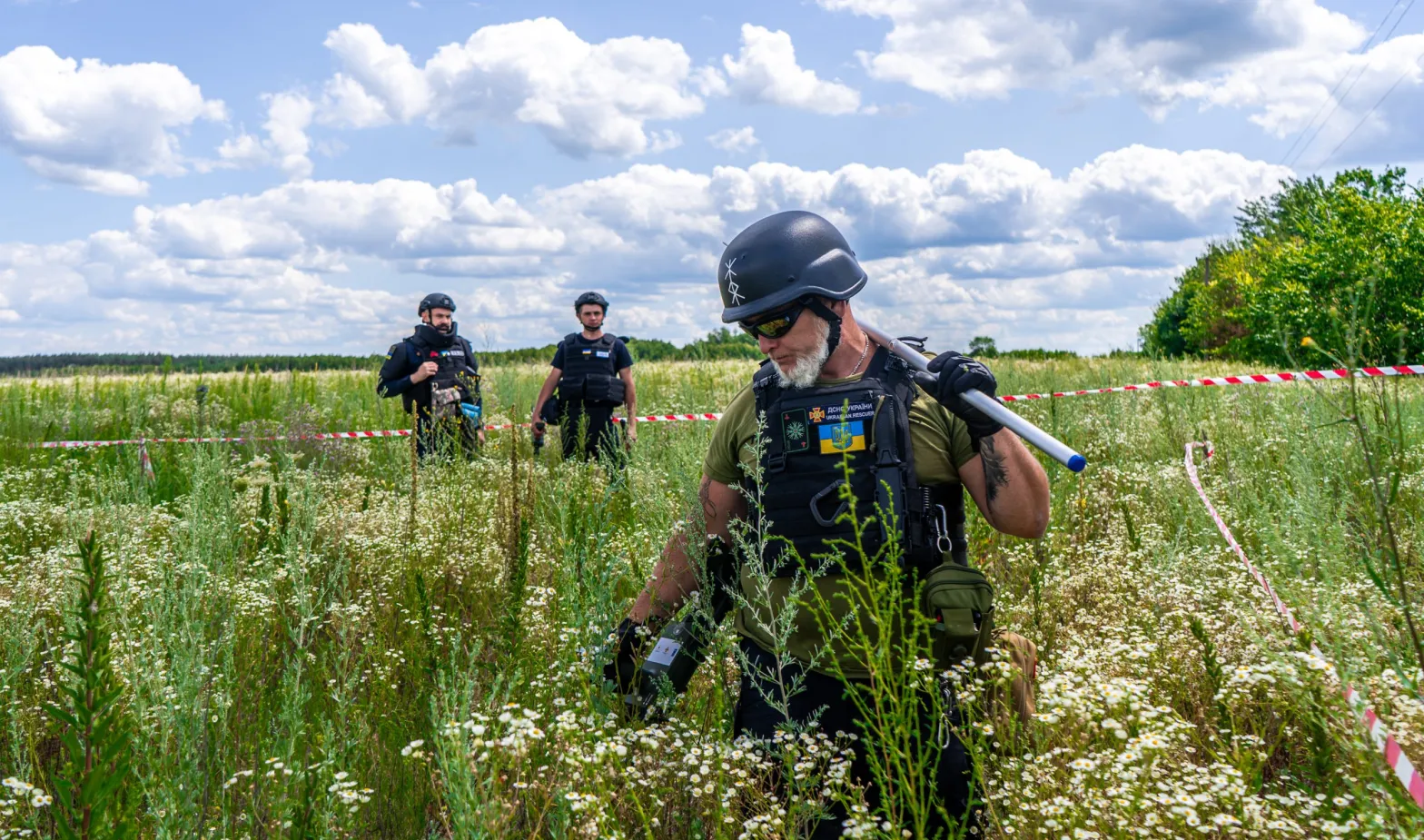
After hostilities end, Ukraine will prioritize demining, not fiber-optic cleanup. So far, ordnance units report no confirmed interference from fiber-optic cables, leaving the demining impact unresolved. Scientific research on fiber-optic pollution is still at an early stage. Experts agree that long-term monitoring is essential to assess real environmental consequences. The main concern is microplastic formation…

Read More “Fiber-optic drone waste in Ukraine: environmental impact and post-war risks” »

Highlights

Fiber-optic drone pollution in Ukraine: environmental risks and scientific uncertainty

Posted on February 10, 2026March 13, 2026 By Editor No Comments on Fiber-optic drone pollution in Ukraine: environmental risks and scientific uncertainty

First-person-view (FPV) drones leave long fiber-optic threads across frontline fields, forming visible webs on soil and vegetation. Research on their environmental impact is just beginning, and long-term effects on soil, plants and wildlife remain unclear. Fiber-optic cables are made mainly from PMMA plastic, which degrades into micro- and nanoplastics over time. Studies suggest these particles…

Read More “Fiber-optic drone pollution in Ukraine: environmental risks and scientific uncertainty” »

Highlights

Fiber-optic drones in Ukraine: military advantage and emerging environmental risks

Posted on February 9, 2026March 6, 2026 By Editor No Comments on Fiber-optic drones in Ukraine: military advantage and emerging environmental risks

Fiber-optic drones have recently appeared on the frontlines of Russia’s war against Ukraine. These UAVs deploy thin optical cables that remain in forests, fields, and soil, forming large debris networks with unknown ecological impacts. The war is often described as a “drone war,” with both sides using UAVs to strike targets remotely and reduce human…

Read More “Fiber-optic drones in Ukraine: military advantage and emerging environmental risks” »

Highlights

Fiber-optic web: How the use of drones on the frontlines impacts the environment

Posted on February 9, 2026March 5, 2026 By Editor No Comments on Fiber-optic web: How the use of drones on the frontlines impacts the environment
Fiber-optic web: How the use of drones on the frontlines impacts the environment

Inha Pavlyi

Read More “Fiber-optic web: How the use of drones on the frontlines impacts the environment” »

Direct Impact

How Ukraine can integrate environmental security into its national defense strategy

Posted on February 5, 2026March 12, 2026 By Editor No Comments on How Ukraine can integrate environmental security into its national defense strategy

Ukraine can make nature a key pillar of national security through coordinated action by the state and society. Environmental risks must be integrated into national security strategies and treated on par with military threats. Creating multi-lateral expert teams within the National Security and Defense Councils would allow for rapid responses to environmental pollution and ecological…

Read More “How Ukraine can integrate environmental security into its national defense strategy” »

Highlights

Environmental security in the Middle East: lessons from Israel, Palestine, and Lebanon

Posted on February 4, 2026March 12, 2026 By Editor No Comments on Environmental security in the Middle East: lessons from Israel, Palestine, and Lebanon

Israel demonstrates how environmental security can be integrated into national defense and diplomacy. Climate risks are treated as threat multipliers affecting water, food, migration and regional stability. Israel’s National Adaptation Plan incorporates climate risks into defense assessments and allocates significant funding for monitoring and the development of resilient infrastructure. Advanced environmental monitoring relies on satellite…

Read More “Environmental security in the Middle East: lessons from Israel, Palestine, and Lebanon” »

Highlights

Occupied agricultural lands and biodiversity at risk in Ukraine

Posted on February 3, 2026March 6, 2026 By Editor No Comments on Occupied agricultural lands and biodiversity at risk in Ukraine

While the country’s eastern regions now under Russian occupation are primarily industrial areas, the southern expanse of Crimea and Kherson has historically been central to agriculture, botany and biodiversity. Although Ukraine covers less than 6% of Europe’s landmass, it is home to about 35% of the continent’s biodiversity. Many of the country’s rare and endemic…

Read More “Occupied agricultural lands and biodiversity at risk in Ukraine” »

Highlights

Environmental security in Ukraine: war, ecocide, and recovery

Posted on February 3, 2026March 12, 2026 By Editor No Comments on Environmental security in Ukraine: war, ecocide, and recovery

Environmental security links clean air, safe water, fertile soils, and public health to the survival of society. Ukrainian legislation defines it as the prevention of environmental degradation and threats to human health through the actions of the state, businesses, and citizens. Russia’s full-scale invasion has raised the issue of Ukraine’s environmental security to a new…

Read More “Environmental security in Ukraine: war, ecocide, and recovery” »

Highlights

Environmental security: a key element of Ukraine’s national policy

Posted on February 3, 2026February 3, 2026 By Editor No Comments on Environmental security: a key element of Ukraine’s national policy
Environmental security: a key element of Ukraine’s national policy

Polina Tsybulska

Read More “Environmental security: a key element of Ukraine’s national policy” »

Civil society, Crisis & Cooperation, Environmental Policy

Wetlands as natural defense: how the Irpin wetlands stopped Russian tanks

Posted on January 29, 2026March 3, 2026 By Editor No Comments on Wetlands as natural defense: how the Irpin wetlands stopped Russian tanks

Wetlands provide a variety of services: support biodiversity, regulate waterflow, and help to mitigate climatic impacts. They store carbon, recharge groundwater and reduce flood risks. The Ramsar Convention on Wetlands and EU environmental frameworks recognize their critical ecosystem services. The war has reshaped defense thinking in Europe. Latvia now restores peatlands as natural military barriers….

Read More “Wetlands as natural defense: how the Irpin wetlands stopped Russian tanks” »

Highlights

Posts pagination

Previous 1 2 3 4 … 22 Next
  • Twitter
  • Facebook
  • YouTube
  • Telegram
  • Bluesky
Support Us

Topics

  • Civil society (36)
  • Climate Crisis (11)
  • Crisis & Cooperation (49)
  • Direct Impact (56)
  • Ecosystems (64)
  • Environmental Policy (82)
  • Green Recovery (42)
  • Highlights (30)
  • Issues (1)
  • Sanctions (12)
  • Uncategorized (8)
  • Webinars (11)

Sign-up for Our Issues:

Copyright © 2022-2025 Ukraine War Environmental Consequences Working Group.

Powered by PressBook News WordPress theme