Yelizaveta Temchenko
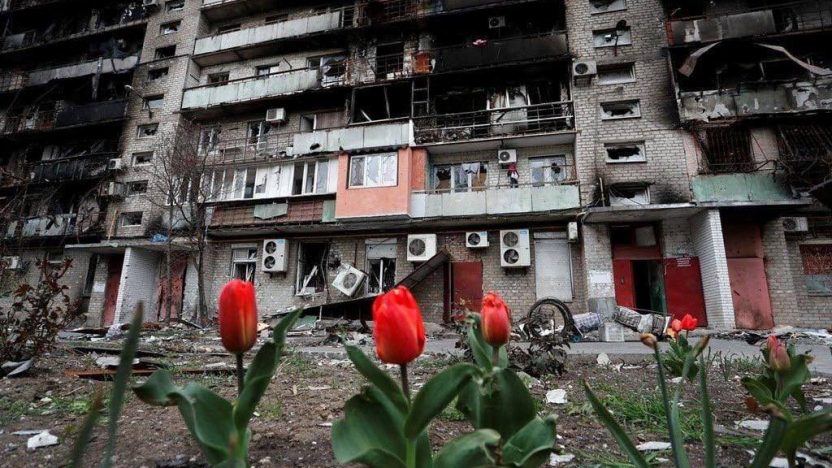
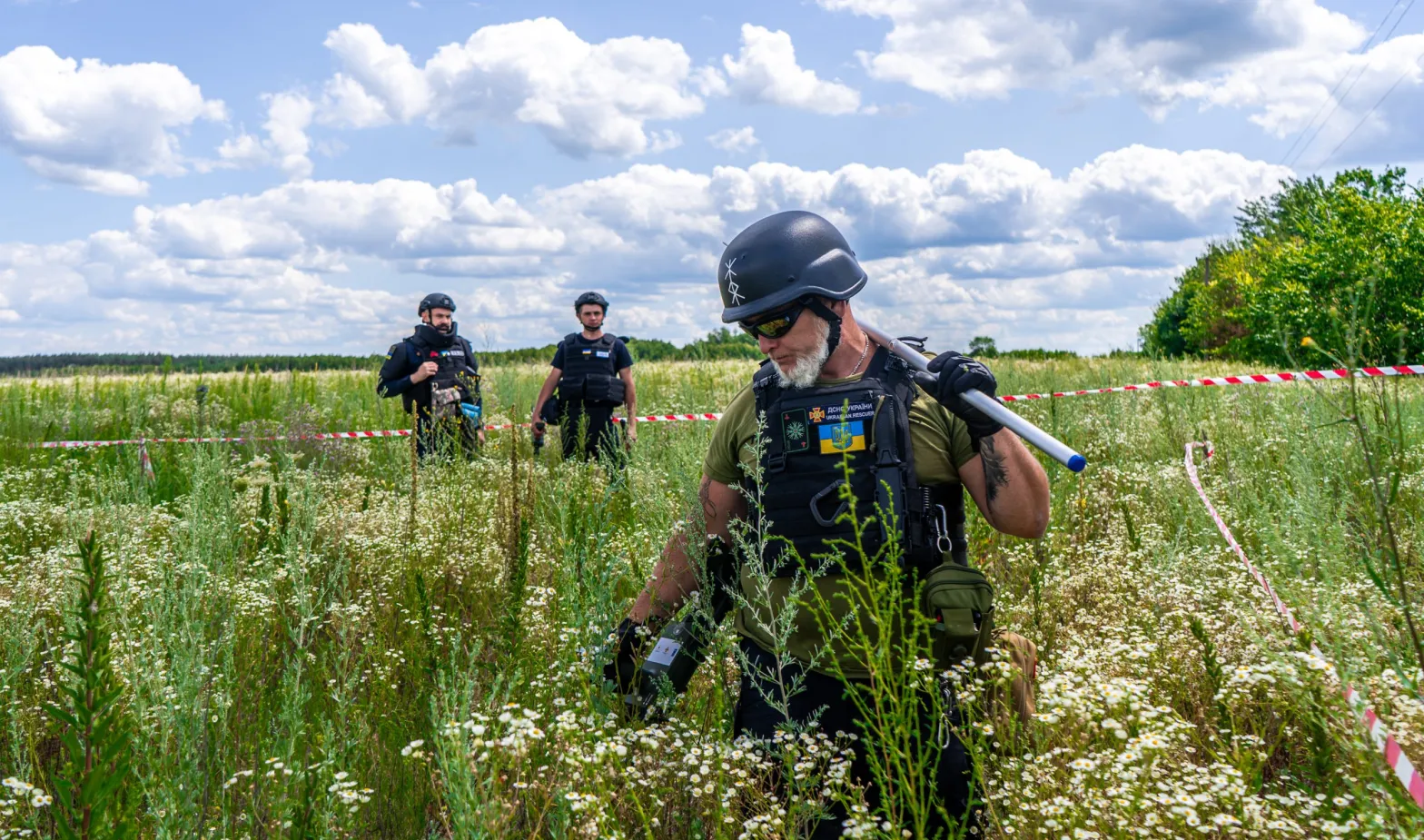
Russia’s war on Ukraine has resulted in large tracts of land being seriously polluted with explosive objects and damaged by military action. These dangerous areas require clearing before they can be returned to agricultural, infrastructural or conservation use. New technology promises to play an invaluable role in this process.
In the course of Russia’s full-scale war against Ukraine, humanitarian demining—the removal of mines and explosive objects from land with the aim of ensuring safe access for people—has become one of the key areas of state policy and community engagement in the country. Demining is also linked to other important aspects of the rebuilding process: the restoration of agricultural production, the development of transportation and critical infrastructure, the functioning of communities (hromady) and the protection of the environment. It will only be possible to fully rebuild Ukraine after the issue of demining, which also significantly affects the macroeconomy, is resolved. Apart from the central government agencies and hromady, Ukraine’s partners, investors and mine clearance operators are also interested in demining, and are already forming a thriving “humanitarian demining market.”
For environmentalists, the issue of mine clearance is of fundamental importance, not only because of its impact on human safety, but also because of how and where demining takes place. Large-scale mechanized clearance of territory—involving deep plowing of soil, the destruction of plant cover and the use of explosive methods—frequently inflicts even greater damage upon nature than the mining itself. Explosions after detonation lead to additional chemical pollution of soils and water, the destruction of soil-based organisms and damage to the ecosystem. For this reason, the choice of demining methods and the identification of sectors which will be possible to use after demining are key environmental protection and safety issues. Without the integration of environmental criteria in mine clearance planning, Ukraine risks finding itself in a situation in which it will be paying mine clearance operators for work leading to an irreversible degradation of ecosystems. This directly contradicts the aims of recovery, climate resilience and the preservation of biodiversity. Until recently, however, there has been no public discussion of environmental criteria and restrictions in the demining process.
Bringing environmental demining in Ukraine to an international audience
In December 2025, Kyiv hosted the Demine Ukraine Forum 2025, a key event devoted to humanitarian mine clearance systems in Ukraine. Organized by the Ministry of Economy, Environment and Agriculture of Ukraine and the Center for Humanitarian Demining, the forum brought together government representatives, international partners, donors, technical specialists, humanitarian organizations and researchers. Together, these parties are shaping policy for postwar cleanup operations in Ukraine.
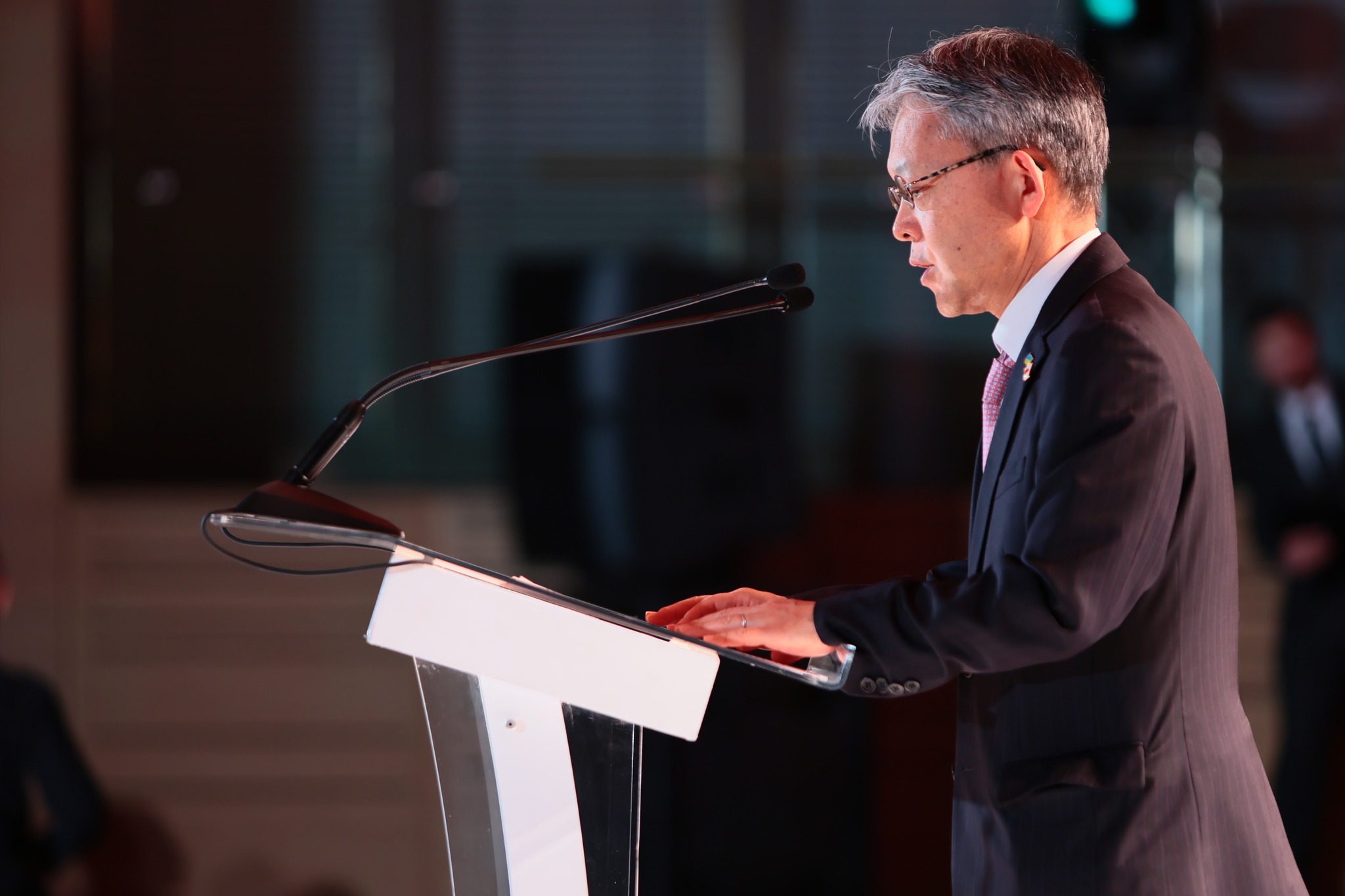
Ukrainian Minister of Economy, Environment and Agriculture Alexei Sobolev and his deputy Igor Bezkaravainy gave speeches at the grand opening. They were joined by international partners, including Ambassador Extraordinary and Plenipotentiary of Japan Masashi Nakagome, as well as representatives of the United Nations Development Program, EU and other diplomatic missions.
The speakers were unanimous in their agreement that demining is not merely a technical challenge, but a strategic investment in safety, the economy and the possibility of rebuilding the country. The forum’s foreign participants were keen to underline their interest in the recovery of agricultural land after demining and the achievement of pre-war production volumes of food, animal feed and industrial crops in Ukraine.
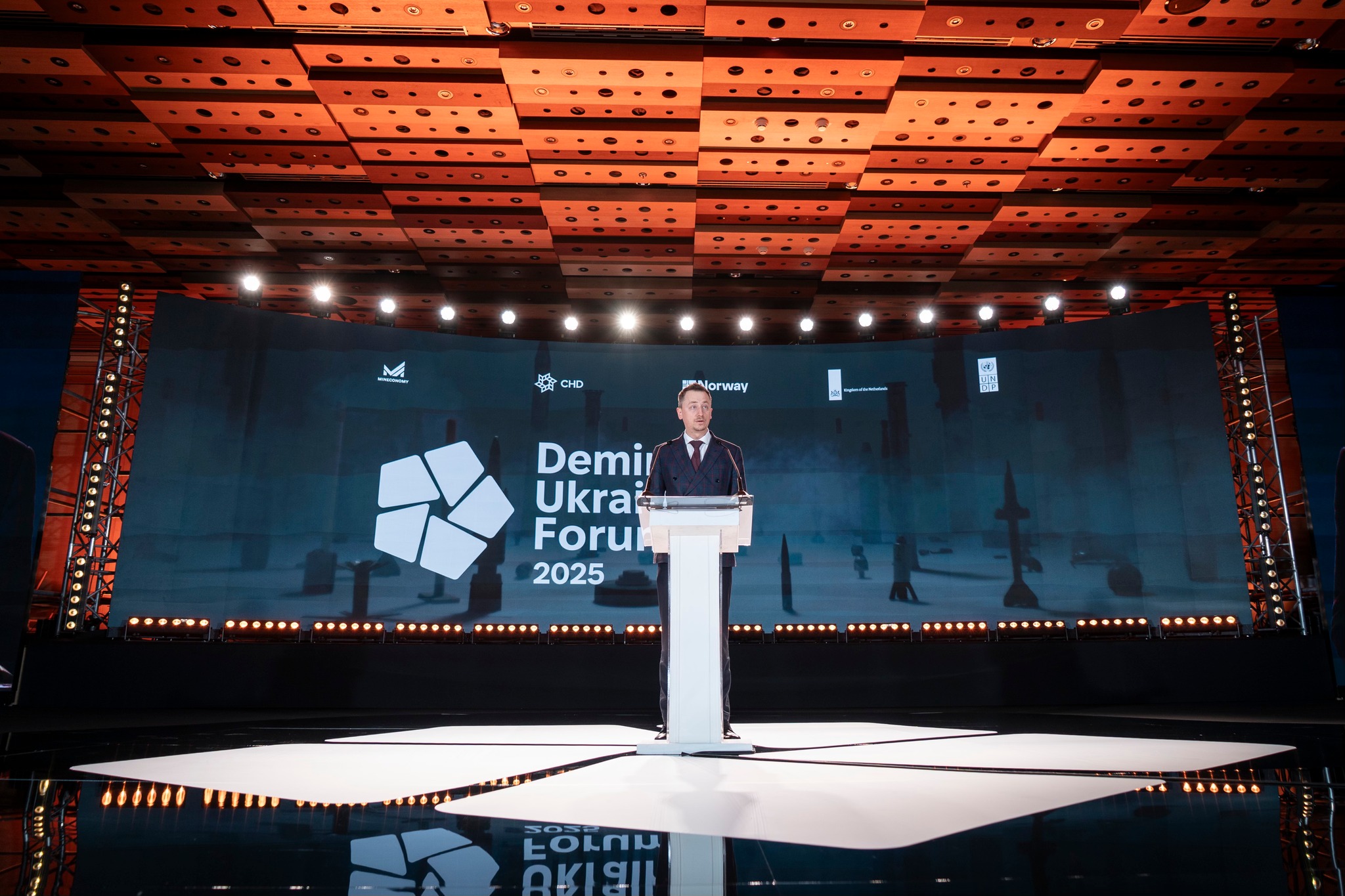
The environmental aspect was also echoed at the forum by Deputy Minister of Economy, Environment and Agriculture Igor Bezkaravainy, who outlined three main principles for making mine clearance environmentally safe:
- Humanitarian demining should not be a spontaneous process determined only by the availability of funding and the readiness of operators to carry out demining work. The process should be supervised by the Ministry of Economy, Environment and Agriculture of Ukraine;
- The methods used for demining should correspond to environmental requirements and restrictions, and should not be selected on the basis of which is cheaper or more convenient for the operator;
- Far from all sectors will return to agricultural use after demining is completed, since in some areas military action has raised pollution levels so far that it is already impossible to grow foodstuffs there.
There are a number of restrictions to be taken into consideration when choosing suitable demining methods, including the presence of nature reserve fund territories and zones belonging to the Emerald Network (a pan-European network of conservation areas), where the use of machine demining is prohibited. Some sectors require delicate cleanup methods or the imposition of special access regimes.
It is extremely valuable that an understanding of the environmental aspects of demining is being voiced at such a high level—and even more importantly, that it has been met with support from technology developers. This is logical, since unconsidered or extraordinarily aggressive use of machine demining can lead to mechanical damage to natural ecosystems: destruction of soil cover and the grass layer, damage to forest litter, reduction of soil fertility, etc. The products of explosions and the remains of explosive substances represent a separate threat: these pollutants can enter the soil and groundwaters. The use of an incorrectly chosen demining method can therefore result in the extended degradation of ecosystems even after the end of military action.
GRIT: A tool for integrating environmental data into the demining process
It is now possible to identify any environmental restrictions and calculate priorities for demining with an automated system that removes the risk of human error. A system like this, which prepares recommendations for demining operators for each mined sector by analyzing large amounts of data, was presented at the Demine Ukraine Forum 2025.
GRIT (Government Risk Information Tool), created by Demine Ukraine, the Center for Humanitarian Demining and Ukraine’s Ministry of Economy Environment and Agriculture is not simply a database. It is a digital platform that aggregates current data on territories that have suffered from this war’s impact. It also uses analytical models to facilitate high-quality and informed decision-making on which areas require priority demining.
For Ukraine, GRIT is the first system of its kind, and introduces the concept of “smart demining,” maximizing results relative to invested effort. GRIT is being developed by Ukrainian experts and scientists working in the fields of ecology, economy, the social sciences, geographic information systems and data engineering.
The team of developers working on GRIT have already fed the system with data on the boundaries of nature reserve fund and Emerald Network areas, as well as the relief of terrain (restrictions on mechanized demining on slopes are intended to protect them from further erosion). They also plan to integrate data on the location of Red Book-listed plant species and rare and vulnerable types of biotope.
The tool will be able to automatically combine satellite data with GIS cartographic layers, allowing operators to see instantly where the use of mechanized demining could be unacceptable, dangerous or lead to irreversible environmental damage.
The core of the GRIT system is the creation of a digital twin (a virtual replica of a physical object or process) for each sector, including a comprehensive data set from different sources:
- satellite photos;
- cadastral data;
- non-technical survey (NTS) data;
- crater identification;
- elevation maps;
- environmental restrictions (protected areas and the Emerald Network);
- condition of vegetation;
- soil maps;
- infrastructure data;
- agricultural activity data.
GRIT is a multi-level analytical model that combines more than 100 sets of spatial, economic, environmental and social data from dozens of different sources. The platform automatically integrates satellite photos, cadastral layers, data on military action and damage, topography, infrastructure, agrarian activity, logistics routes and demographic data. On this basis a digital profile for each sector is created—its own spatial, environmental and functional “passport.”
GRIT then uses AI/ML (artificial intelligence and machine learning) algorithms, which allow computer systems to train themselves on large amounts of data, to evaluate the level of risk, the complexity of demining tasks, potential types of pollution and accessibility of territory. It also shows how exactly a cleared sector can be integrated into the further social and economic development of the region where it is located. Models automatically prioritize mine clearance based on the impact on the population, economic activity, access to education, health services, key transportation hubs, energy and agricultural infrastructure. This means that a donor can also independently assess whether it is expedient to finance the demining of a particular sector.
The platform is also used to form long-term and annual plans for demining: it models the resources that will be expended, as well as completion timeframes, technical scenarios and the number of teams required to clear specific areas. GRIT does not replace international standards, but provides data and offers implementation models, making Ukrainian demining more transparent, predictable and strategically manageable.
International Mine Action Standards (IMAS) are a system of agreed rules, guiding principles and criteria that establish common approaches to the planning, organization and implementation of demining programs, in order to ensure their safety, effectiveness and consistency at all levels (from policy through to field operations). Developed under the aegis of the UN in collaboration with international experts, IMAS standards are an internationally recognized framework for operators, national authorities and donors, particularly in relation to decision-making, training, risk assessment procedures and result monitoring.
In this way, GRIT not only enables users to identify where it is advisable to carry out humanitarian demining, but also to identify the means and expected outcome of its implementation. The platform’s analytical models provide a comprehensive list of mined areas ranked by priority, taking into account the social, economic and environmental benefits of mine clearance, and also assessing the complexity of the work and the resources required to carry it out. In addition, the system models scenarios of further use of demined sectors—from the stage at which an area could be potentially de-occupied to its return to economic and social use, which allows for the planning of recovery, remediation and timeframes for the integration of such territories into the development of regions.
Today, humanitarian demining in Ukraine is no longer a purely technical or engineering task: it is increasingly taking on the characteristics of a comprehensive management process, combining security, economic recovery and environmental protection issues. The integration of environmental restrictions and spatial conservation data into demining planning is a necessary condition of sustainable restoration of territories, not a supplementary component. Tools like GRIT demonstrate the possibility of combining international standards, government policy and modern analytical approaches, allowing informed decisions to be taken on where and how demining should be done.
The hope is that the introduction of such solutions will bring real practical results for Ukraine and facilitate the restoration of mined areas without accompanying damage to the environment.
Source for main image: NovaUkraine
Demine Ukraine Forum 2025 was organized by the Ministry of Economy, Environment and Agriculture of Ukraine and the Center for Humanitarian Demining, with the support of the United Nations Development Program and financed by the governments of Norway and the Netherlands.