Skip to content
  • EN
  • UA
  • RU
Ukraine War Environmental Consequences Work Group

Ukraine War Environmental Consequences Work Group

Seeking solutions through information sharing about the environmental impacts of the war. UWEC Work Group.

  • Home
  • About UWEC
  • Issues
    • Issue #33
    • Issue #32
    • Issue #31
    • Issues 21-30
      • Issue #30
      • Issue #29
      • Issue #28
      • Issue #27
      • Issue #26
      • Issue #25
      • Issue #24
      • Issue #23
      • Issue #22
      • Issue #21
    • Issues 11-20
      • Issue #20
      • Issue #19
      • Issue #18
      • Issue #17
      • Issue #16
      • Issue #15
      • Issue #14
      • Issue #13
      • Issue #12
      • Issue #11
    • Issues 1-10
      • Issue #10
      • Issue #9
      • Issue #8
      • Issue #7
      • Issue #6
      • Issue #5
      • Issue #4
      • Issue #3
      • Issue #2
      • Issue #1
  • Highlights
  • Contacts
  • Resources
    • Webinars
  • Toggle search form

Kreminski Forests National Park in the Luhansk region devastated by the war

Posted on March 17, 2026April 2, 2026 By Editor No Comments on Kreminski Forests National Park in the Luhansk region devastated by the war

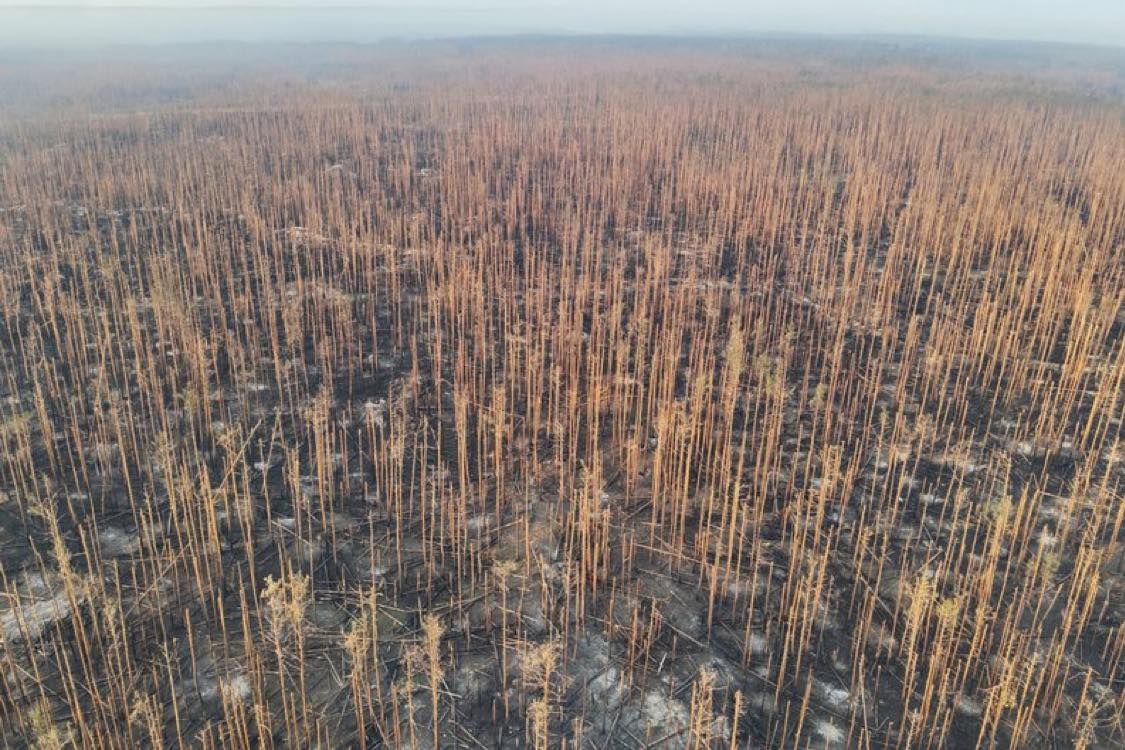
The Kreminski Forests National Park in the Luhansk region has been virtually destroyed as a result of the fighting. Established in 2019, this park was the region’s only national park and one of the largest forest areas in eastern Ukraine.

The Kreminski Forests were a unique natural phenomenon. It was an island of boreal forests in the middle of the steppe zone, formed at the confluence of the Sivirski Donets, Zherebets, and Krasna rivers. The ecosystem was characterized by high biodiversity and served as a refuge for rare species of animals and plants.
war in Ukraine, Zaporizhzhia nuclear power plant, Velykyi Luh, Kreminski Forests National Park

Environmental consequences of the war in Ukraine: Dec 2025 – February 2026 review

Historically, the Russian desman—an aquatic mammal described as Critically Endangered by the IUCN—inhabited this area. The species disappeared as early as the second half of the 20th century, though conditions for its reintroduction remained. Full-scale war destroyed these natural conditions for reintroduction as well. The forests were also home to the steppe polecat, ermine, white-tailed eagle and other rare species.

After the invasion began, both the Serebrianski Forest District and the Kreminski Forests experienced intense fighting. In 2025, the area was occupied by Russian troops, and a front line was established directly in the forest. Large-scale shelling, fires and the construction of fortifications destroyed forest ecosystems and the soil layer.

Support UWEC Work Group

Today, the territory of the Kreminski Forests National Park is controlled by the occupation administration. The remaining forest areas are being cleared for defensive structures and economic needs. According to experts, it is no longer possible to restore the former ecosystem. Over time, nature will form new natural communities, but these will be different forests and a different regional ecology.

Highlights

Related Posts

  • Russia establishes “Velykyi Luh” National Park in occupied Zaporizhzhia Highlights
  • Occupied agricultural lands and biodiversity at risk in Ukraine Highlights
  • Environmental security in Ukraine: war, ecocide, and recovery Highlights
  • How warfare destroys Ukraine’s farmland and wildlife Highlights
  • Fiber-optic drone pollution in Ukraine: environmental risks and scientific uncertainty Highlights
  • IUCN Congress 2025: Ukraine blocks Russia’s political lobby Highlights

Leave a Reply Cancel reply

Your email address will not be published. Required fields are marked *

  • Twitter
  • Facebook
  • YouTube
  • Telegram
  • Bluesky
Support Us

Topics

  • Civil society (36)
  • Climate Crisis (11)
  • Crisis & Cooperation (49)
  • Direct Impact (56)
  • Ecosystems (64)
  • Environmental Policy (82)
  • Green Recovery (42)
  • Highlights (30)
  • Issues (1)
  • Sanctions (12)
  • Uncategorized (8)
  • Webinars (11)

Sign-up for Our Issues:

Copyright © 2022-2025 Ukraine War Environmental Consequences Working Group.

Powered by PressBook News WordPress theme