Oleh Listopad
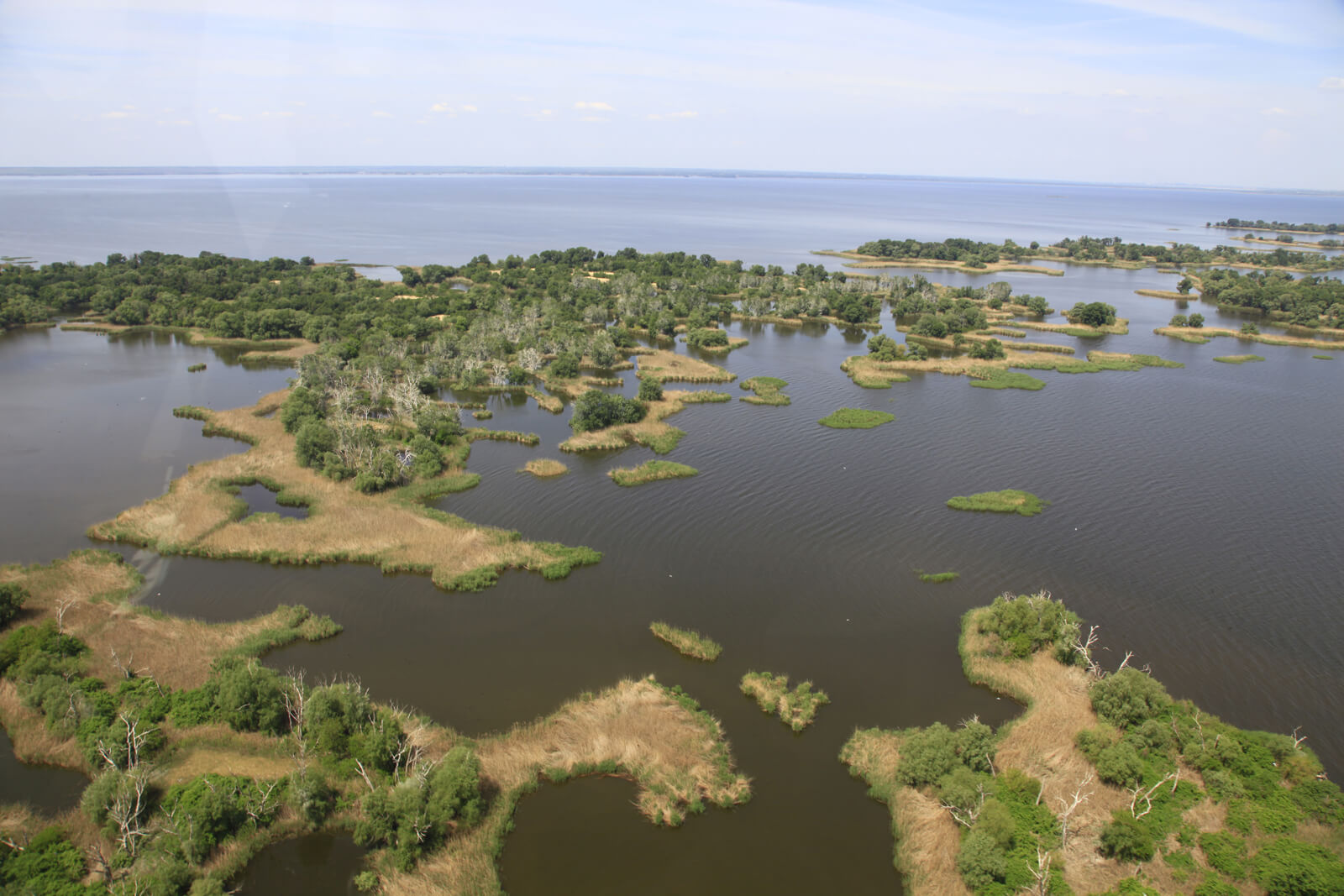
As Russia’s failed advance on Kyiv in 2022 showed, swamps can be a critical part of a country’s security infrastructure. But while EU and NATO countries are already integrating wetland restoration into their defense strategies, Ukraine still views swamps as a land reclamation resource rather than a biodiverse natural shield.
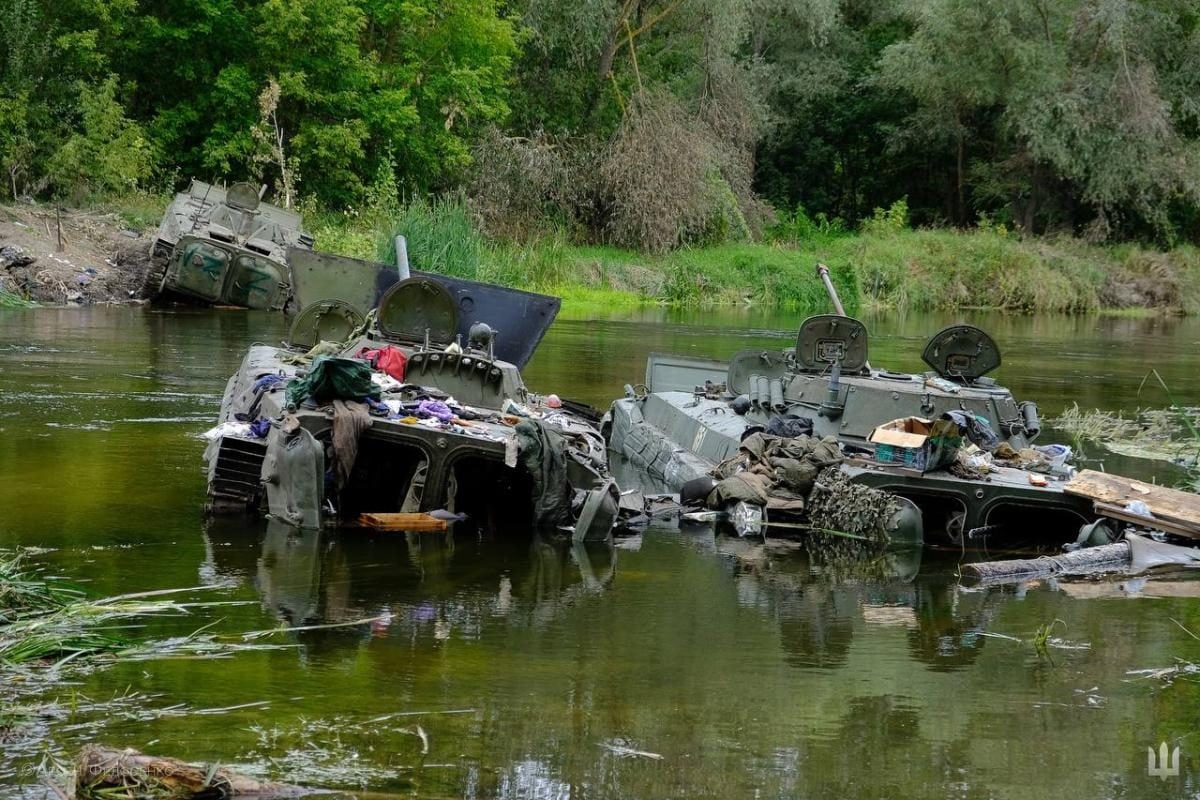
On February 25, 2022, as Russian forces advanced on Kyiv, the Ukrainians took action so as to avert an enemy breakthrough. They blew up bridges over the Irpin River in the cities of Hostomel and Demydiv, on the main road into Kyiv from the northwest, as well as a dam near the village of Kozarovychi. Water quickly flooded the fields and roads, and Russian tanks speeding toward the capital were halted at the approaches to the city. Some got bogged down in the soggy soil.
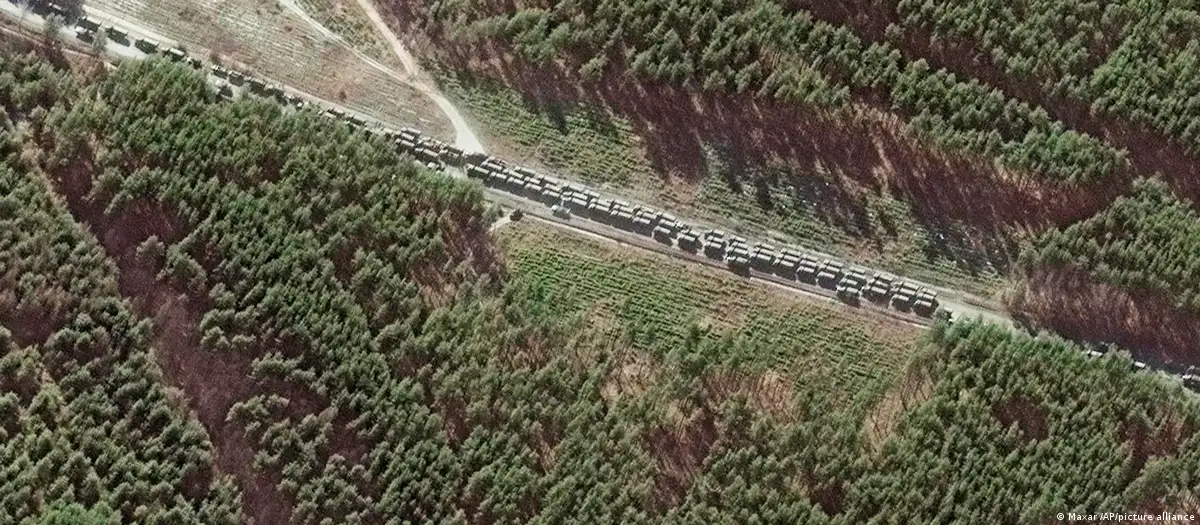
But it was not only the floodplain of the Irpin that helped the Ukrainians to defend themselves, but the entire wetland complex of Ukrainian Polissia. In the course of their advance in the Kyiv, Chernihiv, Sumy and Zhytomir regions in February–March 2022 Russian armored columns were forced to move only along asphalt highways, giving them little opportunity for maneuver. Even when the Ukrainian army demonstrated the vulnerability of this type of combat formation by repeatedly ambushing these columns, the enemy were unable to change their tactics. They were forced to continue advancing in columns of heavy equipment along a single narrow road, from which it was impossible to turn off.
Wetlands are incredibly valuable natural systems, guardians of the climate, talismans of biodiversity, guarantors of water supply and a sponge during floods. Environmentalists regularly plead with the authorities for the preservation and restoration of these ecosystems.
In some countries, like the Czech Republic, environmentalists find a sympathetic ear and are allowed to save, restore and protect swamps and peatlands. Others, like Denmark, are only just beginning to restore wetland systems, although strict plans have already been drawn up and funding provided. In many other places, swamp-loving environmentalists are still regarded as lunatics. Unfortunately, Ukraine is one of these countries.
Recent research confirms that wetland ecosystems perform a multitude of environmental functions. In addition to serving as habitats for wildlife, especially migratory birds, the EU’s Biodiversity Information System for Europe describes them as being of decisive importance for the provision of water-related ecosystem services. The UN’s Ramsar Convention on Wetlands (1971) provides a framework for the conservation and sustainable use of wetlands.
“Wetlands are vital for human survival. They are among the world’s most productive environments; cradles of biological diversity that provide the water and productivity upon which countless species of plants and animals depend for survival. Wetlands are indispensable for the countless benefits or “ecosystem services” that they provide humanity, ranging from freshwater supply, food and building materials, and biodiversity, to flood control, groundwater recharge, and climate change mitigation.”
Ramsar Convention on Wetlands
The apparent—and perhaps even decisive—role played by swamps as obstacles to enemy advances in the early days of the full-scale Russian invasion has changed the way a number of countries view wetlands and peatlands.
“The National Armed Forces support the restoration of degraded historical peat extraction sites into wetland ecosystems that can serve as natural barriers on the eastern border,” reads a statement posted on the website of the Latvian Ministry of Defense on September 22, 2025.
“This involves restoring wetlands, water resources, marshland crops, and forests in historically degraded peat extraction sites, thereby mitigating historical damage to natural resources. Restoring wetland ecosystems not only facilitates defense operations but also reduces logistical and personnel resources,” reads the statement.
These declarations are far from the first statements of their kind to issue from NATO/EU countries of their intentions to use natural ecosystems to enhance defense capabilities. Similar ideas have been voiced by officials in Poland, Finland and Estonia. Dozens of analytical articles on the subject have already been published by international media outlets, including Politico, Riffreporter, Yale Environment 360 and France24. Among these publications, an article on the Texty portal whose title translates as “Swamp Protection: How to Cover the Northern Border Affordably in the Long Term,” merits particular attention. Indeed, in Ukraine itself the idea of naturally enhancing defense capability through ecosystems has almost never been raised. In addition, October 9, 2025 marked the premiere of the documentary film Pryrodnyy Kordon (Natural Border). Devoted to the unique ecosystem of the Polissia peat bogs and their importance for Ukraine’s security, the film was created by Ukraine’s public broadcaster Suspilne with the support of the Frankfurt Zoological Society and the Michael Succow Foundation.
Read more: Nature through the lens: Three films about the environmental impacts of the war in Ukraine
While many European countries are increasingly declaring their intention to restore wetlands, Latvia has already taken action. A statement dated January 29, 2026 on the website of the Latvian Ministry of Defense elaborates:
“Joint revitalization plans for historical peat extraction sites are being developed within the framework of project No. 6.1.1.1/1/24/I/001 “Support for the revitalization of historical peat extraction sites” implemented by the Vidzeme planning region and its cooperation partners Latgale, Zemgale and Kurzeme planning regions.
(…)
For the restoration of historical peat extraction sites, municipalities plan to use European Union funds under the European Union Cohesion Policy Programme for 2021–2027, within Specific Objective 6.1.1 “Mitigate the economic, social and environmental consequences of the transition to climate neutrality in the most affected regions”, Measure 6.1.1.1 “Phase away from the use of peat in energy”.”
For some reason, however, the idea of making practical use of swamps for defense purposes—a move that Ukraine has essentially already pulled off during the war—is not being actively promoted.
What made the Irpin River special?
Almost all those who have written articles justifying the importance of swamps as defensive structures refer to the above example involving the river Irpin, which the Ukrainians turned into an impassable barrier for Russian troops as they advanced in February 2022.
Yet there are two things that are rarely analyzed: Why did the dam suddenly have to be blown up and why did the river become an insurmountable obstacle after that? After all, the Russians had already proved capable of crossing other rivers (even a large river like the Prypiat).
The fact is that the Irpin has not fed into the Dnipro for a long time now. The level of the artificially created Kyiv Reservoir (filled in 1964–1966, after the completion of the Kyiv Hydropower Plant) exceeded the level of the mouth of the Irpin and several other rivers in the district. The mouths of the Irpin, Trubezh and other Dnipro tributaries have been blocked off since then by dams and their water has been pumped into the reservoir using pumps.
For a long time, both the Irpin River’s environmental and defensive significance was ignored. Its channel was barbarically straightened, and the river itself was turned into a drainage ditch. The floodplains were drained and partially developed. In essence, the river was killed off. The authorities of the satellite city of Irpin actively promoted (and continued to do so as soon as the direct threat had receded) plans for the urban development of the Irpin River floodplain. For this reason, the dam had to be destroyed in order to allow water from the reservoir to fill the floodplain.
As a result, the area became practically impassable—the floodplain “remembered” that it was swampy and when Russian military vehicles found themselves in it, they got stuck and stopped. This also complicated the construction of crossings. Despite decades of reclamation, the soil remained unchanged, and the returning water restored the marshland.
Read more: Plans to rebuild Ukraine shaped by solutions for Irpin
Wetland reclamation: decades of misguided policy
In fact, the Polissia swamps could have played an even greater protective role during the Russian invasion, but Ukraine’s wetlands have been subject to a systematic destruction that goes back to the Soviet era.
Polissia, a land of lakes and marshes, spreads across the border regions of northeast Ukraine. For several decades, the Soviet government, and subsequently the government of independent Ukraine, destroyed these ecosystems by carrying out large-scale land reclamation programs. The original impetus for the draining of Polissia was a grand Stalinist plan for the transformation of nature. Adopted on Stalin’s own initiative, the decree “On the Plan for Shelterbelt Afforestation, the Introduction of Grassland Crop Rotations and the Construction of Ponds and Reservoirs to Ensure High, Sustainable Harvests in Steppe and Forest-Steppe Regions” was implemented by the Council of Ministers of the USSR and the Central Committee of the All-Union Communist Party (Bolsheviks) on October 20, 1948. Even today, many even write about this plan with enthusiasm, since it led to the creation of numerous forest belts. But few people know that the same plan also called for the drainage of 1.9 million hectares of swamps in Ukraine.
In fact, large-scale drainage in the region began even before World War II and continued afterwards, as Vladimir Boreiko, author of the book Istoriya okhrany prirody v Ukraine (The History of Nature Conservation in Ukraine) explains. On October 18, 1947, the Communist Party and government of the Ukrainian Soviet Socialist Republic demanded continued “development of the Irpin River floodplain and its tributaries,” and by the summer of 1948, large-scale drainage of the area had already begun. The regional party newspaper, Kyivska Pravda, even published a special supplement titled Kyivska Pravda on the Irpin Floodplain. A few years later, the floodplain was destroyed and the river channel was straightened.
In 1954, several government decrees on drainage were signed simultaneously in the Ukrainian SSR. These concerned the floodplains of the Trubizh, Nedra and Stsviha rivers, also located in the vicinity of Kyiv in northern Ukraine.
In November 1959, the Soviet government adopted a comprehensive resolution to drain approximately 5 million hectares of Ukrainian Polissia and straighten 600 km of the Prypiat River. This was accomplished through the use of explosives, destroying beaver colonies and rich fishing holes.
In July 1966, the Central Committee of the Communist Party of Ukraine and the Council of Ministers of the Ukrainian SSR signed a resolution “On the Extensive Development of Land Reclamation,” proposing the drainage of around 1 million hectares of land in the Ukrainian SSR between 1971 and 1975. All the way up to the 1970s, the Communist Party kept track of the socialist competition to drain swamps, compiling an annual “prize ranking” for the destruction of nature.
According to Olga Denyshchyk, a wetland expert at the Michael Succow Foundation, as of 1959 in Ukraine 1,446,000 hectares of land were covered by peat bogs. Of these, 800,000 hectares were drained (official data), though the most frequently cited figure is 1.2 million hectares. Another 52,085 hectares burned in the period from 2001 to 2013 as a result of forest fires.
Ironically, this destruction of valuable wetlands occurred despite keen interest from military specialists from the USSR—and later, Belarus and Russia—in the problem of transporting troops through swamps and their development of methods for assessing their passability. Despite these vast losses, however, there was still enough swampland remaining to hinder the movement of Russian troops in 2022.
Swamp strategies for Soviet soldiers
The defensive properties of swamps were of great interest to the Soviet military. In 1943, military hydrologists carried out a study that produced a book titled Prokhodimost bolot raznymi rodami voisk (Passability of Swamps by Different Types of Armed Forces), which for a long time was available only for use by the armed forces.
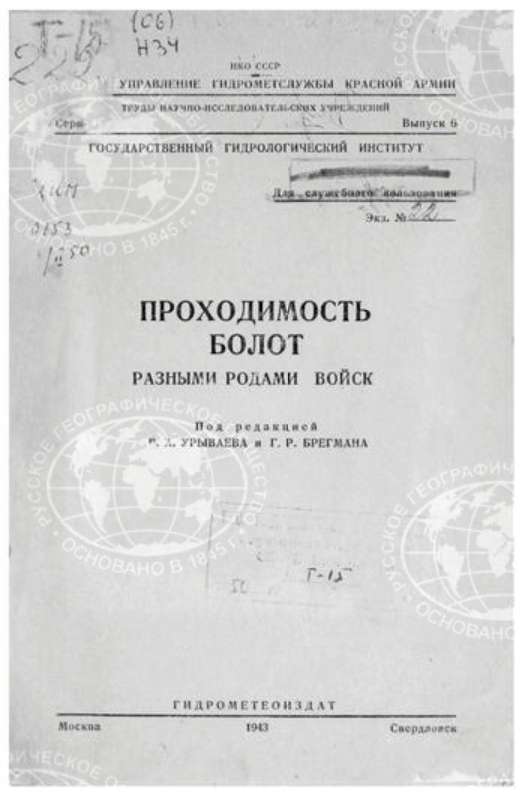
The authors of the book investigated in detail the possibility of crossing different types of swamps with infantry, artillery, armor and horse-drawn transport. The book also analyzes ways to enable or simplify such crossings.
The authors clearly demonstrate that the swamps are on the side of those holding the line. This is what they write about test-drives of tanks:
On a research route approximately 1 km long, a KV tank [a heavy Soviet tank] twice sank into a layer of dried peat to a depth of up to 1.5 m. No less typical was the case of the “movement” of a Т-60 light tank across a mossy swamp: after passing a 300-meter section in seven minutes, on the return journey the same tank, along the same section, got stuck for three hours, and needed assistance 12 times to be pulled out.
Therefore, any talk of tanks “moving” independently through swamps (without special reinforcement of the surface) should be done with great caution. Moving tracked vehicles through swamps should be seen as an operation requiring special training, technical supervision and associated with clear risk.
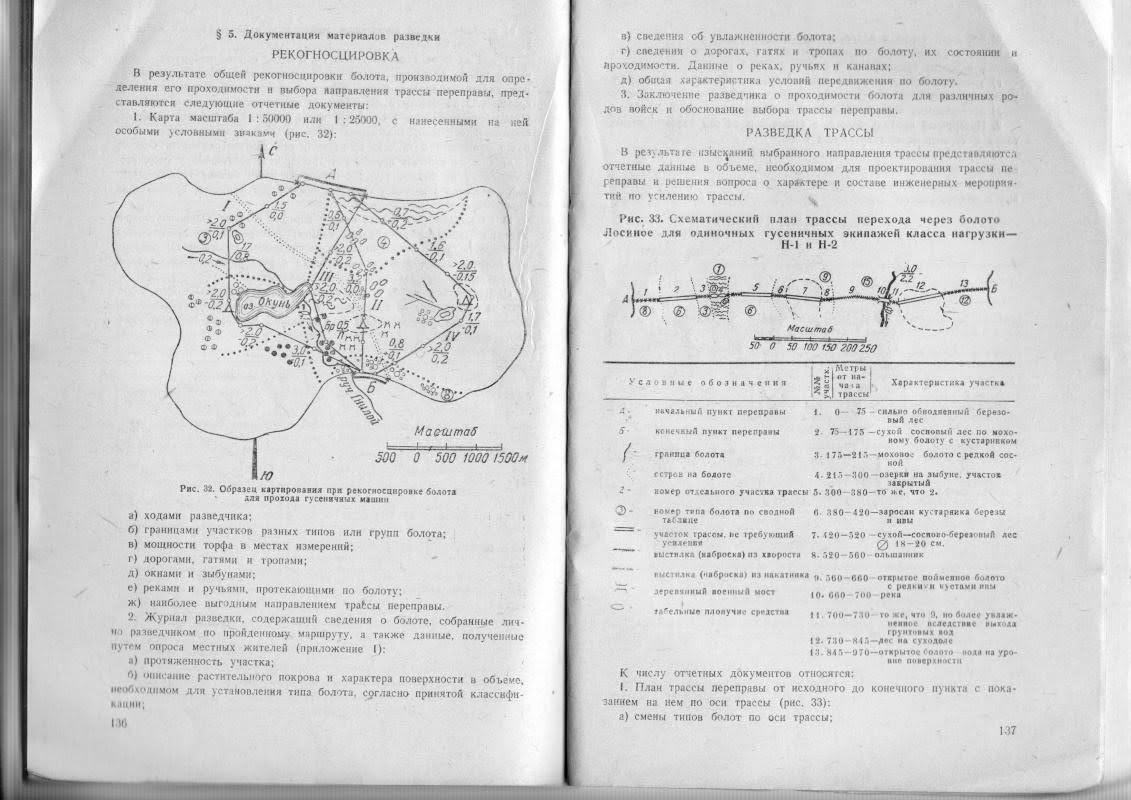
Experimenters were able to move artillery of various calibers by mounting it on homemade skis made from entire tree trunks. These guns “on skis” were pulled by either horses or men. However, moving through swamps is also challenging for humans, as described separately in a section titled “Crossing Swamps with Infantry”:
Crossing swamps requires the expenditure of a great deal of energy and is especially hard on infantry soldiers, making it one of the most difficult types of crossings, requiring careful preparation and a clear understanding of how to conquer swamps,”
During World War II, the USSR not only issued many different recommendations on how to cross swamps with army units, but also put this knowledge into practice on a large scale, which allowed the Red Army to deal several unexpected blows to Nazi troops. The most popular of these was the successful Operation Bagration in 1944, in which tank divisions crossed the marshes of Polissia. As a result, enemy troops were ejected from Belarusian territory.
On the whole, the events of World War II confirmed that many types of wetlands represent a significant obstacle for advancing troops, and crossing them requires special equipment and the construction of complex and fairly extensive engineering structures.
Modern Russian military engineering textbooks are apparently classified out of habit; it was not possible to find any in the public domain. This author did, however, find another contemporary study of the topic online. There is a corresponding section called “Metodika Inzhenernykh Raschyotov” (“Methodology of Engineering Calculations”) in a teaching aid for the discipline titled Voenno-Inzhenernaya Podgotovka (Military Engineering Training), published in Minsk in 2018. Belarusian military specialists assign great significance to the passability of swamps, both for defense purposes and to ensure the safe movement of Belarusian troops during an offensive. In this relatively short manual on general issues related to military engineering calculations, the term “swamp” was used over 40 times. The authors rank different types of wetland in terms of how challenging an obstacle they represent for tanks, tractors and people. Some types of forest swamps, for instance, are designated as “impassable” or “difficult to pass” for tanks.
Read more: Protected areas and border zones in Ukraine: How to harmonize them?
Ukraine’s wetlands today: a story of pain and hope
Environmentalists and conservationists understand the importance of preserving and restoring wetlands as biodiversity-rich natural ecosystems, “water banks” and carbon repositories.
According to the International Union for Conservation of Nature, peatlands in their natural state (over 3 million square kilometers) absorb 0.37 gigatons of CO2 per year worldwide. Peat soils contain over 600 gigatons of carbon, representing up to 44% of all carbon in soils and exceeding the amount of carbon stored in all types of vegetation, including the world’s forests.
Ukraine’s share of this “peat treasure chest” is not the largest, but it is significant all the same. Part of its swamps are protected as natural reserve areas, and part as Emerald Network areas (although the bill “On the Emerald Network” has lain unadopted for four years already in the Verkhovna Rada of Ukraine). But government agencies in Kyiv view unprotected swamps and peatlands solely as a peat and amber resource. Correspondingly, permission for industrial use has either already been issued for these sectors, or can be issued at any moment. In addition, there have been a number of cases in which even licenses for the development of areas under state protection have been granted.
The situation is particularly grave with already reclaimed territories. Drained peat decomposes, releasing greenhouse gases, and are often the site of fires. This millennial carbon store is becoming one of the largest sources of its release into the atmosphere. Ukraine has no state program for the recovery (hydration) of peatlands. There are only a few interesting pilot projects, funded by international organizations, all of which are being implemented in nature reserves or national parks.
In February 2025 a number of public organizations appealed to the Ministry of Environmental Protection and Natural Resources of Ukraine with a request that a draft resolution “On the Specifics of the Legal Regime for the Use of Peatlands and Possible Types of their Intended Use” be drawn up and submitted for government approval.
As Petro Testov, an expert from the Ukrainian Nature Conservation Group, points out, the Cabinet of Ministers should have adopted a resolution like this five years ago. In 2020, amendments were made to Part 3 of Article 150 of the Land Code under the law “On Amendments to Certain Legislative Acts of Ukraine on Land Use Planning.” “3. The specifics of the legal regime for the use of peatland and the possible types of its intended use are determined by the Cabinet of Ministers of Ukraine,” read the amendments.
This is clearly stated in a set of recommendations based on hearings in Ukraine’s parliamentary Committee on Environmental Policy on the subject: “Legal Foundations for the Functioning of an Effective System of Protected Areas and Sites as a Basis for the Conservation and Restoration of Biodiversity: Current Issues,” which were published on October 24, 2024.
In particular, the following recommendation was made to the Cabinet of Ministers of Ukraine: “2. To develop and approve the following regulatory legal acts: … – on the specifics of the legal regime for the use of peatlands, in particular, in terms of prohibiting the drainage of peatlands …”.
The Ministry of Environmental Protection and Natural Resources, the State Forestry Agency of Ukraine, the State Service of Ukraine for Geodesy, Cartography and Cadastre, and regional state (military) administrations are recommended to “2. Ensure the implementation of measures to restore drained peatlands, including within the boundaries of nature reserve fund institutions and regular forest users.”
Unfortunately, on July 21, 2025, Ukraine’s new Cabinet of Ministers abolished the Ministry of Environmental Protection and Natural Resources, transferring its functions to the newly created Ministry of Economy, Environment and Agriculture. This was a new agency with new people, establishing new vectors of cooperation. All explanations of the importance of peatlands from an environmental and climate-related perspective therefore had to begin anew. The situation has only been exacerbated by the confusing reshuffle of the environmental agencies.
So it is possible that at least an understanding of the role of wetlands as a defensive factor will encourage the Ukrainian authorities to engage seriously in protecting the country’s remaining wetlands and restoring those devastated by reclamation projects. The first step toward achieving this must be to halt the issue of permits for peat and amber extraction, which are currently being sold off like hot cakes by the State Agency for Geology and Subsoil. A moratorium must be declared on any further land reclamation activity until the issue has been studied by the Ministry of Defense with the participation of ecologists and hydrologists. And a broad program must be adopted and implemented to restore the natural hydrological regime of drained peatlands, which will help to restore the ecological, climatic and defensive functions of wetlands across vast areas of northern Ukraine.
Oleh Listopad is an environmental expert and member of the National Interest Advocacy Network (ANTS)
Note: The draft resolution of the Cabinet of Ministers of Ukraine “On the Specifics of the Legal Regime for the Use of Peatlands and Possible Types of their Intended Use,” aimed at the practical implementation of European Union legislation on environmental protection, climate policy, and sustainable land use in relation to the protection and restoration of peatlands, was finally published for public review on January 5, 2026.
Translated by Alastair Gill
Main image source: unian