
Oleksiy Vasyliuk
On the eve of the third anniversary of Russia’s destruction of the Kakhovka Hydropower Plant and its reservoir, Ukrainian and international institutions appealed to Ukraine’s Ministry of Culture and Strategic Communications and the Ukrainian National Commission for UNESCO, calling for the inscription of the Dnipro River Great Meadow on the UNESCO Tentative List of World Heritage Sites as a mixed cultural and natural site.
Proposed by environmental, cultural, archaeological, scientific, and expert organizations, this is a multilateral initiative to protect the Great Meadow, known as Velyky Luh, an area of great historical, cultural and natural importance. Their proposal is accompanied by a prepared site concept and a working draft document for submitting the site to the convention’s “Tentative List” (Tentative List Submission) in accordance with the requirements of the UNESCO World Heritage Center.
The Great Meadow boasts exceptional global value as a unique cultural and natural landscape in which the natural structure of the Lower Dnipro’s vast floodplain shaped a key military-political and cultural system in early modern Europe—the Zaporyzhzhia Sich and the cultural cradle of the Ukrainian Cossacks. It is not a single historical monument or natural area, but rather a large-scale historical landscape in which nature, military history, the formation of political traditions, the river ecosystem and national memory are inextricably intertwined.
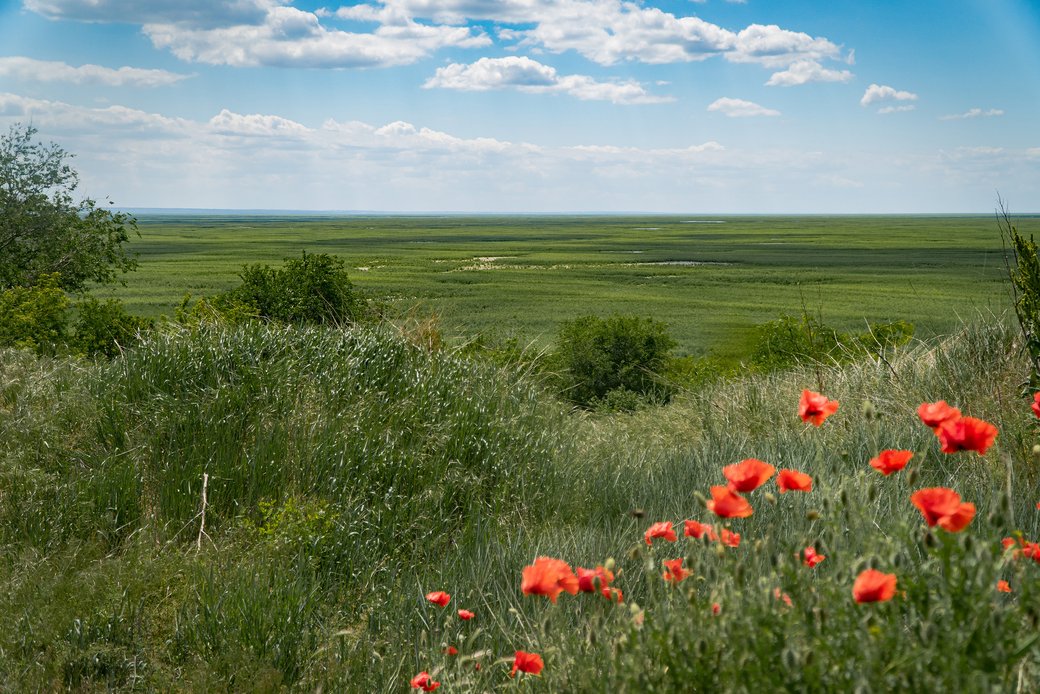
At the same time, Velyky Luh, which covers more than 2,000 square kilometers, already possesses high ecological value. Today it is demonstrating the revival of natural processes in an unprecedentedly short period of time, doing so without human interference (not even roads). Thanks to the unusually rapid rate of tree growth, it also sequesters significant carbon, contributing to climate change mitigation. The Great Meadow is also of exceptional importance for protected animal species, particularly for the migration of sturgeon and birds.
The petition has already been signed by 40 organizations and cultural figures, and signature collection will continue until the opening of the UNESCO World Heritage Committee session in mid-July 2026.
The historic floodplain landscape that shaped the Zaporyzhzhia Sich
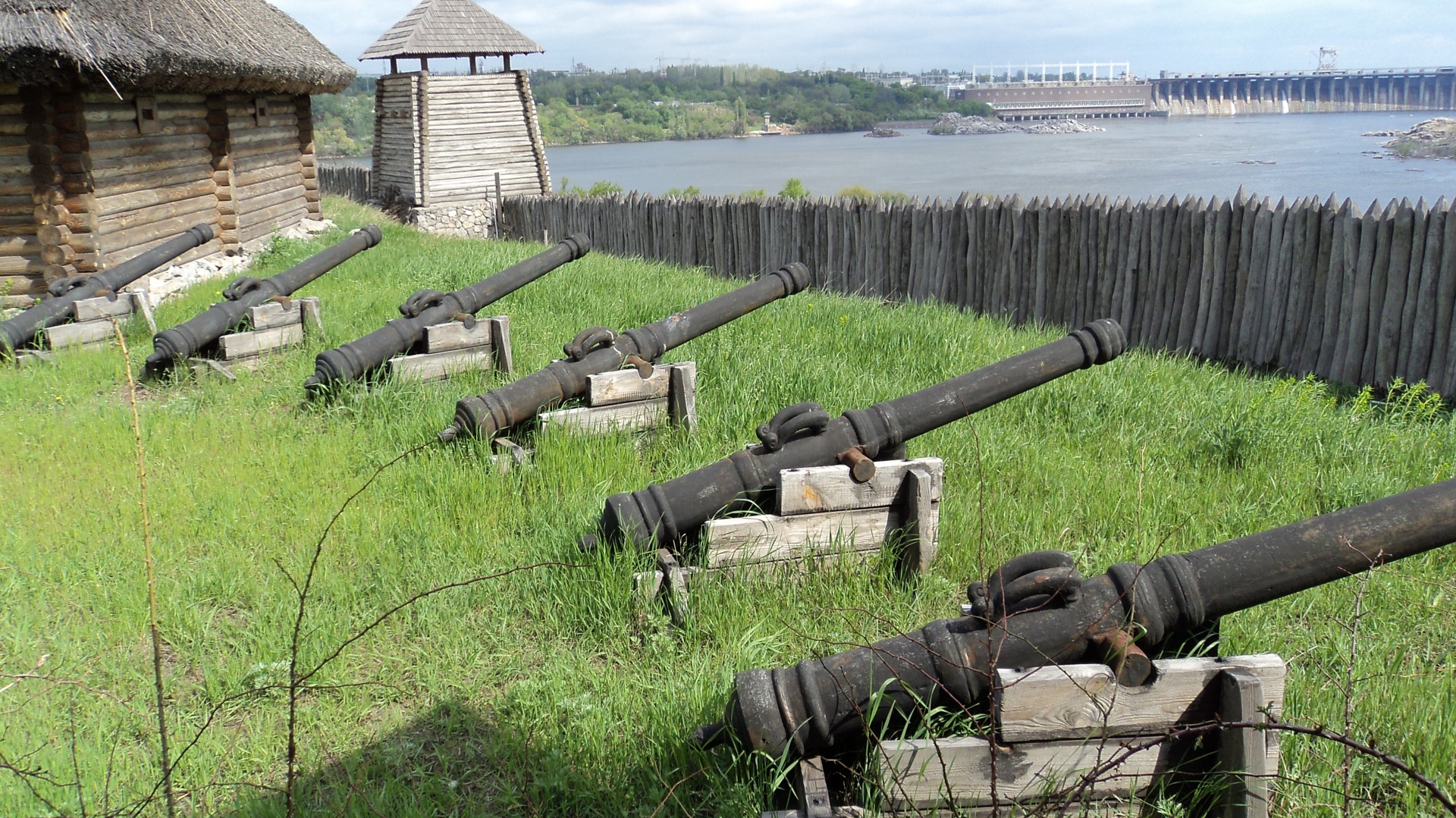
The Great Meadow was not only the geographical backdrop of Cossack history, but it was precisely thanks to it that the Zaporyzhzhian Siches were formed—fortified military and administrative centers established by Ukrainian Cossacks in the 16th–18th centuries, simultaneously serving as fortresses and centers of self-government. They formed the core of a unique democratic community where Cossacks elected their leaders, organized their defense, and controlled vast border areas in Eastern Europe. It is from the Zaporyzhzhian Sich that Ukraine traces the beginning of its struggle for national independence. Ukraine’s nation and statehood began to form here.
Velyky Luh’s natural landscape directly influenced sich settlement site selection, their defensive capabilities, mobility and ability to survive over the long term in the borderland between major Eastern European states.
Historically, the Great Meadow was one of Europe’s largest floodplain landscapes—a complex mosaic of lowland forests, meadows, marshes, lakes, shallow waters, and sandy areas, all connected by the Lower Dnipro system all the way to the Black Sea. The territory played a key role in supporting the biodiversity of the Azov-Black Sea region, bird migration and the functioning of river and wetland ecosystems.
Six of the eight Zaporyzhzhia Sich settlements were located on the Great Meadow. To this day, the concepts of “sich,” “Great Meadow” and Cossack heritage itself remain central elements of Ukrainian historical memory and national identity.
In the mid-20th century, Soviets almost completely destroyed the Great Meadow as a result of the creation of the Kakhovka Reservoir during the construction of a series of hydropower plants along the Dnipro. Historical landscapes, archaeological sites, the remains of the sich settlements, burial mounds, villages, cemeteries, forests and floodplain ecosystems were flooded. Not only were historical and archaeological sites lost, but the floodplain’s climatic functions—water exchange and carbon sequestration—ended as well. In fact, this was one of the largest transformations of a river landscape in Europe in the 20th century. Accompanied by large-scale conversion of the steppe grasslands surrounding the Great Meadow to agricultural use in the 1950s, these actions could be seen as one of the most significant blows to climate stability in Eastern Europe.
Read more: Hydroelectric dams as weapons: virtual and actual
Restoration of the Great Meadow’s historical and natural landscape
The destruction of the Kakhovka hydropower plant (HPP) dam in 2023 by Russian occupation forces reopened the area for research and launched the reappearance of floodplain ecosystems, including the return of endangered species. This created a situation unprecedented in the modern world, where a historical and archaeological site that had been submerged for decades suddenly became accessible. Natural hydrological processes resumed; floodplain forests, wetlands and fish-spawning grounds began to form, and the historical riparian zone that once shaped the space of the Zaporyzhzhian Sich reemerged.
In the first years following the emptying of the reservoir, rapid growth of vegetation, formation of new floodplain ecological communities, restoration of shallow-water and marshy areas and the return of the spatial “mosaic” that is typical of a river floodplain all were observed. Migratory fish, such as the critically endangered Russian sturgeon (Acipenser gueldenstaedtii), have returned to their historic spawning grounds on Khortytsia Island. These processes do not fully recreate the past landscape, but they do restore a number of its key structural and functional features.
Read more:
Potential value of the Velyky Luh natural-historical landscape
The initiative’s authors argue that the Velyky Luh’s current recovery is of not only national but also global significance as one of the most largest known examples of the regeneration of a large river floodplain following the disappearance of an artificial reservoir.
The draft concept notes that Velyky Luh potentially meets criteria for UNESCO’s “Outstanding Universal Value” as a mixed cultural-natural river floodplain landscape, in which the natural structure of the Lower Dnipro became a defining prerequisite for the formation of one of the most striking military-political phenomena of the modern era in Eastern Europe — the Zaporyzhzhian Sich. The modern restoration of the large floodplain ecosystem following the disappearance of the Kakhovka Reservoir lends this area additional natural and scientific significance.
The “Operational Guidelines for the Implementation of the World Heritage Convention” is the Convention’s primary working tool and, among other things, regulates the selection of new sites for inclusion on the List.
To be included on the World Heritage List, a candidate site must represent an outstanding universal value and meet at least one of ten specific selection criteria:
i) to represent a masterpiece of human creative genius;
ii) to exhibit an important interchange of human values, over a span of time or within a cultural area of the world, on developments in architecture or technology, monumental arts, town-planning or landscape design;
iii) to bear a unique or at least exceptional testimony to a cultural tradition or to a civilization which is living or which has disappeared;
iv) to be an outstanding example of a type of building, architectural or technological ensemble or landscape which illustrates (a) significant stage(s) in human history;
v) to be an outstanding example of a traditional human settlement, land-use, or sea-use which is representative of a culture (or cultures), or human interaction with the environment especially when it has become vulnerable under the impact of irreversible changes;
vi) to be directly or tangibly associated with events or living traditions, with ideas, or with beliefs, with artistic and literary works of outstanding universal significance. (The Committee considers that this criterion should preferably be used in conjunction with other criteria);
vii) to contain superlative natural phenomena or areas of exceptional natural beauty and aesthetic importance;
viii) to be outstanding examples representing major stages of earth’s history, including the record of life, significant on-going geological processes in the development of landforms, or significant geomorphic or physiographic features;
ix) to be outstanding examples representing significant on-going ecological and biological processes in the evolution and development of terrestrial, fresh water, coastal and marine ecosystems and communities of plants and animals;
x) to contain the most important and significant natural habitats for in-situ conservation of biological diversity, including those containing threatened species of outstanding universal value from the point of view of science or conservation.
UNESCO criteria (iii), (v), and (ix) are the most suitable for the Great Meadow, as well as potentially criteria (x) and (vi). In particular, the Great Meadow can be considered exceptional testimony to the historical tradition of the Zaporyzhzhian Sich under criterion (iii).
To be considered as a candidate (nominee) for the World Heritage List, the government of the country in which it is located must first include candidate sites in the so-called “Tentative List” of the World Heritage Convention.
Restoration of a major river system and the international context
From an ecological perspective, the Great Meadow is part of the broader floodplain and delta system of the Lower Dnipro river system, extending to the Black Sea and encompassing valuable wetland, floodplain and delta ecosystems. Such a spatially and ecologically interconnected system is important for sustaining hydrological processes, preserving floodplain habitats, supporting the migration of wetland birds, fish spawning and the overall biodiversity of the Azov-Black Sea region. The concept also notes that recognition of the exceptional universal natural values of the Lower Dnipro dates back to Herodotus’s accounts of Hylaia—the vast forests along the river Borysthenes (Dnipro).
A separate area of work involves conducting a comprehensive analysis comparing other riverine cultural landscapes, mixed natural-cultural sites and transboundary landscapes listed on the World Heritage List and beyond. Among the heritage sites preliminarily identified for comparison are the Danube Delta (Romania), the Tugay forests of Tigrovaya Balka Nature Reserve (Tajikistan), the Machu Picchu Historic Sanctuary (Peru), the Frontiers of the Roman Empire – Danube Frontiers (Germany-Austria-Slovakia), the Upper Middle Rhine Valley (Germany) and others. At the same time, the concept’s authors emphasize that none of these sites combines, within a single territory, an extensive historical river floodplain system, the formation of an autonomous military-political institution spatially dependent on this system, and a contemporary large-scale process of natural restoration subsequent to total destruction by humans.
Read more:
Existing nature conservation system and next steps
An important requirement for new heritage sites is the establishment of protection measures and territorial management. The concept notes that virtually all key ecosystems of the Lower Dnipro downstream of the former Kakhovka dam already have legal status as national parks and other nature conservation areas, further attesting both to the value of this area and to the level of protection already achieved. Certain high value conservation areas in Velyky Luh are already partially protected by other international conservation mechanisms. In particular, the Lower Dnipro is home to wetlands of international importance under the Ramsar Convention, including the “Great Meadow” site. At the same time, the concept document emphasizes that the UNESCO World Heritage mechanism is the most suitable for presenting the Great Meadow as a unified historical, cultural and natural landscape.
Priority steps for advancing the initiative to nominate a new World Heritage site include selecting and refining a working nomination model, identifying key cultural and natural attributes, preparing a science-based outline of potential boundaries, compiling historical information, systematizing natural data on floodplain regeneration, conducting an in-depth comparative analysis and initiating a structured consultation process with stakeholders.
Appeal to government agencies
In an appeal to Ukraine’s Ministry of Culture and Strategic Communications and Ukraine’s National Commission for UNESCO, the signatory organizations request that the submitted concept and working “Tentative Submission” draft for inclusion of the site on the Convention’s “Tentative List” be reviewed, seek support for the launch of the official nomination preparation procedure, call for the creation of inter-agency and expert working groups and further coordination among government bodies, scientific institutions and the public sector regarding the preparation of the nomination dossier.
The concept’s authors also emphasize that the nomination of Velyky Luh has more than just environmental or cultural significance for Ukraine. The nomination is also viewed as a tool for the decolonization of historical heritage, a re-evaluation of the consequences of Soviet industrial transformations and an international signal regarding the need to preserve the natural dynamics of the Lower Dnipro and prevent new large-scale transformations of this territory.
The restoration of the river’s natural flow and the floodplain landscape across such a large area is an unprecedented opportunity to achieve pan-European nature restoration goals by 2030, an argument for Ukraine’s accession to the European Union.
Main image source: suspilne.media



NGO “Ecological clab “KRAY”