Oleksiy Vasyliuk and Eugene Simonov
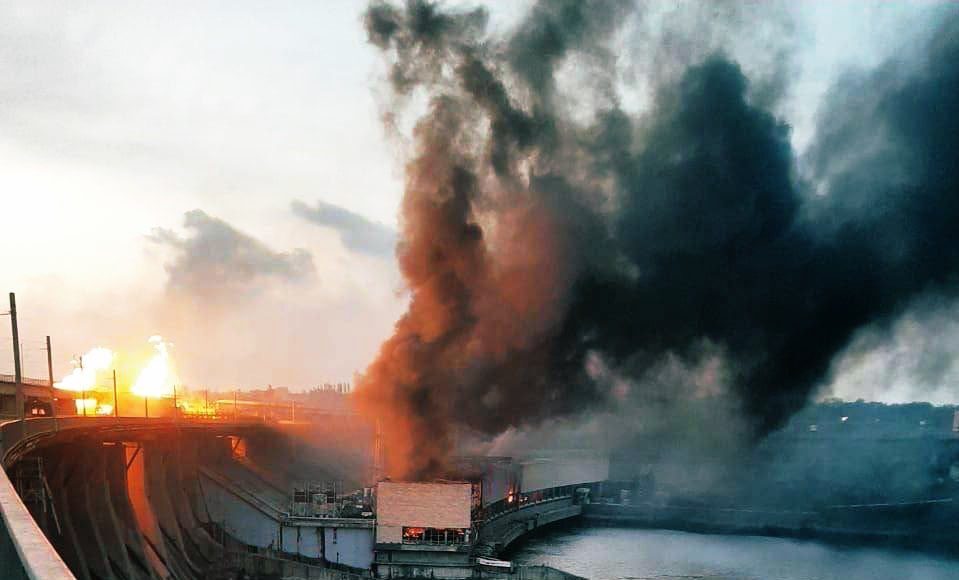
Throughout the years of full-scale war, the tactics chosen by the Russian army have focused on capturing or destroying the most powerful power generation facilities. All hydroelectric power plants (HPPs) along the Dnipro River have sustained serious damage during the war, and the Kakhovka HPP was completely destroyed—an event that triggered the rebirth of a resilient floodplain ecosystem on the floor of the former reservoir.. A new report by UWEC experts, published this week, analyzes the future of these HPPs.
The Government of Ukraine and international development banks face a fundamentally mutually exclusive choice for the Lower Dnipro: financing the reconstruction of the Kakhovka Reservoir to restore the pre-war agricultural and energy status quo, or supporting a scenario of natural restoration for the Lower Dnipro floodplain and alternative pathways for developing a modern, resilient economy. A new report by experts from UWEC and the Ukrainian Nature Conservation Group (UNCG), prepared in partnership with the NGO Ecosocium (Cherkasy, Ukraine), analyzes efforts to restore hydropower following Russian attacks, as well as the investments made and planned by international financiers to overcome the consequences of the war.
The report, entitled “Prospects of Dnipro River Ecosystem Recovery and Degradation in the Light of War-induced Destruction, Reconstruction Policies and International Financing of Hydropower during the War” details how Ukrainian government policy and the state operator “Ukrhydroenergo” remain committed to the idea of rebuilding the Kakhovka dam, while simultaneously financing the construction of alternative water pipelines to adapt southern regions to the absence of the reservoir (which is part of an alternative, mutually exclusive scenario). Currently, exemptions provided under martial law are being used to bypass mandatory Environmental Impact Assessments (EIA) for these projects.
This meticulous analysis of the international development financing landscape reveals that grants and loans from the World Bank, the European Bank for Reconstruction and Development (EBRD), and the European Investment Bank (EIB) have so far been directed exclusively toward emergency repairs, equipment replacement, and ensuring grid stability at existing dams, without any clear commitments regarding the reconstruction of the Kakhovka HPP. While repair work at most power plants does not immediately increase their negative impacts, future financing decisions will determine the ecological and economic trajectory of the entire Dnipro basin. The authors identify systemic risks associated with the implementation of large-scale hydropower ambitions. These include high construction costs, the inherent vulnerability of mega-dams to military strikes, corruption risks in public procurement, and the unintentional use of outdated irrigation models in modern realities, contributing to secondary soil salinization.
Choosing natural restoration would require financiers and policymakers to protect the recovery of floodplain ecosystems and fish migration, prioritize decentralized energy resilience over vulnerable large-scale infrastructure, and implement sustainable, nature-based solutions in water resource management that align with modern European environmental standards.
The Dnipro Cascade at a crossroads: war, destruction, and unexpected ecological rebirth
The Dnipro River is the lifeblood of Ukraine and one of the largest river systems in Europe. Historically, it was a majestic lowland river characterized by a vast floodplain, numerous branches, and rich gallery forests that nurtured unique wetland ecosystems. However, the mid-20th century saw a radical transformation of the river. Between the 1920s and 1980s, a cascade of six large hydroelectric power plants and accompanying massive reservoirs was built, effectively regulating over eighty percent of the river’s length within Ukraine. This Soviet-era industrialization severely disrupted the natural hydrological regime, led to the flooding of vast areas of historical and ecological significance, and blocked the migration routes of important Black Sea drainage basin fish species.
The full-scale war in 2022–2025 brought unprecedented devastation to this already heavily modified river system. Russian forces attacked the Dnipro HPP cascade with numerous missile and drone strikes, inflicting varying degrees of critical damage on the Dnipro, Kyiv, Kaniv, Middle Dnipro, and Kremenchuk hydroelectric stations. The most catastrophic event was the deliberate destruction of the Kakhovka HPP dam in June 2023. This act of ecocide triggered devastating flooding downstream and completely drained the Kakhovka Reservoir—a massive artificial body of water that had submerged the landscape for decades.
However, from the depths of this man-made disaster emerged a profound and unexpected ecological miracle. The disappearance of the reservoir exposed over two thousand square kilometers of the former floodplain, historically known as Velykyi Luh (The Great Meadow). Within months, rapid natural succession began. Today, this exposed area has transformed into the largest natural willow-poplar forest in Europe’s steppe zone, with young trees already reaching heights of seven meters. This recovering floodplain ecosystem is not merely a biological curiosity; it possesses immense conservation value. The new floodplain is rapidly becoming a vital habitat for terrestrial fauna, its waters a critical spawning ground for endangered fish species such as the Russian sturgeon (Acipenser gueldenstaedtii), and a key stopover along the Dnipro ecological corridor for hundreds of thousands of migratory birds. Furthermore, the natural conditions of this willow-poplar forest make it one of the most climate-resilient ecosystems in the region, capable of naturally cooling and humidifying the harsh summer air of the steppe. This area is part of Europe’s Emerald Network, making its preservation a matter of international environmental importance. Sustaining this floodplain forest contributes to modern Europe-wide environmental goals and is a worthy alternative to restoring outdated hydropower complexes.
Illusion of the status quo: risks of rebuilding Kakhovka HPP and the need for alternatives
Despite the undeniable ecological and climate benefits of restoring Velykyi Luh, the Ukrainian government and state operator “Ukrhydroenergo” remain tethered to outdated Soviet paradigms of water resource management. Official policies and strategic development plans still prioritize the full reconstruction of the Kakhovka dam and refilling the reservoir. Ukrhydroenergo is actively promoting its Kakhovka HPP-2 plan, which aims to build a new facility with a capacity of up to 600 megawatts—nearly double the capacity of the destroyed station. This new capacity is primarily intended for peak-load operation, which would result in severe hydropeaking. Hydropeaking involves rapid, massive water releases that cause sharp daily fluctuations in water levels downstream, leading to severe erosion and the destruction of aquatic habitats in protected areas such as the Lower Dnipro National Nature Park.
Implementation of the Kakhovka HPP-2 project would mean the deliberate destruction of Europe’s largest natural ecosystem restoration project. Re-flooding the Velykyi Luh floodplain would submerge over 2,000 square kilometers of recovering forests and wetlands, permanently destroying a landscape that is far more valuable economically and ecologically than the Kakhovka Reservoir.
Restoring the reservoir to support the pre-war agricultural irrigation model is highly problematic. Water from the Kakhovka Reservoir was historically the most saline and polluted in the cascade. Long-term irrigation with this highly mineralized water, exacerbated by high evaporation rates from the reservoir surface and the lack of proper drainage, led to severe secondary soil salinization in southern Ukraine. Recreating this system and continuing to irrigate salinized soils with saline water directly contradicts the principles of sustainable agriculture and modern climate change adaptation.
International banks and decision-makers must actively promote and support alternatives to rebuilding the Kakhovka dam. The Ukrainian government itself has already demonstrated that life without the reservoir is possible. Billions of hryvnias were successfully allocated and spent on constructing interim main water pipelines that draw water from the Southern Bug and Inhulets rivers to adapt southern regions to the new hydrological reality. Instead of financing vulnerable, large-scale mega-dams, international investment actors should direct their capital toward modernizing these decentralized water supply networks. In the energy sector, banks must evaluate alternatives to the use of large-scale hydropower to balance the electrical grid. Distributed generation, such as large-scale Battery Energy Storage Systems (BESS) combined with solar and wind power, offers a much faster, safer, and more environmentally friendly way to provide peak capacity and grid resilience. These decentralized systems are significantly harder for enemy forces to destroy compared to massive, stationary hydroelectric plants. According to the April 4, 2026, report from the Minister of Energy, Denys Shmyhal, the total increase in distributed generation in 2025 amounted to 642.77 MW, while 508 MW have been added to energy storage facilities. In 2025 alone, both added grid capacity and storage generation exceed those of the planned Kakhovka HPP-2.
International financing in wartime: lifelines, loopholes, and systemic risks
International financial institutions (IFIs) have played a crucial role in keeping Ukraine’s energy infrastructure afloat during the war. Since the start of the full-scale invasion, the World Bank, the EBRD and the EIB have collectively allocated approximately one billion dollars to the Ukrainian hydropower sector. These funds are primarily structured as loans under sovereign guarantees and are directed toward “Ukrhydroenergo” operations. Financing has focused exclusively on emergency repairs, the procurement of critical equipment such as transformers and turbines and the installation of hybrid storage systems to enhance the stability of existing damaged dams. As of early 2026, no international financing has been publicly allocated for the large-scale construction of new major dams or the formal reconstruction of the Kakhovka HPP.
However, this influx of emergency financing carries significant systemic risks, primarily due to the erosion of environmental and social safeguards. Under the pressure of wartime recovery demands and martial law, international banks are allowing a dangerous “compliance gap” to form. Mandatory Environmental Impact Assessments (EIA) are regularly ignored or waived for reconstruction projects. For example, the EBRD has postponed full environmental and social audits until twelve months after the end of martial law. This means that permanent, potentially destructive infrastructure is being redesigned and rebuilt without the application of modern environmental standards.
These environmental risks are compounded by a serious lack of transparency and a surge in corruption allegations. Hydropower is a globally corruption-prone sector, and Ukraine’s state energy enterprises have been plagued by public procurement scandals. Recent investigations have highlighted questionable allocations of international and state funds specifically within the “Ukrhydroenergo” system. Millions of dollars were spent on designing protective structures for HPPs that were never built, and massive infrastructure protection contracts were awarded to firms without relevant experience or to entities linked to sanctioned individuals. The inaccessibility of active combat zones means that international financiers have very little reliable data to physically monitor how their funds are being used and whether the spending actually achieves its promised goals. Furthermore, martial law has been used to block public access to EIA registers under the pretext of national security, effectively eliminating civil society oversight and independent analytical work.
Action plan for a “green” recovery: recommendations for investment institutions and decision-makers
Decisions made by IFIs in the coming years will irreversibly define the ecological and economic trajectory of the Dnipro basin. IFIs must recognize that post-war reconstruction cannot simply copy obsolete Soviet-era natural resource management models. To ensure a genuine “green” recovery, banks and donor governments must apply a rigorous, forward-looking approach to their investment portfolios in Ukraine.
First and foremost, IFIs must strictly adhere to the “Do No Significant Harm” (DNSH) principle and immediately close the compliance gap. Emergency conditions and martial law should no longer serve as acceptable justifications for bypassing Environmental Impact Assessments (EIA) or Strategic Environmental Assessments (SEA). Banks must demand that any project related to the Dnipro Cascade—whether it is the modernization of existing dams or the proposed construction of new ones—is subject to rigorous and transparent environmental screening before any funds are disbursed. Projects that threaten the integrity of the Emerald Network, disrupt the restoration of Velykyi Luh, or contradict the EU Water Framework Directive must be categorically excluded from financing.
Protecting freshwater biodiversity must be elevated to a primary investment criterion. The destruction of the Kakhovka dam, while tragic, has given Ukraine and Europe a unique, once-in-a-lifetime opportunity to restore a 250-km long river valley of immense natural and cultural value and restore free-flowing stretch of a major European river, saving critically endangered migratory fish species and supporting habitat for terrestrial wildlife.
IFIs should actively condition loans for the energy sector on the implementation of environmental flows downstream of all existing dams, particularly the Dnipro HPP, which is located upstream of the Velykyi Luh floodplain. Environmental flow rules require dam operators to release sufficient volumes of water at appropriate times to support natural downstream habitats, rather than managing the river solely for maximum electricity production.
Furthermore, international banks must demand a comprehensive analysis of alternatives before approving any loans for the restoration or construction of hydropower facilities. In the context of modern warfare, pouring hundreds of millions of dollars into highly visible, easily targeted mega-dams is a questionable energy security strategy. IFIs must require project developers to prove that restoring large-scale hydropower is superior to decentralized alternatives. The most effective and only viable path to restoring Ukraine’s energy stability is the creation of a network of distributed energy capacity across Ukraine.
The report’s authors are convinced that investments should be decisively redirected toward nature-based solutions, decentralized battery energy storage systems, and the modernization of local, climate-adapted agricultural water networks that do not rely on the creation of massive stagnant reservoirs.
Finally, ensuring active stakeholder engagement and transparency is absolutely critical. IFIs must use their leverage to demand that the Ukrainian government lift unjustified restrictions on public access to environmental documentation. Civil society organizations, independent scientists, and local communities must be given a meaningful voice during the planning and approval stages of reconstruction projects. By insisting on transparency, rigorous environmental standards, and the prioritization of natural restoration, international financial institutions can help Ukraine avoid the mistakes of the past and become a pioneer in creating a truly sustainable, climate-resilient future for the Dnipro River basin.
Main image source: zmina.info