Alex Ovchinnikov
The UWEC editorial team continues to share highlights of recent media coverage and analysis of the environmental consequences of Russia’s war in Ukraine with our readers. As always, we welcome reader feedback, which you can leave by commenting on texts, writing to us (editor@uwecworkgroup.info) or contacting us via social networks.
Two Kyiv lakes polluted by oil following Russian attacks
A recent mass Russian missile attack on civilian infrastructure resulted in the Kyrylivske and Yordanske lakes in the Ukrainian capital’s Obolon district being polluted with oil from a nearby industrial site and a gas station. The local administration has announced the beginning of clean-up operations. The State Emergency Service (DSNS) has localized the oil spill using floating booms, and the next stage will involve using a sorbent to remove the oil from the water.
Reciprocal attacks on oil storage and refining infrastructure have resulted in significant soil and water pollution in both Ukraine and Russia. However, while in Ukraine civilian monitoring is possible and administrative institutions are working to mitigate the consequences, in Russia the authorities are doing their best to hush up the environmental impact of Ukrainian attacks on oil terminals and refineries. The scale of the disaster and how Russia is dealing with it remains unclear.
Read more: In oil wars, the environment and public health lose—both in Ukraine and Russia
Forest fires in the Chornobyl zone after Russian strikes
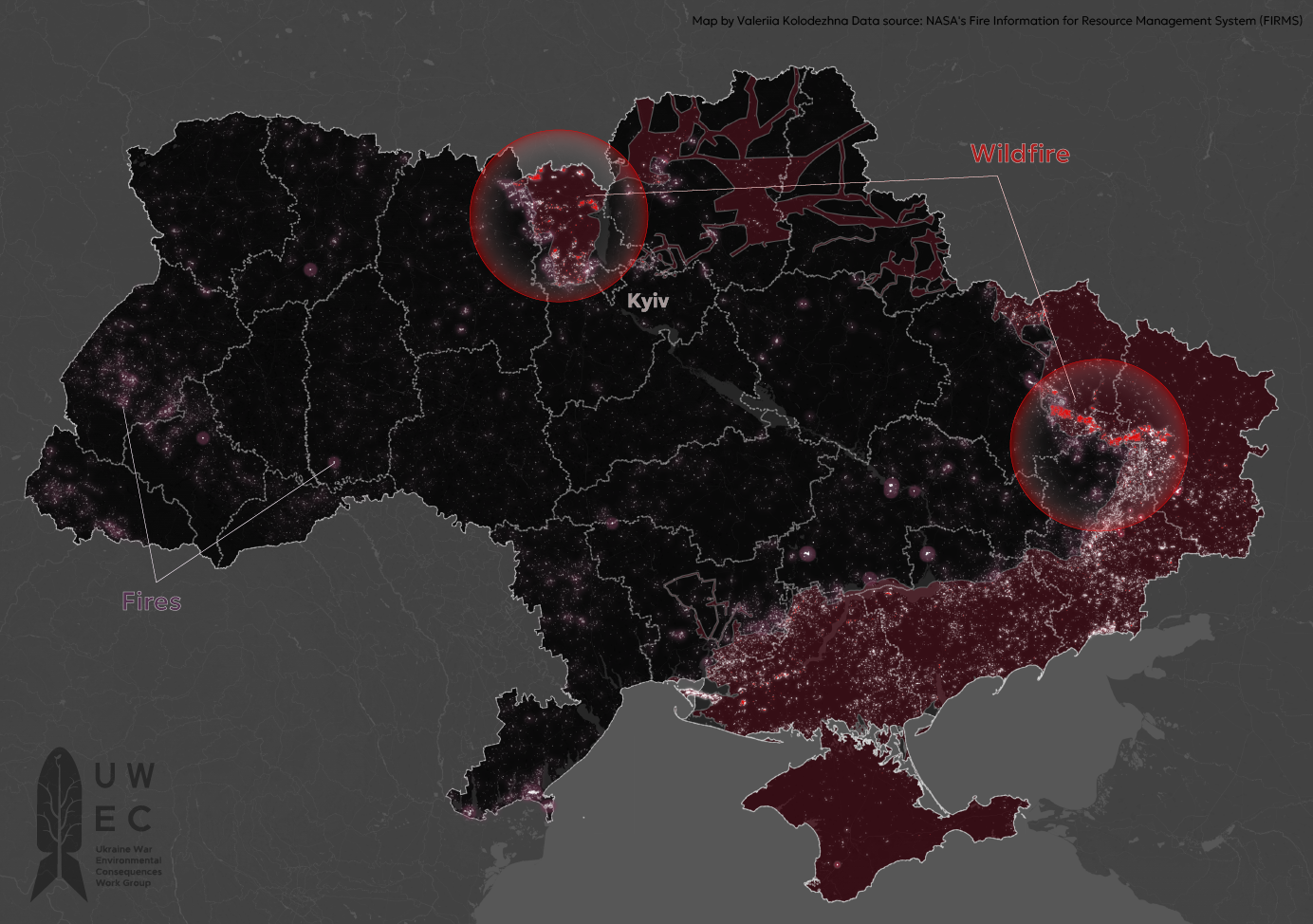
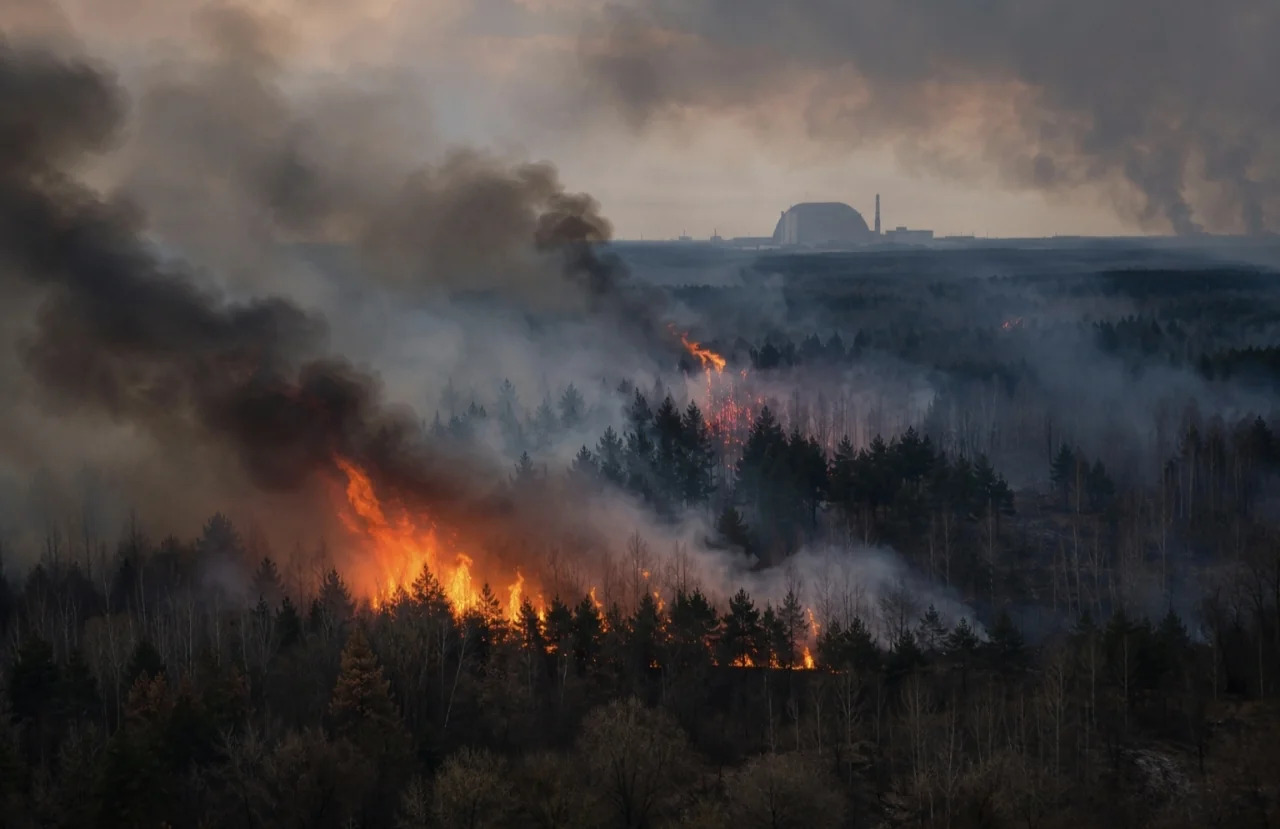
As Ukrainian outlet Suspilne.media reports, Russian drones have caused fires in the Chornobyl exclusion zone after being shot down. Emergency services are working to contain and put out the fires, but this is often difficult. Furthermore, new fires can quickly break out again after one is extinguished. The fires cause significant air pollution, which affects air quality in Kyiv, including documented smog.
Fire detection and localization are conducted not only on the ground but also from space. Researchers at the Ukrainian Meteorological Institute are using satellite data to detect fires, which simplifies the work of the DSNS.
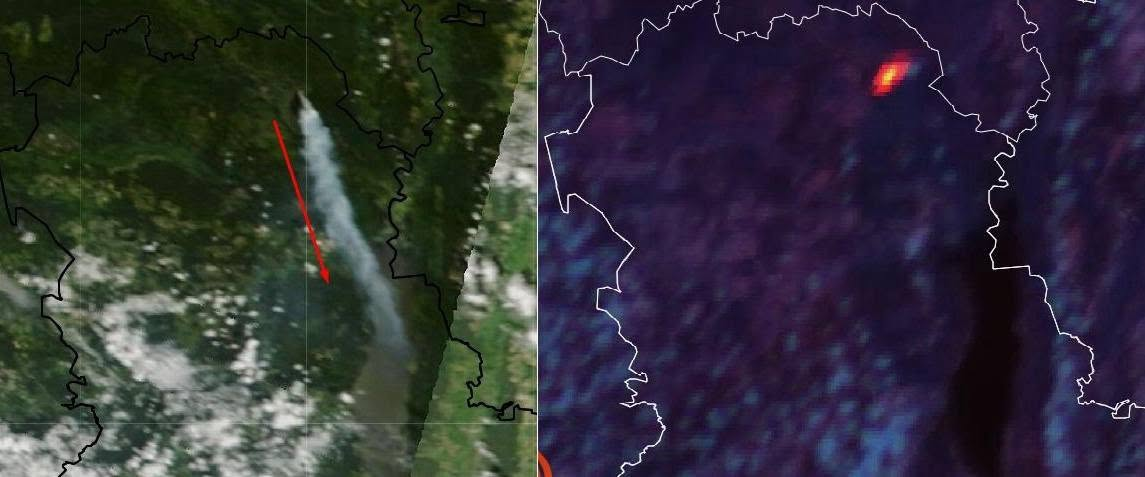
Wildfires were a common occurrence in the Ukrainian part of the Chornobyl zone even before the war, so local residents are unconcerned about increases in radiation levels. However, military action, as well as extreme weather events caused by climate change, are increasing the likelihood of wildfires not only in the Chornobyl zone, but all over Ukraine. For example, a fire tornado was recently observed in the Chornobyl zone.
Apart from forest fires, attacks on the infrastructure of the Chornobyl nuclear power plant itself also pose a danger to the sarcophagus encasing the reactor, as well as the nuclear fuel storage facility.
One such strike, as Greenpeace Ukraine reports, citing Energoatom, occurred on the night of June 7. A Russian drone attacked the Centralized Spent Nuclear Fuel Storage Facility, which could potentially have caused radioactive contamination. The building where containers of used fuel are received was partially destroyed, causing a fire, though this was soon extinguished. As Jan Vande Putte, a radiation and nuclear energy specialist at Greenpeace Ukraine, explains, this is not the first Russian attack on Chornobyl nuclear infrastructure in the past year and a half. The strike on the new steel structure encasing the original concrete sarcophagus, known as the New Safe Confinement, on February 14, 2025, has already created a serious threat and will require significant financial assistance for recovery. Further attacks only increase the likelihood of another radiation disaster.
Read more: The Zone and the war: the new tragedy of Chornobyl
Scientists look into negative impact of shelling on soils
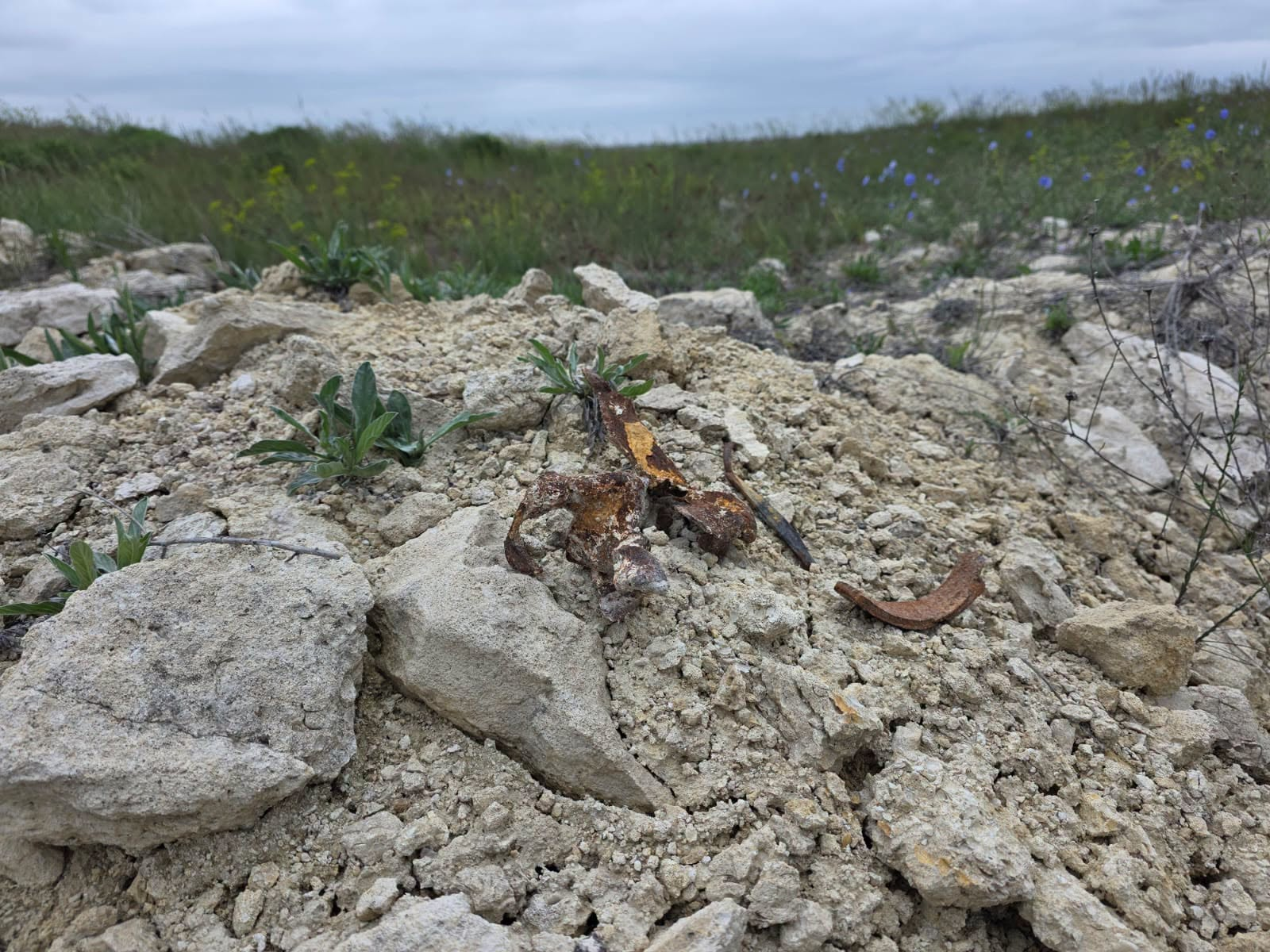
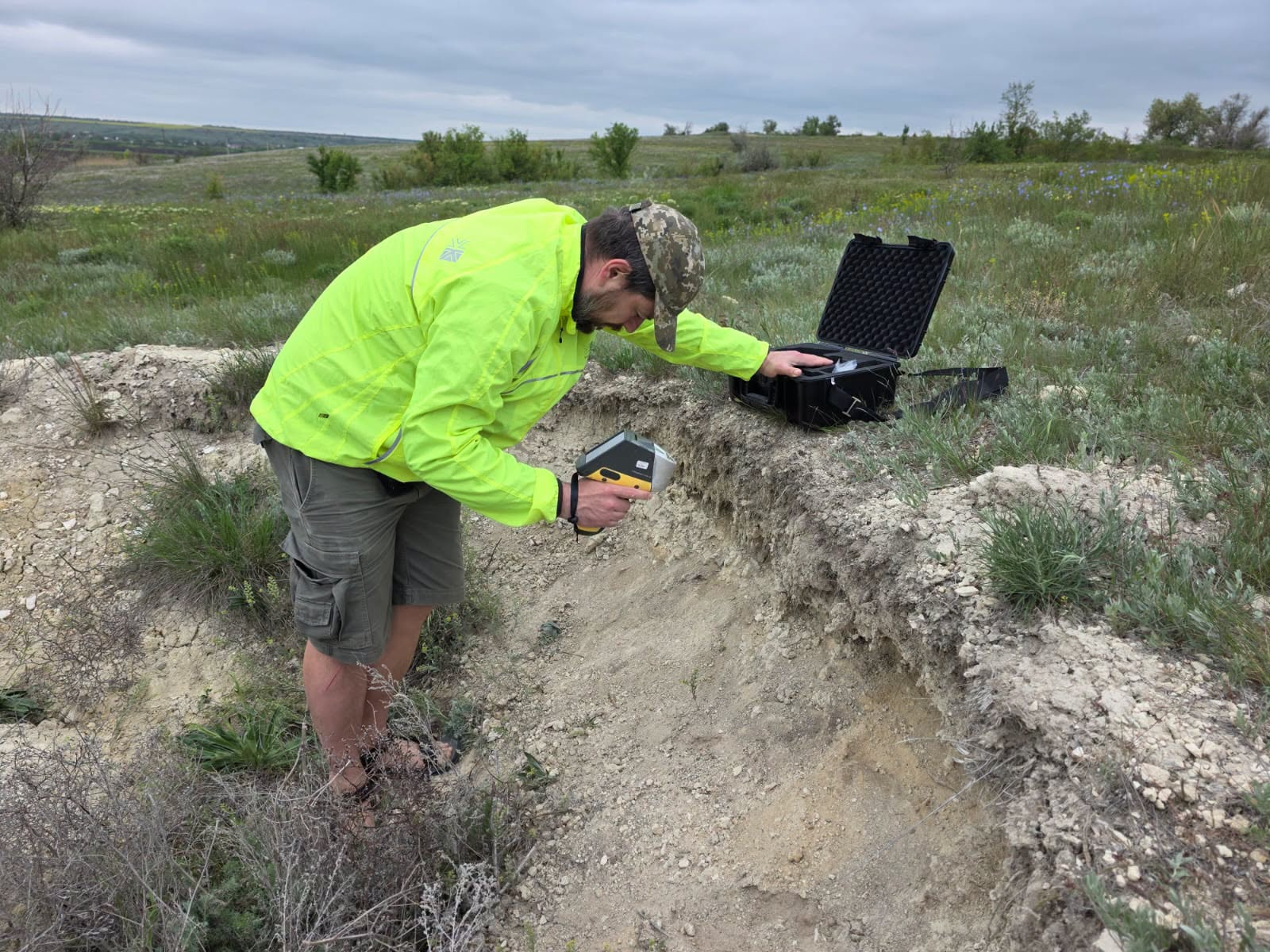
Researchers at the Askania-Nova Biosphere Reserve, one of Europe’s largest nature reserves, are currently forced to work outside its boundaries, since the reserve is occupied by Russian troops. However, their important work continues. Scientists are currently working alongside colleagues from the National Academy of Sciences of Ukraine’s M.M. Hryshko National Botanical Garden to study soils and vegetation succession at explosion sites and fortifications.
The study, carried out using an Elvatech X-ray fluorescence spectrometer, showed high levels of copper and, in other cases, lead and cadmium at crater sites. However, it is too early to draw conclusions. As researchers note, it is currently impossible to say with any degree of certainty where changes in soil composition occur as a result of explosions, where it is due to fuel combustion, and where explosions have simply brought the parent rock or subsoil layers to the surface. An increase in the content of a particular metal may simply be a result of this process, rather than because of pollution. It will be possible to draw conclusions once a more detailed comparative analysis of the ratio between metals has been carried out.
Ukrainian court upholds lawsuit against Russia for environmental damage
The Shostka District Court of the Sumy Region granted a claim by the Ukrainian environmental organization Environment–People–Law (EPL) and demanded 6.1 million rubles (around $78,000) in compensation from Russia for damage to the environment.
The case concerns damage to a national park, part of the UNESCO Desnianskyi Biosphere Reserve. The claim filed by EPL made the case that more than 100 trees were destroyed, the national park’s territory was polluted, and its ecosystem was damaged as a result of Russia’s military invasion. The court upheld the claim and also ruled that the pollution of the national park was a direct consequence of Russia’s military invasion, that Russia cannot claim immunity from prosecution, and also that it is liable for the destruction of Ukraine’s natural heritage.
“This decision has ramifications that extend far beyond one national park,” said lawyer Elena Pelikh, who has been representing the interests of EPL in court. “The court has confirmed that damage inflicted upon the environment as a result of war can be properly documented, assessed and compensation recovered from the aggressor state through legal proceedings.”
While court cases seeking reparations for Russia’s destruction of Ukrainian nature are still relatively few, the very fact that they are taking place is important. It is also important that claims from civil society organizations are being granted. All this is a complex process, since securing reparations requires a switch from national to international level.
Belarusian environmental organizations in a time of war
Russia’s full-scale invasion of Ukraine was accompanied by repressions against civil society in neighboring countries, primarily Belarus and Russia itself. In Belarus, repressions against the environmental movement began even earlier, starting in 2020 amid nationwide protests against the rigging of elections and gathering pace in 2021, when most environmental organizations in the country were shut down.
Ekodom (Ecohome), an environmental organization recognized as “extremist” in Belarus and which is currently continuing its work in exile, has published a report on the work of Belarusian environmental organizations during times of social and political crisis and the full-scale invasion. It describes the main environmental campaigns, which were held in Belarus until 2020: an anti-nuclear campaign against the construction of a nuclear power plant, as well as a campaign against the construction of a battery factory in Brest. Repressions against environmental activists, which have been accompanied by arrests, imprisonment and even the death of one of the activists (Vitold Ashurok), the shuttering of environmental organizations and their designation as extremist groups, which makes them criminally liable for cooperation with organizations labeled extremist.
Despite these repressions and persecution, Belarusian environmental organizations continue to fight for the environmental and climate rights of their compatriots, support their Ukrainian colleagues and analyze climate-related and environmental issues in the region.
Source of main image: ngu.com.ua