Ievgeniia Kopytsia, Alexander Vorbrugg, Anna Ackermann
The Ukraine Recovery Conference (URC) 2026 in Gdańsk was the largest yet. Civil society and municipalities played a stronger role than in previous years, promoting people-centered, environmentally safeguarded recovery, while “green recovery” featured in discussions but was often narrowly framed around EU accession, energy security and business opportunities. The authors argue that the conference’s emphasis on pragmatism and investment leaves environmental and social concerns vulnerable to being sidelined or reduced to rhetorical commitments and call for more diverse cross-sectoral debate and stronger environmental advocacy ahead of URC 2027 in Tallinn.
In this article, we follow up on the Ukraine Recovery Conference (URC) 2025 report published here last year. Once again, we traveled to the URC, held in Gdańsk, Poland this year, mingled with thousands of participants and attended official and side events. Affiliated with the Build Ukraine Back Better (BUBB) platform, we were also involved, to varying degrees, in the exchanges and coordination leading up to the event. Now we reflect: How was this year’s event different from previous iterations? What was new, what stood out, what was missing and what can be learned?
Read more:
- Environmentalists critique Ukraine’s reconstruction plan
- URC23 Review: Ukraine offers investment opportunities
- Ukraine Recovery Conference 2024: What were the key environmental takeaways?
- Building back better? Fifty shades of green at the Ukraine Recovery Conference 2025
As last year, this year’s URC was too large and diverse to summarize. Much of what is important about the event is not announced on big stages but happens in interactions at the official venue and in more than 70 side events. Drawing around 7,500 participants, it was the largest URC to date. Parallel events across various venues reflected the heterogeneity of interests assembled here.
In terms of tangible outcomes, the organizers announced nearly 200 signed documents: agreements, contracts and memoranda of intent. Ukrainian officials highlighted more than 30 intergovernmental agreements and announcements worth around €1.5 billion and support from the European Investment Bank. The Ukrainian government also presented a portfolio of over 530 investment projects from communities and regions, along with a first systematic portfolio of public-private partnership projects. Most of these projects and announcements concern transport, logistics, housing, winter resilience and municipal infrastructure. Strikingly few of the headline outcomes had explicit environmental content.
In 2026, “Security and Defense” was added to the existing dimensions of “Business”, “Human”, “Local and Regional” and “EU” that structure the program. The Business Dimension remained the most prominent. Its sessions were held on the largest stage, where heads of state and other political leaders delivered remarks and made major announcements during the opening ceremony. Business representatives also dominated the URC Business Fair, which, in addition to events, remains a main pillar of the URC. Reportedly, 5,000 participants represented businesses.
Role of civil society and local leaders
While only a few representatives of civil society organizations were invited to speak on official panels, and many struggled with the registration procedures, this year’s URC saw the highest number of civil society representatives. Also, civil society organizations (CSOs) raised self-organized activities to a new level in Gdańsk. The Civil Society Forum, held on the day before the official start of the conference and in parallel with dozens of other side events, brought together more than 400 representatives.
The Gdańsk Common Message, launched and discussed at the Forum, was another main result of coordinated CSO efforts. With it, more than 200 CSOs call on the Government of Ukraine, international partners and the Ukraine Donor Platform for a recovery pathway that is people-centered, grounded in human rights and built on genuine partnerships with Ukrainian civil society. It also calls for environmental safeguards to be upheld across all economic sectors. The Common Message was shared by CSOs with international, national and local decision-makers, as well as communicated through media and opinion leaders, such as head of the Nobel Peace Prize–winning Center for Civil Liberties, Oleksandra Matviichuk.
In addition, RISE Ukraine, the largest Ukrainian-only CSO coalition on reconstruction and recovery, launched its Shadow Report on Reconstruction Architecture during the Forum. The report provides an independent diagnosis by Ukrainian CSOs monitoring reconstruction policies and projects, showing both progress and the many issues Ukraine faces, such as gaps between national priorities and local project execution capacity. It also draws attention to the need for a national framework, benchmarks and pilot projects to operationalize the ‘build back better’ principle to strengthen social and environmental aspects of reconstruction.
In addition to civil society organizations, representatives of 102 municipalities attended the URC, more than in past years. During conference events, Ukrainian municipalities highlighted the practical challenges of rebuilding under conditions of ongoing insecurity, limited administrative capacity and significant infrastructure needs, underscoring the importance of direct access to finance, technical assistance and stronger project preparation. Several municipalities and organizations supporting them emphasized the need for city-to-city partnerships, peer learning and coordinated donor engagement.
A consistent message throughout the conference was that successful reconstruction requires empowering municipalities as decision-makers and ensuring that local priorities are translated into bankable, investment-ready projects through closer collaboration with national authorities, international financial institutions and private investors. Municipalities in the SUN4Ukraine project promoted recovery pathways that integrate climate neutrality, energy transition and resilience objectives, linking local reconstruction efforts with Ukraine’s longer-term sustainability and EU integration goals.
Role of environmental issues
As last year, Ukraine’s EU accession, domestic energy security and resilience and reconstruction needs and projects were among the conference’s dominant themes. “Green recovery” has by now become part of the standard vocabulary of certain panels, strategy papers and business pitches. Overall, however, environmental aspects were absent from most of the events, and most of those mentions were rather general.
Part of the explanation is institutional. Since July 2025, Ukraine’s government has had no cabinet-level dedicated environmental authority. The Ministry of Environmental Protection and Natural Resources was liquidated and its functions folded into a merged Ministry of Economy, Environment and Agriculture in 2025, a decision environmental organizations warned would subordinate environmental policy to economic priorities. The government reshuffle of July 2026, shortly after the Gdańsk conference, broke up the mega-ministry again, but the environment portfolio stayed with the Ministry of Economy.
Read more:
Combined ministries are not in themselves unusual—Croatia, France, Ireland, Latvia and Spain (among others) all have them—but in those cases the environmental component is not subordinate. What is distinctive in Ukraine is less the merger than the hierarchy it encodes. Environmental protection is now one directorate among many inside a ministry whose primary mandate is growth, investment and deregulation. That hierarchy shapes how environmental matters are presented, at the URC and elsewhere. They are raised by economic officials, before economic audiences, in a vocabulary of accession requirements, investment conditions and permitting reform. It is also the vocabulary in which they are most easily traded away, since each of those framings makes environmental protection contingent on something else. The gap is easy to overlook precisely because green recovery is talked about so much. But what counts as green, and how green is green enough, is exactly the question.
Two URC sessions were explicitly dedicated to environmental issues. Both were well attended and linked to the “EU dimension”. The workshop “Green Recovery of Ukraine: Practical Steps, Challenges and Opportunities” brought together perspectives on environmental regulation, nature restoration, cross-border nature protection zones and green tech and entrepreneurship. Panelists laid out how environmental issues are crucial even as the war is ongoing. For example, Iryna Stavchuk, Director of the Eastern European Program of the European Climate Foundation, emphasized that, in addition to being part of a green transition, the transition away from fossil energy was crucial to enhancing energy security. Similarly, green recovery measures are not only beneficial in environmental terms but also enhance quality of life in many places—a crucial factor given the demographic challenges the country is facing and related attempts to incentivize people to stay or return.
The panel session “From compliance to capital: How green reforms unlock EU investment for Ukraine” included opening remarks by Oleksii Sobolev, Ukraine’s Minister of Economy, Environment and Agriculture. Sobolev described the green transition as part of Ukraine’s EU accession, and as both a policy requirement and business opportunity. The goal, in his words, was to make Ukraine a green, resilient and prosperous member of the EU family. Margot Wallström, former Foreign Minister of Sweden and co-author of the pioneering Environmental Compact for Ukraine, described Ukraine as a biological superpower and underscored that environmental issues were a question of survival rather than an add-on, and that green recovery is also an economic opportunity. In her remarks, Anna Ackermann, IISD policy analyst and BUBB platform coordinator, similarly combined environmental concern with economic pragmatism, adding that green recovery is also crucial in the context of a climate-troubled future. She highlighted the need to clearly define “build back better” approaches and policies for all sectors of the economy.
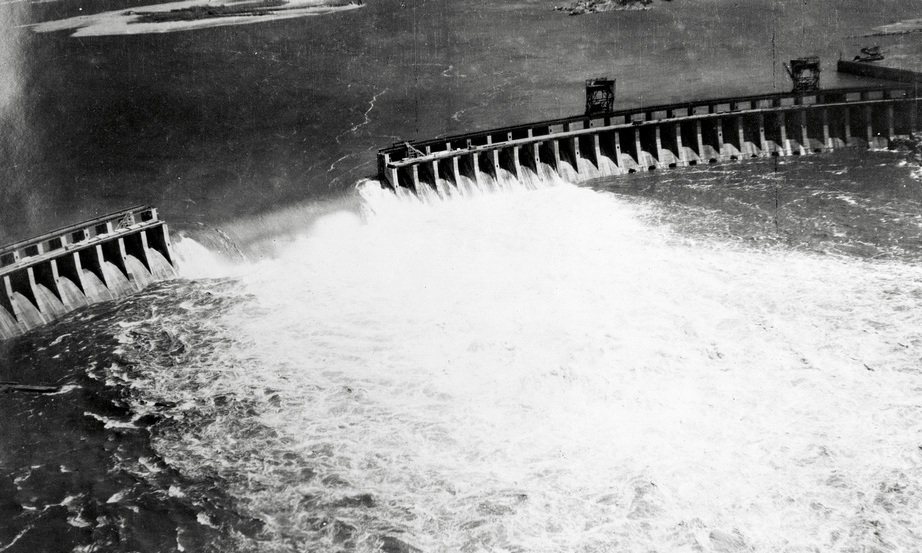
Besides such dedicated events, speakers mentioned, mostly in passing, well-known environmental issues, including the destruction of the Kakhovka dam as a prime case of ecocide committed by Russia or the extent to which land in Ukraine has been mined.
In this setting, “greenness” is increasingly framed through two narrow lenses. The first is EU accession, where environmental ambition appears as an alignment with the Community acquis and the Green Deal, something Ukraine must do rather than something it chooses to do. The second is security, where decarbonization is argued through resilience, decentralization and energy independence rather than through climate or ecosystem concerns. Both framings have proven relatively effective for drawing more attention to advancing renewables, energy efficiency and circular construction. Yet, topics such as biodiversity, environmental safeguards and questions of where and how infrastructure is built remain marginal both at URC and on the ground in Ukraine, as the siting of wind projects in high-conservation areas illustrates.
The clearest current case is Polonyna Runa in Zakarpattia, where a 30-turbine wind farm is being built on high-mountain Carpathian pasture and old-growth forest, next to several protected sites and land proposed for the Emerald Network. Ukrainian environmental lawyers and NGOs documented construction starting before the environmental impact assessment was complete and challenged the underlying spatial-planning decisions in court, pointing out that the national energy-siting maps prepared with the Energy Community Secretariat never designated the area for wind development. In February 2026 the Ministry of Economy, Environment and Agriculture nonetheless issued a favourable EIA conclusion. In July 2026, weeks after the URC, the European Parliament criticized the siting of wind turbines in high-conservation areas in the Carpathian mountains in its resolution on Ukraine, noting that green energy and nature conservation need not be in conflict where suitable alternative sites exist. The case received little attention in Gdańsk despite its relevance to the practical implementation of green recovery.
A relevant municipal-level example was heard at the side event “Strengthening municipal capacity to respond to EU integration process within recovery process“. Its stated aim was to help municipalities build climate resilience strategies, align with EU integration processes and develop investment-ready adaptation projects. Discussions addressed how to integrate a climate component into community and regional development plans; how to build effective local climate governance systems; the role of communities in green recovery and in preparing investment-attractive projects; and the development of “green and blue infrastructure” as part of resilient urban recovery. The discussion placed particular emphasis on access to EU funding and international finance as enablers of local climate action. In contrast, biodiversity and ecosystem protection featured less prominently among the topics addressed.
Sustainability talking?
Much of the sustainability talk at business events, too, appeared mostly aligned with broader economic and investment narratives. Sustainability ambitions were often highlighted where they supported visions of modernized, future-oriented, European economies and businesses, or where Ukraine could be framed as a “green growth engine” or a “laboratory for environmental innovation,” to quote from some of these discussions. In such statements, green recovery and sustainability were often equated with smart, green technologies and more efficient operations, rarely with what is protected, restored or avoided.
Sustainability measures were frequently presented as part of mutually beneficial outcomes. For example, at some agricultural events, increasing biomethane and biofuel production was described as an opportunity for agricultural producers, a means for Ukraine to be at the forefront of European energy production, and a contributor to the EU’s green energy transition. At the same time, these events did not address potential sustainability trade-offs or challenges.
While acknowledging war-related business risks and difficulties, speakers rarely discussed tensions and contradictions within Ukrainian or Western business strategies and projects, or within broader policy developments. For example, business representatives often emphasized how easily investment projects can be rolled out in Ukraine. However, environmental organizations have pointed to the rollback of environmental regulations in Ukraine over the past few years as an important part of this context. Exceptions from environmental impact assessment procedures were introduced beginning in 2022, that is, the year Ukraine became an EU candidate country, and at a time that many URC speakers frame as a straight path to a greener future. In 2025, the Ukrainian parliament considered amendments that would let construction proceed while environmental permits are still contested in court, and the government introduced a bill proposing to abolish several dozen environmental permits and approvals.
These developments reflect both responses to increasing war-induced economic pressures and differing approaches to balancing economic, environmental and social objectives in recovery policy. At the same time, effective regulation and oversight remain important mechanisms for ensuring accountability and assessing whether sustainability commitments translate into practice. Without such safeguards, a gap emerges between the sustainability ambitions articulated at forums such as the URC and the regulatory and project-level realities that shape recovery efforts on the ground.
Hidden controversies?
As in earlier years, we observed the relative absence of open debates at the URC. From high-level opening speeches to sessions, a spirit of reassurance and mutual praise was often evident. During the reflection event “URC 2026: Main Signals from Gdańsk,” journalist Taras Yatsenko described the URC as a maidan for political messages. In a program with dozens of simultaneous events, participants are free to choose where to go. Most speakers’ claims—whether about the scope of land contamination and natural damage or a company’s green ambitions—are not a subject of discussion within conference sessions.
The URC has become an annual opportunity to meet and bond with partners, friends, colleagues and allies. This helps strengthen networks but also contributes to creating professional and information bubbles with limited opportunities for interaction and critical debate between them. This perceived lack of more sustained and in-depth dialogue at the URC may represent a missed opportunity, given the range of relevant expertise and perspectives participants bring to the conference. It may be particularly relevant in relation to environmental and social concerns, as these are at risk of receiving less attention, given the dominance of business representatives and the factual and declared urgencies associated with the war against Ukraine.
In response to such observations, several attendees suggested that panels should be diversified and audience discussions enabled to stimulate more heterogeneous discussion, increase the visibility of voices from civil society, emphasize environmental and social aspects, and counter the tendency towards professional and information bubbles. Another recurring reflection was the need for more exchange between different conference communities and thematic dimensions, creating greater scope for cross-cutting issues, such as environmental concerns, to be addressed across a wider range of discussions.
How green is the current green? Shifts and outlook
So what has changed in the overall discourse at URCs over the years, and what’s to be expected next? And what has changed in the green discourse specifically?
Ukraine’s representatives at the URC have always emphasized that Ukraine should not be seen as a recipient of foreign aid and support, but rather as a strategic partner. While the emphasis in earlier years was on the economic potential Ukraine offers through the resources it can export and the security benefits it provides to its partners by fighting off the Russian army, the rhetoric has now shifted to expertise and experience.
Political, municipal and business representatives emphasize how Ukrainian actors can teach others resilience and crisis preparedness relevant for agriculture, urban governance, energy systems and defense. Representing Ukraine as a source of knowledge and expertise rather than a raw resource pool seems like a positive change, even though the context of this shift is grim.
In debriefing events, several participants noted that discussions at this year’s URC were more pragmatic, focused on what can and should be done, and less on grand statements, ambitious promises or an overarching strategic framework. This may be a double-edged development. While we won’t miss lofty, unrealistic promises, a shift toward more pragmatism could also increase the risk of dismissing necessary and useful environmental and social ambitions as idealistic. As these issues often concern longer-term resilience and sustainability rather than immediate outputs, they can be difficult to accommodate in discussions driven by urgent needs and time-sensitive decisions.
Our guess is that the outcomes of this discursive shift are not predetermined. Rather, it is a reminder of the need to continuously adapt tactics and strategies of environmental advocacy to changing discursive and political landscapes. Green recovery has become part of the mainstream vocabulary, but, as described above, it is framed mainly through EU accession and energy security, while biodiversity, safeguards and questions of where and how infrastructure is built remain at the margins. The question for environmental advocates is not so much whether the recovery will be called green, but which shade of green will prevail, and whether the pragmatic framings that currently carry the agenda can be expanded to include the aspects they tend to leave out.
The environmental CSO community already follows a strategy of targeted interventions through strategy documents such as the Roadmap for the Sustainable Recovery of Ukraine or the Gdańsk Common Message, organizing panels and side events and approaching decision-makers directly. Another important avenue of engagement remains advocacy for reforms, EU alignment and European integration, recognizing that EU support for Ukraine’s recovery and social needs continues to be linked to reform requirements and that the EU is unlikely to move away from this framework.
We are writing in the middle of a war whose course and whose possible settlements could reshape the recovery agenda entirely, including what a Ukraine Recovery Conference is for and whether the format continues in its present shape. With that caveat, the next URC is scheduled for Tallinn in January 2027. The Ukraine Donor Platform is likely to become a co-organizer of future URCs, which could tie the conference even closer to financing and implementation logics, reinforcing the pragmatic turn described above. Whether that opens or narrows the space for civil society and for environmental and social concerns is worth watching.
In any case, the URC will remain an important place to meet and network, anticipate the direction of recovery discussions, and make meaningful interventions in Tallinn and beyond.
Main image: ua.news