
After the start of the war, the World Bank, the EU, the UN and the government of Ukraine introduced a series of reports to assess damage and recovery needs (RDNA – Rapid Damage and Needs Assessments). These documents combine data on destruction with estimates of reconstruction financing; their environmental component raises concerns.
The latest version, RDNA5, has been significantly reduced – 63 pages instead of nearly 200 previously. The authors shifted to simplified models and averaged coefficients, replacing detailed analysis. This is at least in part due to limited access to data, closed registries, and the suspension of environmental inspections.
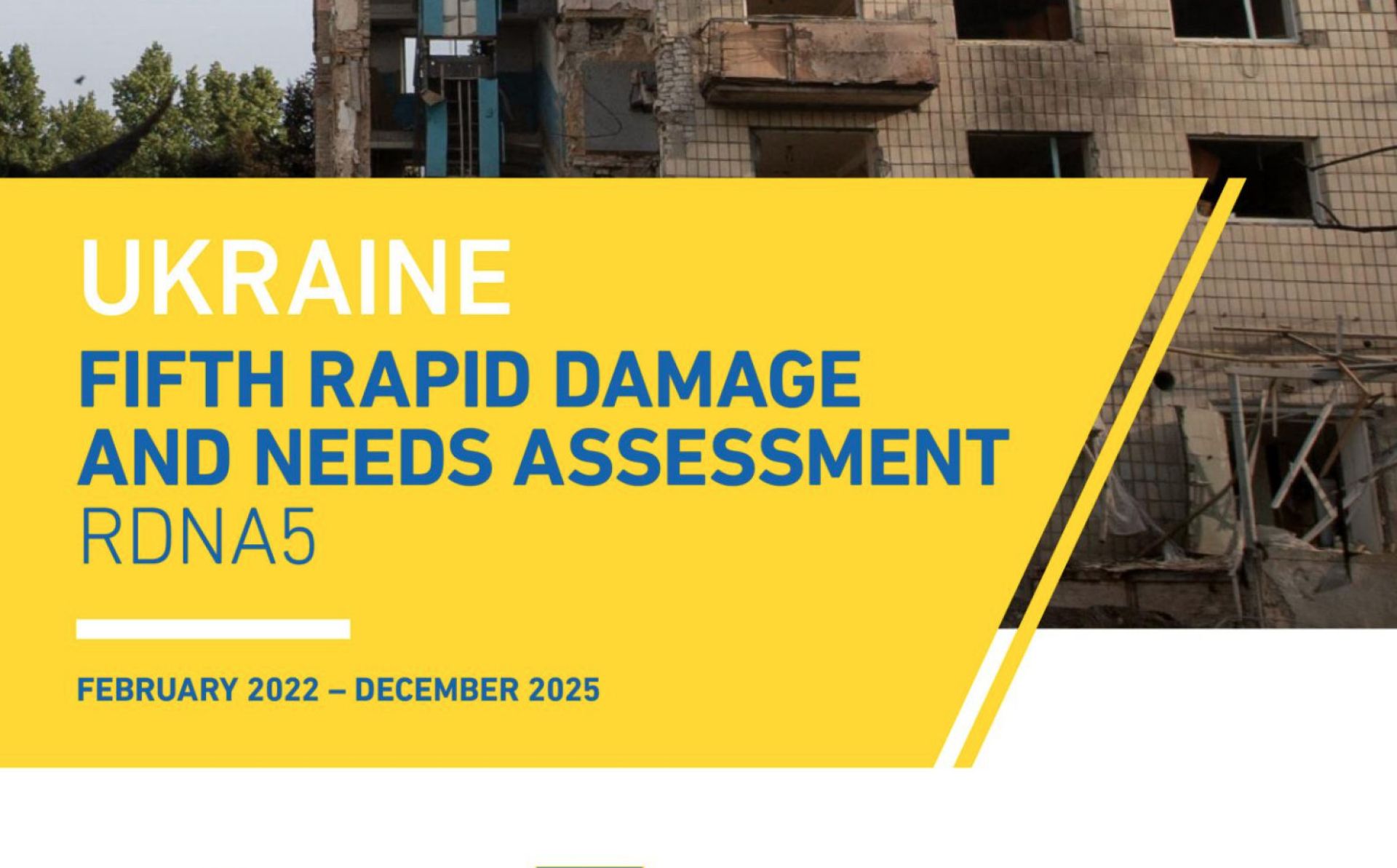
The stabilization of the frontline in 2024–2025 led to more standardized patterns of destruction, so the report offers few new solutions. RDNA5 essentially updates already known damage estimates that reach around $600 billion. The report’s main focus has shifted toward accelerating funding processes and creating mechanisms for allocating resources, including alignment with the Ukraine Facility program.
However, this simplification increases environmental risks. Environmental damage is aggregated into broad categories, ignoring the specific nature of ecosystem destruction. The principle of “Build Back Better” often remains declarative, while in practice weakening environmental safeguards.
Thus, RDNA reflects the tension between the speed of reconstruction and the need for sustainable development. The key challenge is to ensure oversight of fund allocation and compliance with environmental standards so that recovery does not lead to biodiversity loss.
Recent posts:
- Wild Victims of War—Paczoski’s knapweed (Centaurea paczoskii)
- Promises or commitments? Fifty shades of green at the Ukraine Recovery Conference 2026
- Environmental consequences of the war in Ukraine: July–August 2026 Review
- UWEC Work Group designated an “undesirable organization” in Russia
- Wild Victims of War. Great Crested Grebe (Podiceps cristatus)