Margo Moore and Eugene Simonov
The 2026 arbitral ruling in the decade-long maritime dispute between Ukraine and Russia delivered a landmark, albeit mixed, outcome. While the Tribunal dismissed Ukraine’s navigational and “aggravation of the dispute” claims, it ruled that Russia violated the United Nations Convention on the Law of the Sea (UNCLOS) by failing to conduct adequate environmental impact assessments for its key infrastructure projects, such as the Kerch Strait Bridge. Despite ordering no corrective measures to address the violations, leading maritime lawyers believe that the decision significantly advances the “greening” of modern international maritime law and maritime security.
The “Dispute concerning coastal state rights in the Black Sea, Sea of Azov and Kerch Strait” followed the occupation of the Crimean Peninsula by the Russian Federation in February–March 2014 and consequent disagreements over maritime cooperation and coastal state rights. Ukraine initiated the arbitration against Russia in September 2016 under Annex VII to UNCLOS — which precluded the Tribunal from deciding the lawfulness of the occupation, but allowed it to address UNCLOS claims arising from Russian control of adjacent maritime areas.
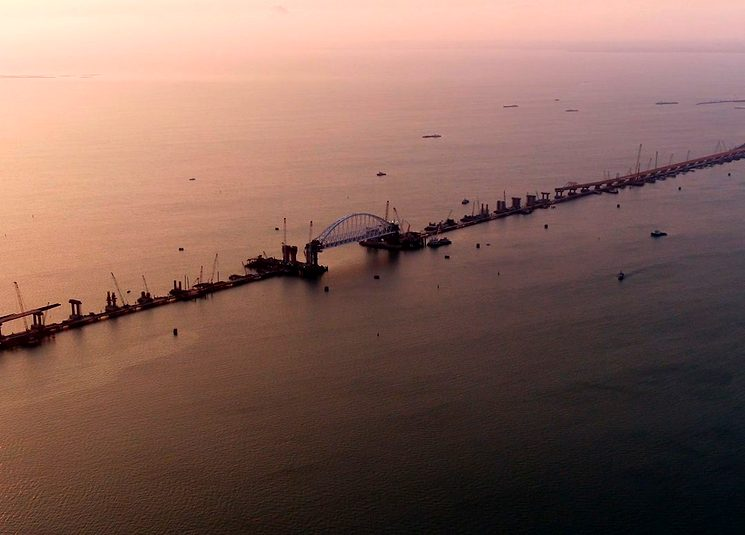
Ukraine’s claims covered several categories of alleged violations: unlawful construction of the Kerch Strait Bridge and other infrastructure (power and fiber-optic cables, a gas pipeline) across what Ukraine described as an international strait, without consent or proper environmental assessment; harassment of vessels navigating to and from Ukrainian ports; seizure and reflagging of two gas-extraction drilling rigs; improper handling of an oil spill near Sevastopol in 2016; and unsafe interference with underwater cultural heritage sites.
In a 2020 preliminary ruling, the Arbitral Tribunal significantly narrowed the scope of the case, determining it lacked jurisdiction over any claims that would require a direct or implicit ruling on territorial sovereignty over Crimea as it falls outside the scope of the UNCLOS.
The final Award, published in June 2026, delivered a mixed outcome. The Tribunal dismissed Ukraine’s freedom of navigation claims, ruling that the Sea of Azov and the Kerch Strait retained the status of internal waters (belonging to Russia and Ukraine) following the dissolution of the Soviet Union. Consequently, UNCLOS provisions regarding transit passage and freedom of navigation were deemed inapplicable.
Claims regarding the seizure of the drilling rigs were dismissed for lack of jurisdiction, as resolving them would have required ruling on Crimea’s sovereign status. The related reflagging claim was rejected because no UNCLOS violation was found. The claims regarding interference with underwater cultural heritage sites were dismissed because Ukraine failed to meet the evidentiary burden. The tribunal also found no evidence of conduct by the Russian Federation that would constitute aggravation of the dispute as such conduct did not meet the legal threshold of seriousness for this doctrine to apply.
However, the Tribunal did rule in Ukraine’s favor on several critical environmental claims, finding that the Russian Federation violated its obligations under UNCLOS regarding environmental impact assessments (EIAs) and regional cooperation during the construction of major infrastructure in the Kerch Strait. But no practical remedies have been awarded for even those claims.
Environment-related demands and tribunal rulings
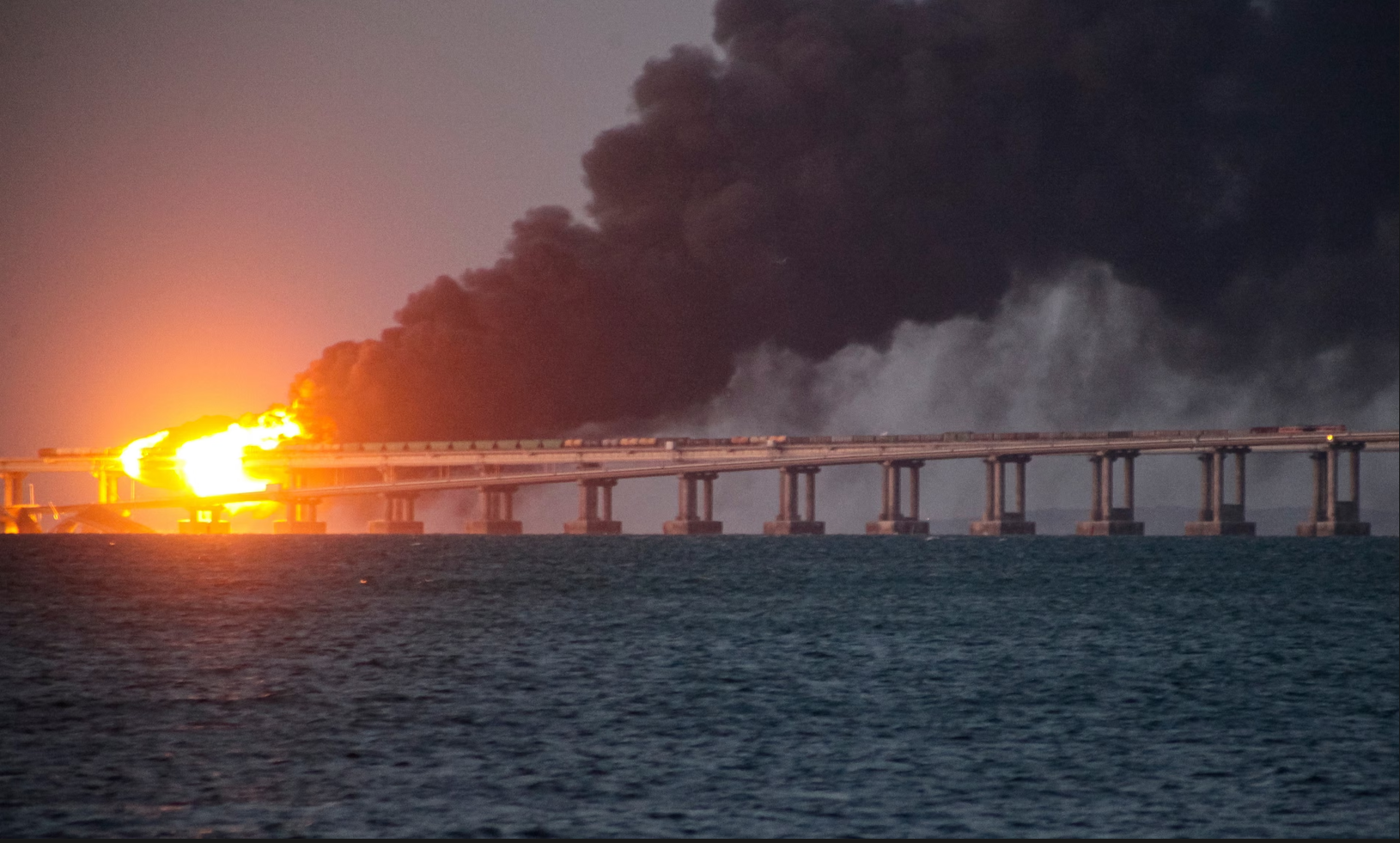
Ukraine’s environmental demands centered on the Russian Federation’s construction of the Kerch Strait bridge, submarine power cables, fiber-optic cable and a gas pipeline, as well as its response to a 2016 oil spill near Sevastopol. Ukraine requested cessation of the violations, restitution including the dismantling of the bridge and compensation, arguing that the projects were rushed, lacked adequate EIAs and posed severe threats to the Azov-Black Seas basin’s fragile marine ecosystems.
Consequently, the Tribunal determined that by failing to properly assess the environmental impacts of its infrastructure projects and share those results, Russia breached Articles 123, 192 and 194 of UNCLOS. The ruling provided vital clarity on the interconnected subjects of these three provisions. Article 192 establishes the foundational, overarching legal obligation for all states to “protect and preserve the marine environment,” a duty the Tribunal confirmed applies universally across all maritime zones, including internal waters.
Building upon that foundation, Article 194 specifically addresses pollution, which the Tribunal interpreted as a “due diligence” obligation requiring states to proactively manage environmental risks and take all necessary measures to prevent, reduce and control marine pollution from any source. Importantly, the Tribunal confirmed that proving actual environmental damage is not required to establish a breach of Article 194(2).
Lastly, the Tribunal clarified that Article 123, which addresses enclosed or semi-enclosed seas, such as the Black and Azov seas, elaborates and gives specific application of the environmental obligations already contained in Articles 192 and 194 in this particular context. Ultimately, the Tribunal concluded that by disregarding the procedural requirements of environmental impact assessments and failing to share environmental impact assessments data with Ukraine, Russia inherently violated these broader substantive mandates of environmental preservation, pollution prevention and regional cooperation.
Read more: The Crimean Bridge: Environmental impact of Russia’s ‘project of the century’
Ultimately, however, the Tribunal did not side with Ukraine on all environmental counts. It ruled that the laying of a submarine fiber-optic cable did not require a full EIA — even though it found Russia’s failure to demonstrate any prior screening ‘regrettable’—ultimately accepting that the existing permitting procedure was adequate and that such activities generally pose a negligible risk of substantial pollution. Furthermore, the Tribunal dismissed claims regarding the 2016 Sevastopol oil spill, determining that the volume of hydrocarbons spilled did not meet the de minimis threshold required to trigger notification obligations under Article 198. The Tribunal also noted that the evidence did not clearly establish the source and nature of the pollution.
Future use of UNCLOS
The interpretation of the environmental provisions of UNCLOS in this case represents a highly significant development in case law for the future application of UNCLOS. Legal experts observe that the decision firmly establishes that the obligation to conduct an EIA under Article 206 is not a mere administrative formality left entirely to state discretion, but an objective, verifiable legal standard. The Tribunal clarified that the trigger for an EIA—“reasonable grounds for believing” that an activity may cause substantial pollution or significant and harmful changes to the marine environment—must be assessed objectively, on the basis of facts and scientific knowledge and in accordance with precautionary approaches. In essence, it is similar to the “precautionary principle” set forth in the 1992 Rio Declaration on Environment and Development. The tribunal also held that a state should first conduct a reasoned preliminary assessment to determine whether a full EIA is required.
Furthermore, the award reinforced the principle that UNCLOS environmental obligations apply comprehensively across all maritime domains, including in internal waters. This ruling suggests that the tribunal decoupled the obligation to protect the marine environment from the concept of absolute territorial sovereignty. The ruling established that even in internal waters, and even during periods of heightened geopolitical tension, states maintain a binding duty to exercise due diligence, share environmental data and cooperate with neighboring states—a principle that the tribunal explicitly affirmed continues to apply ”even in times of tension”. As highlighted in a study by Admiral Aurel Popa and co-authors on the Maritime Security Forum website, the award “confirms the trend towards the ‘greening’ of international law of the sea,” establishing that expanding “obligations regarding risk prevention, environmental impact assessment, monitoring of activities and the exchange of information” are fundamentally “integrating environmental protection into the modern concept of maritime security.”
Lack of practical legal remedies and expert critiques
Despite finding the Russian Federation in breach of several UNCLOS provisions, the Tribunal limited the remedy to declaratory relief. It did not order dismantling of the bridge, assurances and guarantees of non-repetition, compensation or new environmental measures. Its reasoning was not only that Ukraine had not proven actual physical harm to the marine ecosystem, but also that, in the circumstances of the case, the declarations of breach were sufficient and no further relief was necessary.
An international law expert granted anonymity for commentary provided to UWEC, pointed out that this exposes a structural paradox within international environmental law: procedural breaches of “due diligence” are relatively simple to prove, but they rarely result in tangible legal remedies to rectify the situation and award compensation due to the absence (failure to provide) of well-documented proof of severe ecological destruction.
A further paradox emerges here: although the Tribunal found that Russia’s EIAs failed to meet the substantive standards of Article 206 and were never properly disclosed under Article 205, it did not order Russia to make the complete underlying EIA documentation for the Kerch Strait bridge or other major projects publicly available now. This apparent inconsistency may be explained by the fact that Ukraine’s final submissions did not specifically request an order compelling disclosure of the documentation itself, as opposed to a general declaration of breach.
Furthermore, the anonymous expert identified potential weaknesses in the Tribunal’s assessment of the fiber-optic cable. The Tribunal accepted Russia’s argument that fiber-optic communication cables generally do not require full EIAs because they usually pose a low risk of substantial pollution or significant and harmful changes to the marine environment. However, this reasoning does not fully address the separate question of Russian domestic law. Specifically, Article 34 of Federal Law No. 155-FZ “On the Internal Sea Waters, the Territorial Sea and the Contiguous Zone of the Russian Federation” explicitly mandates a State Ecological Expertise—and consequently an EIA—for the laying of submarine fiber-optic cables in Russia’s internal waters and territorial seas.
The expert argues that, although Ukraine referred to this law, the Tribunal did not undertake a separate analysis for this argument and instead focused on Russian regulations governing communication lines. This omission may reflect a gap in the Tribunal’s assessment of the Russian Federation’s applicable domestic regulatory framework.
Procedural shortcomings and alternative legal strategies
UWEC’s analysis of the proceedings suggests that the outcome was heavily influenced by the strategic framing of the claims and the evidentiary thresholds required by international tribunals. Ukraine’s navigational claims failed primarily because they were pleaded exclusively using UNCLOS provisions relating to transit passage and exclusive economic zones. Because the Tribunal classified the Kerch Strait and the Sea of Azov as internal waters, the invoked UNCLOS articles became legally inapplicable.
Ukraine might have had a stronger basis for at least some of its navigational claims under the 2003 bilateral treaty between the Russian Federation and Ukraine on ”Cooperation in the Use of the Sea of Azov and the Kerch Strait” which guaranteed freedom of navigation for vessels of both states. However, Ukraine expressly did not plead a breach of that treaty in this UNCLOS arbitration, and the Tribunal held that it could not decide the case on that basis without going beyond requests made in Ukraine’s submissions. The treaty was denounced by Ukraine in 2023; and in any event the tribunal held that this later development had no retroactive effect on the legal status of the Sea of Azov and the Kerch Strait at the time the arbitration was initiated.
Additionally, the dismissal of claims regarding underwater cultural heritage and the Sevastopol oil spill underscore the rigorous evidentiary demands of international arbitration. Ukraine’s evidentiary submissions—including an expert report on the underwater sites, alongside contemporaneous public reporting and witness testimony—were found insufficient to establish that the archaeological excavations were conducted recklessly.
One of the clear lessons from this arbitration for environmental claimants is that more robust, contemporaneous scientific data and systematic monitoring documentation—something that is admittedly difficult to obtain in contested territories—would have been necessary to satisfy the burden of proof when it came to environmental damage inflicted. In a rare public acknowledgment that this arbitration resulted in a legal defeat for the claimant, experts from the Association for Reintegration of Crimea criticized the tactics of Ukrainian government lawyers in the case, pointing to a lack of transparency and absence of academic discussion in developing Ukraine’s position.
Advancing arbitration outcomes
As the tribunal’s ruling has not provided any operational remedy for the environmental violations committed in the course of Russia’s infrastructure projects, it is widely perceived as a legal defeat in many practical respects. But at the same time, it remains an environmentally significant award for future UNCLOS practice. While the award did not result in immediate restorative actions to eliminate the violations, it provides a vital normative and diplomatic tool. By officially declaring that the Russian Federation violated international environmental law, the Tribunal established a legally significant fact that Ukraine can rely on in the future and use this declaratory relief in broader diplomatic arenas, including the United Nations, the European Union and other intergovernmental organizations to maintain normative pressure and to support calls for greater accountability for environmental harm and lack of transparency in the Black Sea region.
Read more: International reaction to the Kerch Strait oil spill
Contrasting perspectives highlight the diplomatic utility of the award. The Russian Ministry of Foreign Affairs publicly dismissed the environmental rulings as a mere “symbolic consolation” for Ukraine. Conversely, the Ukrainian Ministry of Foreign Affairs stated that the award provides “yet another confirmation that the Russian Federation systematically disregards the rules of international law.” Moving forward, Ukraine can utilize the Tribunal’s precise articulation of EIA shortcomings to demand the release of underlying environmental data and to substantiate future claims if it can demonstrate ecological damage caused by infrastructure projects using robust science-based evidence.
In a thoughtful blog for the European Journal of International Law with detailed analysis of the arbitration outcomes, Michael Raff, an expert on such disputes, notes that “to dismiss the award as merely symbolic would be to misunderstand the function of international adjudication. Declaratory relief crystallises legal obligations; it establishes an authoritative record; and it creates a juridical baseline against which future conduct (and potentially future negotiations) will be assessed. ”
The award is therefore best understood not as an operational redress for the procedural environmental violations committed by Russia’s infrastructure projects, but as a potent legal and diplomatic tool for holding parties accountable in the future for failing to fulfill their obligations to protect the marine environment.
Strengthening UNCLOS for better environmental outcomes
The outcomes of this arbitration illuminate specific areas where UNCLOS and its associated dispute resolution mechanisms must be strengthened. The most glaring gap resides in the remedial phase of environmental litigation. Currently, a state can be found in breach of procedural environmental obligations yet face no concrete remedial order if the opposing party cannot prove actual ecological harm or other material consequences, a highly difficult task when the respondent state controls access to the area and the relevant environmental data.
To achieve better environmental outcomes, the international community should consider developing mechanisms under UNCLOS that link severe procedural breaches to potential material consequences. For instance, if a state fails to conduct or publish an adequate EIA for a mega-project, the burden (or absence) of proof regarding environmental harm could shift to the acting state, rather than remaining with the claimant. Such a presumption is not unprecedented in national legislative systems: Russian environmental law, for instance, enshrines a ‘presumption of environmental danger’ for any planned economic activity, placing the burden on the project’s proponent to demonstrate its safety rather than on objectors to prove harm—a principle the tribunal’s own EIA analysis arguably did not fully extend to the international standard it applied.
Additionally, strengthening the mandate for independent, third-party environmental monitoring in enclosed and semi-enclosed seas (such as the Black and Azov seas) —further building on Article 123’s cooperative framework and Article 204’s monitoring obligations—would ensure that objective scientific data is available to tribunals, preventing states from utilizing a lack of transparency as a shield against international liability.
Utility for environmental NGOs and legal practitioners
For environmental non-governmental organizations (NGOs) and international lawyers, the award sets an important precedent. The tribunal established specific, practical benchmarks for what constitutes an adequate EIA under international law. In emphasizing the importance of sufficient baseline data, and by finding that year-round baseline data may be indispensable in areas with significant seasonal variation, the ruling gives NGOs and legal practitioners a useful argument against rushed or superficial environmental assessments, especially for major marine infrastructure projects in hydrologically complex areas.
Furthermore, the tribunal’s interpretation of Article 205 strengthens arguments for transparency. It clarified that the obligation to communicate EIA results is mandatory and may be fulfilled either by publishing the reports or by providing them to competent international organizations so that they are available to all states. The tribunal also ruled that holding public hearings as part of the EIA process does not fulfill the obligation to disclose its results, and that the submission of edited excerpts from the EIA materials does not in itself indicate that these materials were published in accordance with established procedures. NGOs can cite this award to support demands for meaningful continuous public disclosure of environmental assessment materials for major sea-related projects, including bridges, submarine pipelines and artificial islands. The ruling also affirms that strategic or national security interests do not automatically grant a state immunity from fulfilling its environmental due diligence and transparency obligations.
Margo Moore is a legal expert in the law of the sea, marine environmental protection and international environmental law.
Eugene Simonov is UWEC Work Group’s expert group coordinator.
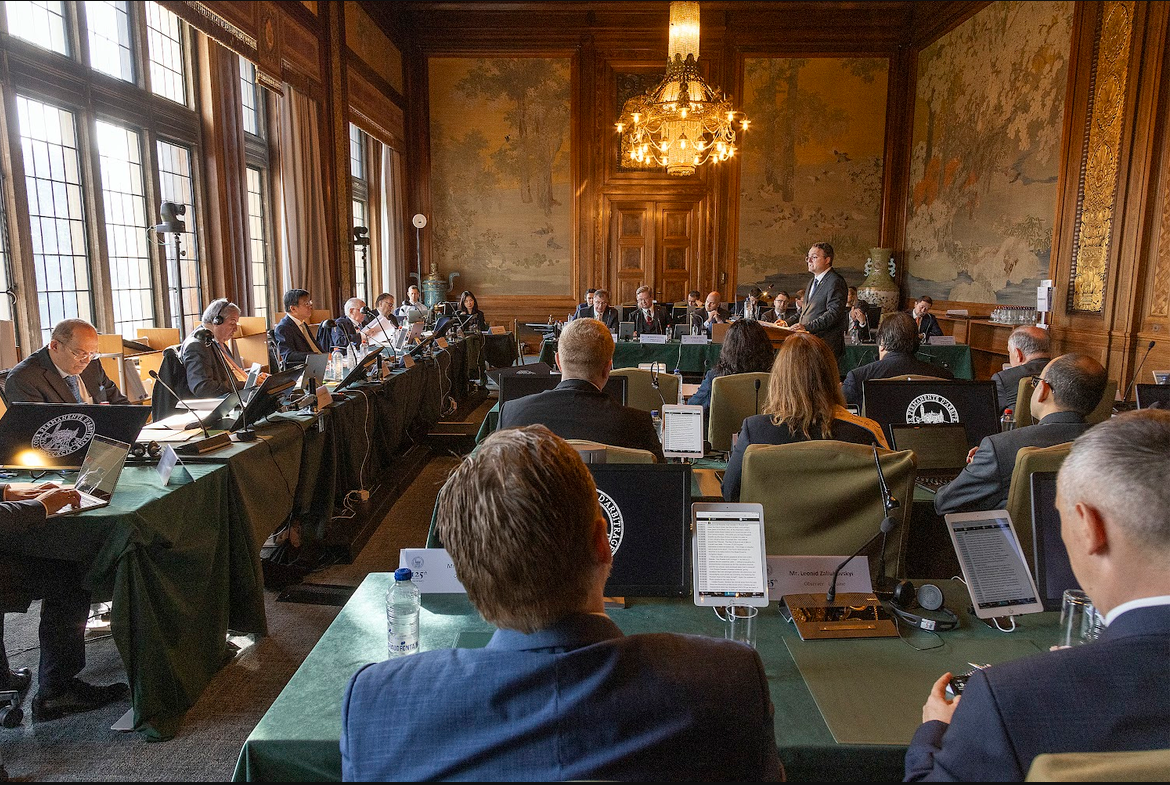
Main image: Hearing in session, 23 September, 2024 Source: Permanent Court of Arbitration