Skip to content
  • EN
  • UA
  • RU
Ukraine War Environmental Consequences Work Group

Ukraine War Environmental Consequences Work Group

Seeking solutions through information sharing about the environmental impacts of the war. UWEC Work Group.

  • Home
  • About UWEC
  • Issues
    • Issue #35
    • Issue #34
    • Issue #33
    • Issue #32
    • Issue #31
    • Issues 21-30
      • Issue #30
      • Issue #29
      • Issue #28
      • Issue #27
      • Issue #26
      • Issue #25
      • Issue #24
      • Issue #23
      • Issue #22
      • Issue #21
    • Issues 11-20
      • Issue #20
      • Issue #19
      • Issue #18
      • Issue #17
      • Issue #16
      • Issue #15
      • Issue #14
      • Issue #13
      • Issue #12
      • Issue #11
    • Issues 1-10
      • Issue #10
      • Issue #9
      • Issue #8
      • Issue #7
      • Issue #6
      • Issue #5
      • Issue #4
      • Issue #3
      • Issue #2
      • Issue #1
  • Highlights
  • Contacts
  • Resources
    • Webinars
  • Toggle search form

Russia’s strikes on Ukraine’s oil terminals trigger large-scale vegetable oil spills

Posted on February 13, 2026March 6, 2026 By Editor No Comments on Russia’s strikes on Ukraine’s oil terminals trigger large-scale vegetable oil spills

Russia’s attacks on oil terminals in Odesa, Chornomorsk, Mykolaiv and Dnipro caused massive sunflower oil spills into estuaries and the Dnipro River. Ukraine exports 5–6 million tons annually, so targeting storage facilities weakens both economy and environment.
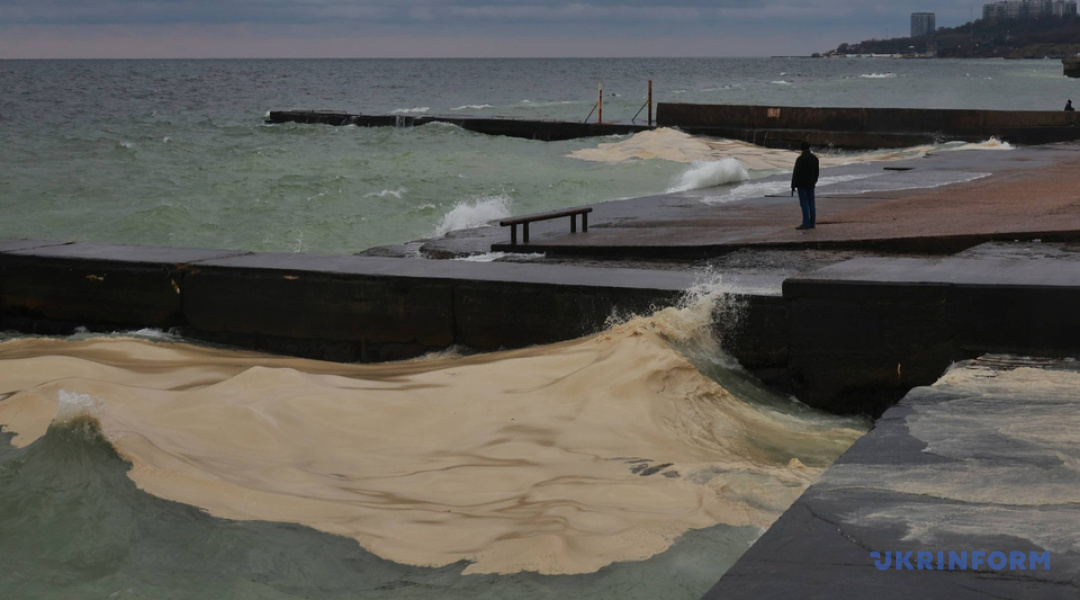
sunflower oil spills

Russian attacks on vegetable oil facilities open a new front in its war on Ukraine

Unlike crude oil, vegetable oils were long seen as low-risk pollutants. Yet cases near Fanning Island, Vancouver, Wales, Colombia and Hong Kong prove they cause fish die-offs, seabird mortality and ecosystem shifts. During the war, repeated strikes on coastal tanks led to recurring contamination of the Ukraine’s coastal waters and rivers.

Vegetable oils biodegrade faster than crude oil, but large volumes rapidly deplete oxygen in water, triggering hypoxia and mass mortality. Sticky fats coat bird feathers and fish gills, while microbial breakdown intensifies eutrophication. Repeated spills in semi-enclosed estuaries like the Small Adzhalyk create chronic contamination, especially where water exchange with the Black Sea is limited.

Support UWEC Work Group

Spills from shore facilities, combined with military frequency, represent a new environmental threat. A dedicated wartime response plan is urgently needed to prevent large-scale water pollution and protect Black Sea ecosystems.

Recent posts:

  • Ten years of sea arbitration—limited gains for Ukraine, a step forward for environmental law 
  • Moscow’s black skies send a message to the world: oil must remain in the ground
  • In oil wars, the environment and public health lose—both in Ukraine and Russia
  • Six-legged stowaways: The dangerous insects hitching a ride to war-torn Ukraine
  • Preserve the Great Meadow as a UNESCO World Heritage Site
Highlights

Related Posts

  • Occupied agricultural lands and biodiversity at risk in Ukraine Highlights
  • Environmental consequences of the war in Ukraine: June 2026 review Civil society
  • IUCN Congress 2025: Ukraine blocks Russia’s political lobby Highlights
  • RDNA5 Report on Ukraine: a brief look at environmental gaps Highlights
  • Environmental security in the Middle East: lessons from Israel, Palestine, and Lebanon Highlights
  • Black Sea dolphins and porpoises: the impact of war on marine mammals Highlights

Leave a Reply Cancel reply

Your email address will not be published. Required fields are marked *

  • Twitter
  • Facebook
  • YouTube
  • Telegram
  • Bluesky
Support Us

Topics

  • Civil society (38)
  • Climate Crisis (12)
  • Crisis & Cooperation (55)
  • Direct Impact (59)
  • Ecosystems (69)
  • Environmental Policy (90)
  • Green Recovery (47)
  • Highlights (34)
  • Issues (1)
  • Opinion (1)
  • Sanctions (12)
  • Uncategorized (8)
  • Webinars (11)

Sign-up for Our Issues:

Copyright © 2022-2025 Ukraine War Environmental Consequences Working Group.

Powered by PressBook News WordPress theme