
Eugene Simonov
With this article, we begin a series on wildlife that has fallen victim to Russia’s full-scale invasion of Ukraine. The war has pushed some species to the brink of extinction, and many populations have disappeared, a lasting impact on biodiversity across a vast region stretching from Polesye to the Black Sea. Whether in frontline territories, where life has become a nightmare due to relentless fighting, or in waterways polluted by oil spills—the war not only kills people and destroys infrastructure but also wipes out mammals, birds, amphibians, plants and insects. All living things are affected by the destructive fiery ambitions of a small group of politicians. The stories in this series—about the common crake, dolphins, vanishing rodent populations, and plants—sometimes personal, sometimes more scientific—are written with the aim of drawing our attention to how, in the frenzy of war, humans are destroying the beauty of the world around them.
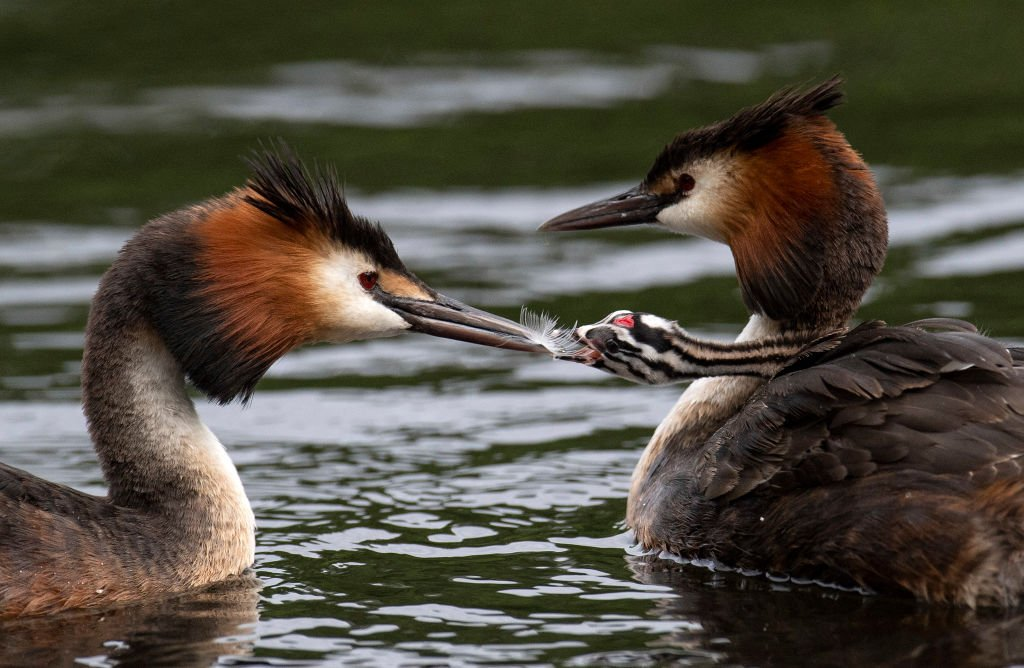
The great crested grebe is an amazing bird that nests in most European countries. My first encounter with this species took place in the late 1970s at the sacred Lake Pühejarve in southern Estonia. Every year, I would row across the lake in a rowboat, observing the local wildlife. An unusual horned bird built its nests on rafts of aquatic plants and carried its hatched chicks on its own back. Encountering this colorful and extravagant grebe was one of my most significant childhood experiences, one which likely later led me down the path of nature conservation.
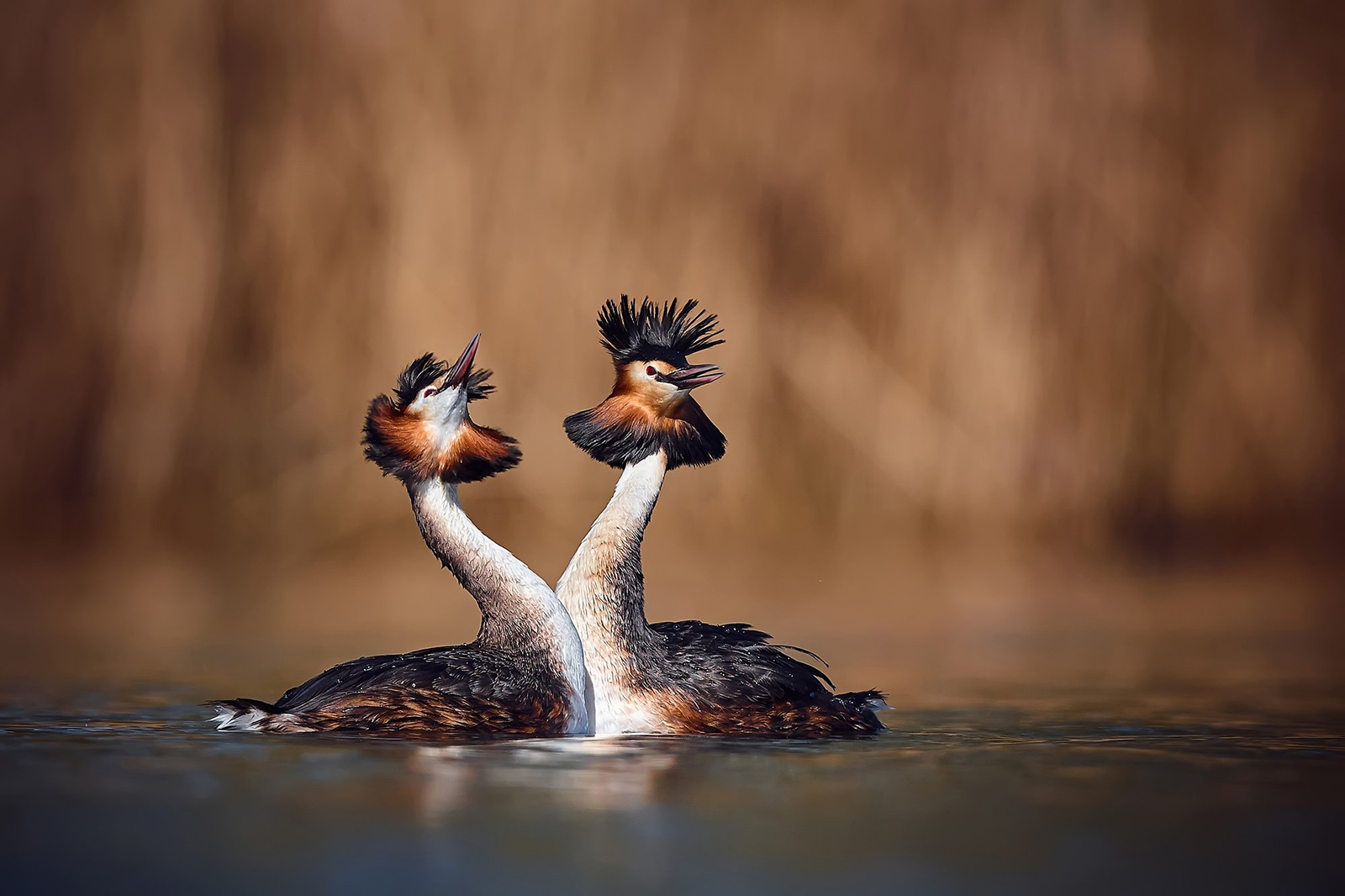
Related to cormorants, these grebes are widely known for their mesmerizing, extravagant courtship displays, during which they dance and exchange bundles of seaweed. The ritual displays of established pairs continue for months even after mating and nest-building. Evolutionary biologist (and later the first director of UNESCO) Julian Huxley published a special work in 1914 devoted to natural selection, using the example of courting great crested grebes. He was the first to describe how ritual (symbolic) behavior develops in animals and what role it plays in the survival of the species.
The great crested grebe keeps its distance from people, because humans offer it no benefit. People, however, sometimes incorrectly accuse the great crested grebe of depleting fish stocks and take actions that range from cutting aquatic vegetation in nesting areas to scaring them away or even shooting them.
One of the great crested grebes main wintering grounds in Europe is the Black Sea coastline, where shallow waters and estuaries block large waves and the waters teem with small fish and aquatic invertebrates.
The war, however, has made these wintering grounds unsafe. At first, the great crested grebe—which gather in the northern Black Sea region by the thousands—were disturbed by explosions and other loud sounds of human conflict. But then oil spilled into the sea, and the grebes’ fate became quite tragic.
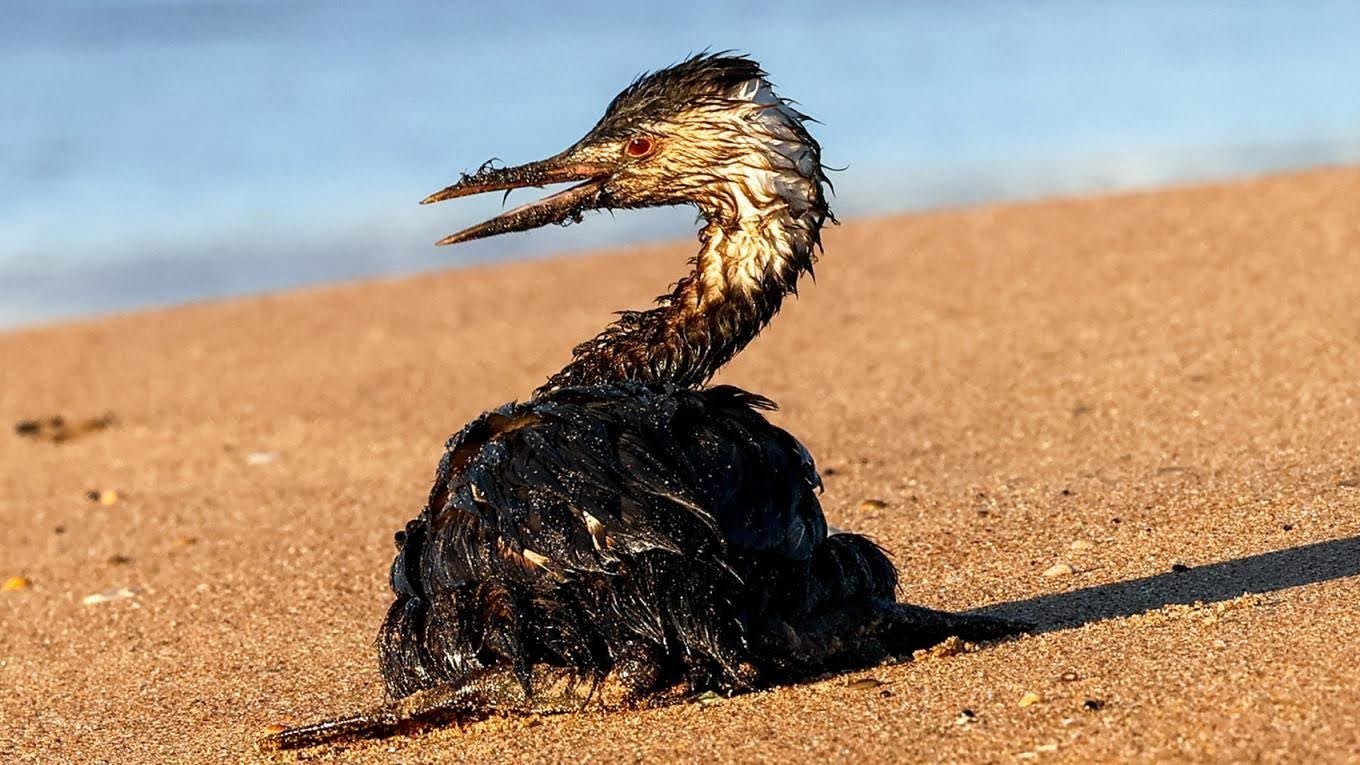
Any bird covered in petroleum products (or oil) loses the waterproofing and thermal insulation usually provided by its feathery armor. Such a bird is doomed to die at sea, unable to restore its protective plumage on its own. In winter months, it simply freezes to death. Worse, oiled birds try to clean themselves, further inhaling and ingesting toxic petroleum products, which in turn causes toxic hepatitis, fatty liver disease, fluid in the lungs and acute heart failure. Most of the birds that survive the cold die from oil poisoning.
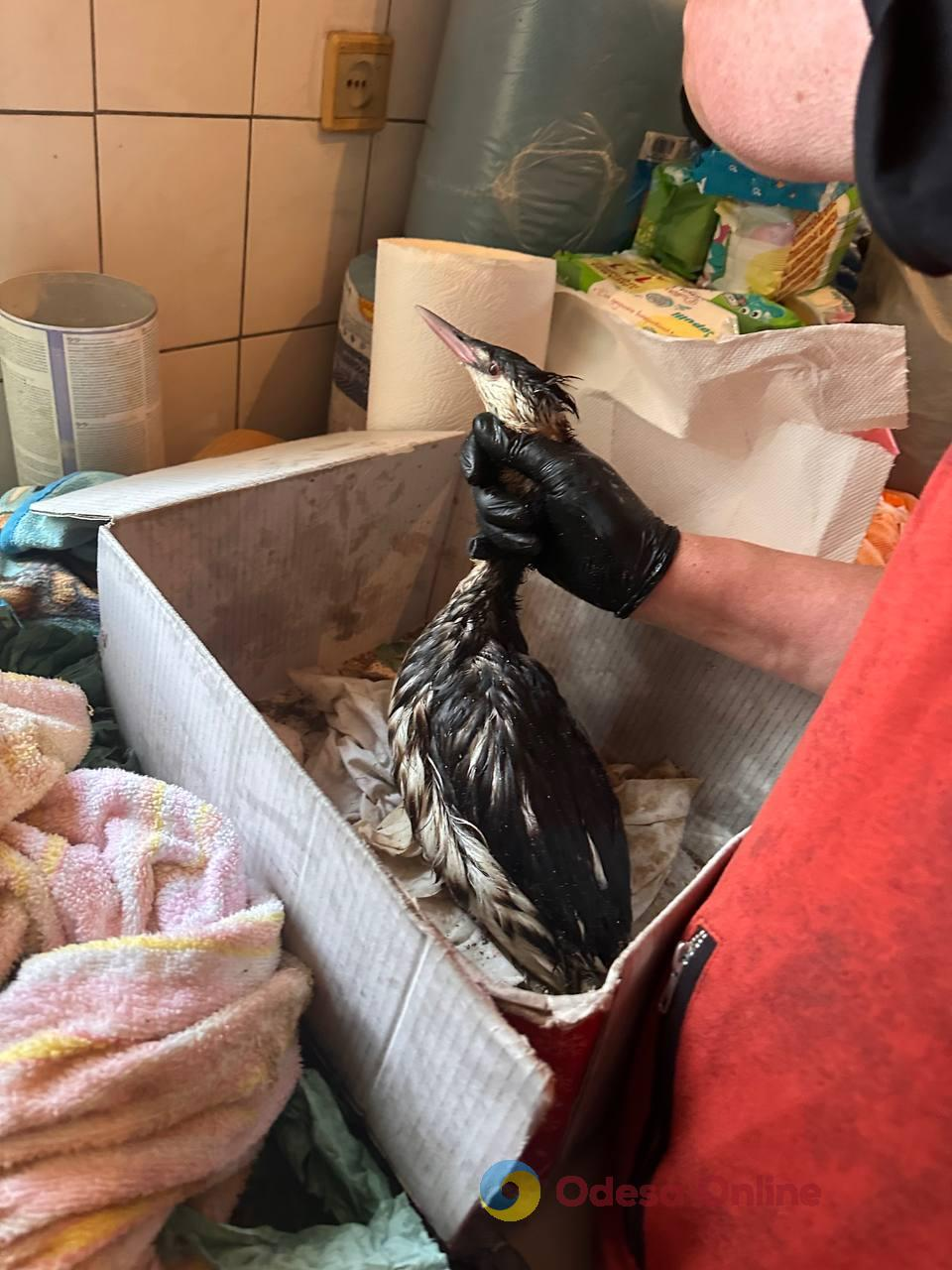
Some birds that make it to shore alive may be found by volunteer rescuers. Covered in oil, they face stressful encounters with two-legged volunteers, who carefully cleanse them with warm water and detergents and move them from box to box on their way to safety. Only around 10% of captured grebes will survive this ordeal, thanks to their well-meaning helpers, and ultimately be released into coastal waters again, where, in all likelihood, new oil spills await them for now.
Of the tens of thousands of birds rescued by volunteers in the early days of the response to the Kerch Strait oil spill in January 2025, 85% were great crested cormorants. These are typical statistics for other spills of petroleum products and cooking oils in the Black Sea.
Read more: Oil Spills—A New Military Threat
The only real solution that will help great crested grebe and other waterfowl is an end to hostilities and irresponsible maritime transport activity, both of which cause these toxic spills. Even in peacetime, risky oil shipments must be limited in seasons when birds gather at sea for wintering or during migrations. Otherwise, more than 90% of the great crested grebes caught in oil spills will inevitably perish.
Main image: Great crested grebe. Source: Australian Geographic